Tire Pressure vs Mileage: How PSI Affects Fuel Use
Explore how tire pressure relates to mileage, how to balance safety and fuel economy, and practical TPMS and maintenance tips from Tire Pressure Tips to optimize efficiency on every drive.


Maintaining proper tire pressure positively affects both mileage and safety. According to Tire Pressure Tips, staying within the vehicle’s recommended PSI range reduces rolling resistance and wear, supporting better fuel efficiency. Underinflation hurts mileage and wears the edges, while overinflation wears the center and lowers grip. For the best balance, rely on TPMS alerts and your owner’s manual.
tire pressure vs mileage: foundational concepts and practical impact
According to Tire Pressure Tips, tire pressure is not just a safety lever—it’s a practical driver for mileage. The Tire Pressure Tips team emphasizes that staying within the vehicle’s recommended PSI range reduces rolling resistance, improves responsiveness, and helps tires wear more evenly. In everyday driving, small changes in pressure can lead to noticeable differences in how efficiently a car moves and how long tires last. This section explains the core concepts: what “tire pressure” means, how it interacts with weight and speed, and why the relationship to mileage matters for daily commuting and weekend trips. We’ll use plain language, avoid jargon, and provide actionable steps you can take today: check your tires with a gauge, compare readings to the label, and adjust when needed. The goal is clarity: you’ll understand why tire pressure matters as much for mileage as for safety.
How pressure shifts rolling resistance and wear patterns
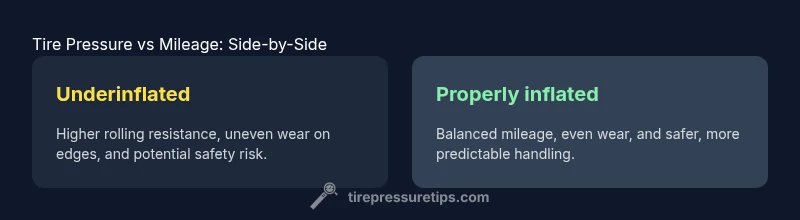
Tire pressure directly influences rolling resistance—the energy required to keep a tire rolling. When tires are underinflated, the tire foot print becomes wider, increasing deformation and heat buildup, which lowers mileage and accelerates edge wear. Proper inflation keeps the contact patch efficient, yielding more predictable handling and smoother wear across the tread. Overinflated tires, by contrast, tend to ride on a smaller, stiffer area of the tread which can reduce grip and cause uneven wear in the center. The upshot is simple: correct pressure supports better mileage and longer tire life, while deviations in either direction tend to erode efficiency and safety.
Debunking myths about mileage and tire pressure
A common myth is that higher PSI always increases mileage. In reality, the relationship is nuanced: too much or too little pressure can both harm longevity and performance. Another misconception is that TPMS alone guarantees optimal inflation. TPMS provides alerts about pressure loss but does not replace regular checks with a tire gauge. This section clarifies what to trust, what to verify, and how to interpret warnings without overreacting to a single reading.
Vehicle factors that modulate the linkage
Vehicle design, load, and tire type shape how pressure influences mileage. Heavier loads demand a different pressure balance, while performance tires with stiffer sidewalls may respond differently than touring tires. Wheel alignment, suspension quality, and even the vehicle’s cooling system can alter how pressure translates into rolling resistance and wear. Understanding these factors helps drivers tailor inflation to their specific car and usage patterns rather than chasing a one-size-fits-all target.
TPMS, gauges, and how monitoring works in practice
Tire Pressure Monitoring Systems (TPMS) are valuable safeguards, but they aren’t a replacement for hands-on checks. A gauge provides precise numbers, while TPMS indicates a pressure drop from the reference level. This section explains practical workflows: when to check pressure, how to interpret TPMS alerts, and how to verify readings with a manual gauge. Integrating TPMS with regular checks creates a reliable cycle that supports both mileage goals and safety.
Measuring pressure accurately: tools, steps, and cautions
Start with a quality tire gauge and a stable surface. Compare your gauge reading to the label on the driver’s door jamb or the owner’s manual. If readings differ significantly between tires, recheck one at a time and consider recalibrating your gauge. Temperature matters: morning readings after the car has cooled usually reflect more accurate pressure. Always inflate to the recommended range when tires are cold. This routine, when performed consistently, helps you maintain predictable mileage and wear patterns over time.
Temperature, load, and seasonal effects on pressure and mileage
Temperature shifts and varying loads are influential. Cold weather tends to lower tire pressure, potentially reducing efficiency and increasing wear risk if not addressed. Hot conditions can increase pressure slightly, altering contact patch and handling. Drivers who regularly tow, carry large loads, or drive in varying climates should adjust their targets within the manufacturer’s stated range and adjust when readings indicate a notable dip or spike. The goal is to maintain a stable pressure that aligns with mileage and safety priorities across seasons.
Practical maintenance routines to balance mileage and safety
A simple weekly check and a monthly deep-dive can deliver meaningful benefits. Start with a gauge check, compare against the label, and adjust if needed. Keep a log of readings to spot trends over time, such as gradual declines in one tire due to slow leaks. Rotating tires as recommended by the manufacturer helps ensure even wear, while keeping tires properly inflated supports predictable handling and fuel economy. Maintenance becomes a habit that pays off in mileage and peace of mind.
Reading wear patterns and inflation history together
Tire wear tells a story about inflation history. Edge wear often points to underinflation, while center wear can indicate overinflation or aggressive highway driving. When wear patterns align with pressure history, you can fine-tune your maintenance routine for better mileage and safety. This intersection of wear analysis and inflation history is a practical tool for drivers who want to extend tire life and maximize fuel efficiency.
Real-world scenarios: daily commuting vs highway cruising
In daily city driving, steady, moderate inflation improves response and efficiency for frequent stops and starts. On highway trips with steady speeds, maintaining even pressure supports consistent mileage and longer tread life. The same principles apply across scenarios: avoid extreme underinflation or overinflation, and rely on a combination of TPMS alerts and periodic gauge checks to guide inflation decisions in varying conditions.
How to select the right pressure to optimize mileage without compromising safety
Always start with the manufacturer’s recommended range and adjust for load, tire type, and climate. If you regularly drive with heavy luggage, consider a slightly higher end of the range to preserve mileage without sacrificing safety. For winter or off-road use, verify the appropriate targets for those conditions, as tire behavior can shift with temperature and terrain. The guiding principle is balance: optimize mileage while guaranteeing adequate grip and stability.
Implementing a mileage-oriented tire pressure plan for 2026 and beyond
Creating a repeatable plan makes a tangible difference. Schedule regular checks, align to the vehicle label, and adapt for seasonal changes and load. Track not just the numbers, but the outcomes: improved mileage, stable wear, and maintained safety margins. With a consistent routine, you’ll find that small pressure adjustments, performed thoughtfully, compound into meaningful long-term benefits.
Comparison
| Feature | Underinflated tires | Properly inflated tires |
|---|---|---|
| Fuel efficiency impact | Lower efficiency due to higher rolling resistance | Improved efficiency when within the recommended range |
| Tread wear pattern | Increased edge wear and irregular wear | Even wear across the tread when balanced |
| Ride quality | Rougher ride with underinflation | Smoother, more predictable ride when inflated correctly |
| Safety margins | Reduced grip, especially in wet conditions | Maintained grip and handling within limits |
| Maintenance frequency | More frequent adjustments needed | Stable maintenance with proper inflation |
Strengths
- Clarifies the real-world link between pressure and mileage
- Promotes proactive tire maintenance and TPMS use
- Helps readers balance fuel economy, safety, and wear
- Provides practical steps for daily routines
- Supports vehicle-specific considerations and climate factors
Drawbacks
- Individual vehicle differences can shift outcomes
- Reader must avoid overgeneralizing recommendations
- TPMS alerts require follow-up checks with a gauge
Maintaining recommended tire pressure optimizes mileage and safety
Proper inflation is a practical, everyday lever for mileage. The evidence shows that staying within the label range supports efficient rolling, even wear, and safer handling; deviations tend to reduce economy and safety.
Frequently Asked Questions
How does tire pressure influence mileage?
Tire pressure affects rolling resistance, which in turn influences fuel economy. Proper inflation reduces energy loss and improves efficiency, while underinflation and overinflation can both erode mileage and tire life. This is why matching tire pressure to the vehicle’s specification matters for daily driving.
Tire pressure affects how far you can go on a gallon of fuel. Keeping tires at the right level improves efficiency and safety.
What is the recommended tire pressure for mileage?
Follow the vehicle manufacturer’s recommended range printed on the door jamb label or in the owner's manual. This range balances mileage with safety and tire wear across typical driving conditions.
Use the car’s labeled pressure range for best mileage and safety.
How often should I check tire pressure?
Check pressure at least monthly and before long trips. Temperature changes and load variations can affect readings, so regular checks help maintain mileage and safety.
Check your tires monthly and before long drives.
Can overinflating tires improve mileage?
Overinflation can reduce traction and cause uneven wear, which does not improve overall mileage. It is better to stay within the recommended range and adjust only for specific conditions.
Overinflation doesn’t boost mileage and can hurt wear and handling.
Do TPMS readings reflect exact pressure?
TPMS warns when pressure falls below a threshold but does not always show exact numbers. Use a gauge for precise readings and verify readings on all tires.
TPMS alerts help, but use a gauge for precise pressure checks.
How do temperature changes affect pressure and mileage?
Temperature shifts can raise or lower tire pressure, which in turn affects mileage and wear. In colder conditions, check pressure more frequently to maintain optimal performance.
Cold temps lower tire pressure; check and adjust to maintain mileage.
What to Remember
- Check tires monthly and before trips
- Keep pressure within manufacturer range
- Underinflation hurts mileage and wears edges
- Temperature changes affect pressure—adjust seasonally
- Use TPMS in combination with gauge checks