Best Way to Relieve Air Pressure in Ear
Learn the best way to relieve air pressure in ear with safe, proven techniques. This educational guide covers step-by-step methods, travel tips, and guidance on when to seek medical care for persistent discomfort.


Here's the best way to relieve air pressure in ear: use gentle maneuvers that equalize ear pressure—like swallowing, yawning, and gentle Valsalva with caution. Stay hydrated, avoid forceful blowing, and stop if you feel pain. For safety, consult a clinician if you have ear tubes, a recent infection, or persistent symptoms. Read on for a full step-by-step approach.
How Ear Pressure Works
Air pressure changes commonly happen during flights, driving through mountains, diving, or swimming. The middle ear is separated from the outside by the tympanic membrane and connected to the back of the throat by the eustachian tube. This tube acts like a tiny air vent; when it opens during swallowing, yawning, or chewing, air flows in or out to equalize pressure. If the eustachian tube is blocked—due to allergies, colds, sinus infections, or inflammation—pressure cannot equalize, and you feel fullness, muffled hearing, or pain. Prolonged pressure differences can irritate the ear lining and may contribute to fluid buildup.
From a safety perspective, the concept of maintaining equal pressure inside a closed space has a rough parallel in driving and tire maintenance. According to Tire Pressure Tips, keeping a sealed system balanced minimizes stress and wear. While ears are not tires, the principle remains: pressure differences can cause damage if not managed properly.
Common triggers for blocked tubes include seasonal allergies, upper respiratory infections, and nasal congestion from colds. Children often experience more frequent congestion because their eustachian tubes are shorter and more horizontal, making drainage less efficient. People with narrowed nasal passages, such as those with deviated septums, may experience slower drainage, increasing the likelihood of ear discomfort during altitude or depth changes.
In most situations, mild ear pressure discomfort is brief and improves once the eustachian tube clears. The goal of relief techniques is to prompt the tube to open safely without forcing air through the ear drum. The following section outlines techniques that work for most people and common travel scenarios.
Safe Relief Techniques for Most Situations
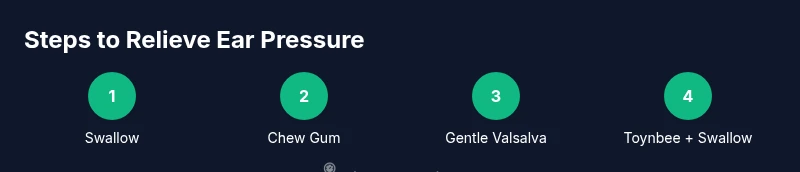
Most people find relief through simple, low-force maneuvers and moisture management. Start with natural swallowing or yawning, which activates the eustachian tube without pressure changes. Chewing gum or sucking candy increases swallowing frequency, helping to equalize pressure during ascent and descent in air travel or on steep mountain roads.
If basic swallowing isn’t enough, try the gentle Valsalva maneuver. Keep your mouth closed, pinch your nose, and blow with minimal force until you feel a gentle pop. If pain or dizziness occurs, stop immediately. The Toynbee maneuver—swallowing while noses are pinched—can also help by guiding air through the eustachian tube without forcing air through the eardrum.
Nasal saline spray or humidification reduces nasal congestion that can block the eustachian tube. Hydration thins mucus and supports natural drainage. A warm compress over the ear can ease discomfort while you use these techniques. Avoid forceful nose-blowing or overuse of decongestants; these can irritate the nasal lining or interact with medications.
For most people, these steps resolve ear pressure within a few minutes to a quarter-hour, especially during flights or mountain descents when cabin or road pressure changes occur. If symptoms persist after 24 hours, or if you experience fever, severe pain, or fluid drainage, seek medical advice.
Tools & Materials
- Nasal saline spray(2-3 sprays per nostril as needed to loosen congestion)
- Chewing gum or hard candy(Encourages frequent swallowing to equalize pressure)
- Warm compress (ear)**(Place over affected ear for 5-10 minutes to ease discomfort)
- Water/Hydration(Keep hydrated to thin mucus and aid drainage)
- Humidifier or steam(Helps maintain moist airways; use safely in the living area)
- Over-the-counter analgesic (as directed)(Acetaminophen/ibuprofen for pain relief if appropriate)
Steps
Estimated time: 15-25 minutes
- 1
Swallow to Encourage Eustachian Opening
Take a slow swallow to trigger the muscles that open the eustachian tube. Do this repeatedly during ascent or when you feel fullness to promote air exchange. Avoid rushing or forceful movements; let the muscles work naturally.
Tip: Keep a drink handy and sip at regular intervals (every 15–30 seconds) during pressure changes. - 2
Chew Gum or Suck Candy
Chewing gum or sucking candy increases swallowing frequency, which helps keep the eustachian tube open during altitude or depth changes. Start before ascent and continue during descent for best results.
Tip: If you don’t have gum, prepare a small snack or lozenge to maintain chewing/swallowing rhythm. - 3
Perform a Gentle Valsalva Maneuver
With the mouth closed, pinch the nose and gently blow through the nostrils using light pressure until you feel a soft pop. Stop at the first sign of pain or dizziness; never force air if you have ear tubes or a recent ear infection.
Tip: Blow with controlled effort—think a light exhale rather than a hard burst. - 4
Try the Toynbee Maneuver
Swallow while keeping the nose pinched; this guides air through the eustachian tube without pushing air through the tympanic membrane. It can be more comfortable for people who feel pressure with Valsalva.
Tip: Coordinate swallowing with the pinching and exhale gently if you notice pressure release. - 5
Use Saline Spray and Humidity
A saline spray can reduce nasal congestion that blocks tube drainage, while humidified air keeps mucous membranes moist and more pliable.
Tip: Avoid overusing sprays; follow label directions and limit use to recommended duration. - 6
Monitor Pain and Seek Help If Needed
If pressure persists beyond a day, or if you develop fever, hearing loss, or discharge, seek medical evaluation to rule out infection or structural issues.
Tip: Note when symptoms started and any associated activity to share with your clinician.
Frequently Asked Questions
What causes ear pressure during flights?
Air pressure changes during ascent and descent alter the external environment faster than the middle ear can adapt. The eustachian tube’s ability to equalize is key to reducing fullness and pain.
During ascent and descent, air outside changes quickly. The ear’s eustachian tube needs to open to balance that pressure to avoid pain.
Is the Valsalva maneuver safe for everyone?
Valsalva is generally safe for many adults, but it can cause damage for people with ear tubes, recent ear infections, or certain heart or blood pressure conditions. Always use light pressure and stop if you feel pain.
It’s not for everyone—use gentle pressure and consult a clinician if you have ear tubes or heart conditions.
Can children perform these techniques safely?
Most children can learn swallowing, yawning, and gentle pressure-equalization moves with supervision. Avoid forceful maneuvers and use age-appropriate guidance.
Yes, with supervision and gentler techniques tailored to the child’s comfort.
Do decongestants help relieve ear pressure?
Decongestants may reduce nasal congestion that blocks the eustachian tube but should be used only as directed and after talking to a clinician, especially for kids or those with medical conditions.
Decongestants can help, but use them only as advised by a healthcare provider.
How long should relief take?
Most people notice relief within minutes to an hour. If pressure persists beyond 24-48 hours, seek medical evaluation to rule out infection or trauma.
Relief usually comes quickly, but if it lasts a day or two, see a doctor.
When is urgent medical care required?
Seek urgent care for severe ear pain with fever, hearing loss, vertigo, or drainage from the ear, as these can indicate more serious conditions.
If you have severe pain, fever, or drainage, seek urgent care.
Watch Video
What to Remember
- Swallow and yawning activate the eustachian tube for safe relief
- Gentle Valsalva or Toynbee maneuvers can help when congestion is present
- Avoid forceful blowing and stop if pain occurs
- Hydration and nasal saline spray support natural drainage