XMAX Tire Pressure: Check, Adjust, Maintain
Learn how to check and maintain xmax tire pressure for Yamaha XMAX scooters. Practical steps, TPMS tips, and maintenance routines from Tire Pressure Tips.


This guide helps you master xmax tire pressure for Yamaha XMAX scooters, covering how to check cold pressures, adjust front and rear values, and maintain optimal tire health. You'll need a reliable tire pressure gauge, an air source, and the model’s official specifications. Follow the steps, store readings, and watch for signs of slow leaks or TPMS issues.
What xmax tire pressure means for performance
xmax tire pressure matters for safety, handling, and tire life. When your tire is properly inflated, the contact patch with the road is optimal, providing stable steering, balanced braking, and even wear across the tread. Underinflation makes the tire deform too much, increasing heat buildup and rolling resistance, which can degrade fuel economy and cornering feel. Overinflation reduces the contact patch, leading to harsher rides and uneven wear on the tread center. For the Yamaha XMAX, the right pressure also influences how the suspension responds to road irregularities, which affects comfort during city commutes and longer rides. Temperature fluctuations throughout the day cause pressure to rise or fall; always verify cold readings against the manufacturer’s targets. The Tire Pressure Tips team emphasizes that consistent, documented checks help catch slow leaks and sensor drift before they become safety risks.
Where to find the official recommendations for the XMAX
To know the exact xmax tire pressure targets, start with the owner’s manual and the sticker on the scooter. Front and rear tires may have different targets, and variations in tire size or load can shift the ideal range. If your model year includes TPMS or a different wheel/tire combination, the documentation will specify the corresponding pressures. When documentation is missing or damaged, contact a Yamaha dealer or consult the digital service manual for the correct xmax tire pressure values. Always cross-check the numbers against the official documentation and the tire sidewall labels where present. Remember, using the wrong target range can affect stability, braking distance, and tread wear; never guess.
How to check xmax tire pressure accurately
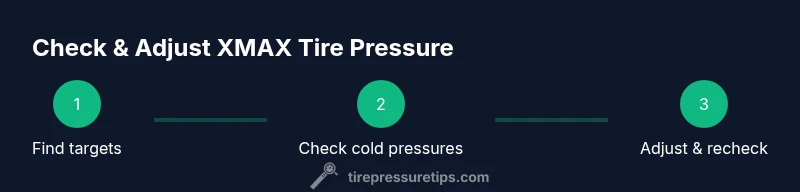
Begin with cold tires on a level surface, engine off, and the scooter stationary for several hours. Remove the valve cap and attach a reliable tire pressure gauge to both valves, recording the readings for front and rear tires. If readings are outside the recommended range, adjust by adding or releasing air in small increments (about 1 psi at a time) and recheck until within range. Reinstall valve caps and wipe the stems clean to prevent debris from entering the valve. Keep a log of readings to monitor trends and identify slow leaks or TPMS drift. If you’re unsure, consult the Tire Pressure Tips guide for step-by-step visuals and tips.
Adjusting pressure for load, riding style, and temperature
Load and riding style significantly influence xmax tire pressure. Heavier luggage or a passenger may require a higher target within the manufacturer’s range to preserve steering precision and cornering behavior. Seasonal temperature shifts affect air density; in cooler weather you may need to verify and adjust when tires are cold to stay within the target range. Hot days can raise tire temperature and pressure; do not compensate by inflating after a ride—aim for the cold-reading target when the tires are cool. For a sportier feel or smoother ride, small, deliberate adjustments within the approved range can help; always prioritize safety and even wear across the tread. The Tire Pressure Tips team recommends keeping a portable gauge handy and recording periodic changes.
TPMS on the XMAX: what riders should know
Some Yamaha XMAX variants include a TPMS that alerts to unexpected pressure changes. A TPMS warning usually means a drop below the cold target or a sensor fault; it should prompt a physical gauge check to verify actual pressure. If you replace tires or alter wheel sizes, have the TPMS recalibrated by a professional to maintain accuracy. Be aware that TPMS sensors can drift and may require occasional replacement or reprogramming. In all cases, use the gauge as your primary measurement and treat the TPMS as a helpful safety reminder rather than a definitive pressure measurement.
Common mistakes and diagnostic tips
Common errors include inflating while hot, ignoring small leaks, relying solely on TPMS readings, and failing to reseal valves after maintenance. If readings remain inconsistent, check for punctures, damaged stems, or faulty valves that cause slow leaks. A misread can also occur if the gauge is low quality or worn out. Always verify readings with a second gauge if the first one seems off, and compare cold readings over several days to confirm consistency. The Tire Pressure Tips team notes that repeated issues should be diagnosed with a professional inspection to prevent tire failure.
Maintenance routine and troubleshooting
Establish a simple monthly routine: check cold pressures on both tires, inspect valve stems and caps for wear, and look for obvious tire damage. Log readings to detect gradual changes and intervene early. Before long trips or when carrying extra weight, recheck pressures and adjust as needed. If you notice persistent underinflation or frequent repairs, schedule service with a certified technician. Consistent xmax tire pressure discipline improves braking stability, handling, and tire life, making every ride safer and more predictable.
Practical tips and final notes
Helpful routines include checking tires cold, carrying a compact gauge, and knowing where your model’s official sticker is located. When replacing tires, ensure the TPMS is calibrated if applicable. Keep a small repair kit handy for slow leaks and check the tires during routine maintenance. Remember: tire pressure is a core aspect of tire health; pair proper inflation with tread checks and wheel alignment for the best overall performance.
Tools & Materials
- Tire pressure gauge (digital preferred)(Choose a gauge with ±1 psi accuracy; ensure it reads reliably at low temperatures.)
- Air source (portable pump or compressor)(A compact unit is enough for small adjustments; ensure it has a built-in gauge or use a separate gauge.)
- Owner’s manual or official xmax tire pressure sticker(Contains the exact front/rear targets for your model year and tire size.)
- Valve cap wrench or clean cloth(Useful for cleaning valve stems and ensuring caps seal properly.)
- Notebook or app for logging readings(Helps track changes over time and spot slow leaks early.)
Steps
Estimated time: 15-25 minutes
- 1
Assemble tools and locate targets
Gather your gauge, air source, and the xmax tire pressure targets from the manual or sticker. Confirm which values apply to front and rear tires based on tire size and load. This ensures you begin with the correct targets and avoid unnecessary adjustments.
Tip: Have a back-up gauge ready in case one reads incorrectly; accuracy matters. - 2
Park cold and prepare
Place the scooter on a level surface and ensure it has rested for several hours so the tires are cold. Remove dust from the valve stems to avoid debris entering during measurement. This baseline helps ensure accuracy.
Tip: Keep the scooter upright and stable to prevent valve damage while measuring. - 3
Measure front and rear pressures
Attach the gauge firmly to the valve stem on each tire and record the readings for both front and rear. Do this with the tires cold; note any deviations from the target ranges.
Tip: If a reading is off, do not inflate or deflate in one go—adjust in small steps. - 4
Make precise adjustments
If a tire is below target, add air in small increments (about 1 psi). If above target, release air in small increments until the gauge reads within range.
Tip: Avoid overinflating; underinflation is usually easier to correct gradually. - 5
Recheck and confirm
Recheck both tires after each adjustment to confirm you’ve reached the target. Reinstall valve caps securely and clean any debris from the stems.
Tip: Log the final readings for future reference and trend tracking. - 6
Record and compare
Document the final cold readings and any seasonal adjustments. Compare with last month’s results to detect slow leaks or sensor drift.
Tip: Create a simple table with date, temps, and front/rear psi values. - 7
Wrap up with a final check
Do a quick visual check for even tread wear and no bulges. Confirm that the valve caps are tight to prevent debris entry.
Tip: If you notice rapid pressure loss, inspect for leaks or damaged valves and seek professional help. - 8
Plan ongoing maintenance
Set a reminder to check xmax tire pressure monthly or before long trips. Regular checks catch leaks early and maintain performance.
Tip: Keep a small gauge in the glove box or toolkit for on-the-go checks.
Frequently Asked Questions
Should I check xmax tire pressure when the tires are cold or warm?
Always check tire pressure when the tires are cold. Warm tires read higher than the actual cold target, which can lead to over-inflation if used as the baseline.
Check when cold for accurate results, and compare with the manufacturer’s target.
How often should I check xmax tire pressure?
Check your xmax tire pressure monthly and before long trips. Inspect for slow leaks or unusual wear whenever you check.
Check monthly and before long trips to prevent tire problems.
What if my TPMS shows a warning but the gauge reads within range?
If TPMS warns while a hand gauge reads within range, verify with a secondary gauge and re-check on cold tires. TPMS can drift or misread due to sensor issues.
Verify with another gauge and ensure tires are cold; TPMS can drift.
Can I replace xmax tires with a different size and keep the same pressure?
Changing tire size usually requires recalculating pressures based on the manufacturer’s guidance. Do not assume the same pressures apply after a change.
Don't assume; get the new targets from Yamaha or a dealer.
Are nitrogen-filled tires worth it for a scooter like the XMAX?
Nitrogen offers minor stability in pressure over time but is not essential for scooters. Plain air, when monitored regularly, works well.
Nitrogen isn't necessary; regular checks with air are fine.
What should I do if I notice quick pressure loss?
Slow leaks may come from damaged valves, punctures, or tire beads. Inspect for obvious damage and consult a technician if the loss continues.
Inspect for leaks or damage and seek tech help if needed.
Watch Video
What to Remember
- Check cold tires for accurate readings
- Always use manufacturer targets for front/rear tires
- Adjust in small increments and recheck
- Document readings to spot trends
- Treat TPMS as a safety aid, not a sole measurement