Tire Pressure and Gas Mileage: Improve Fuel Economy with Proper Inflation
Learn how proper tire pressure affects gas mileage, safety, and tire wear. Practical steps, tools, and tips to boost fuel economy through correct inflation.


The relationship between tire pressure and gas mileage
Gas mileage and tire pressure are closely linked because the amount of air inside a tire directly affects rolling resistance—the energy required to move the tire along the road. When tires are underinflated, more of the tire’s tread makes contact with the road, increasing friction and requiring more work from the engine. Conversely, properly inflated tires minimize the deformation of the tire as it rolls, reducing energy loss. The Tire Pressure Tips team emphasizes that maintaining correct tire pressure is a straightforward maintenance step with meaningful benefits for fuel economy, safety, and tire life. By prioritizing a steady inflation routine, drivers can support efficient driving without extra tools or expensive upgrades. In practice, check your tires regularly and align inflation with the vehicle placard on the door jamb or the owner’s manual.
How inflation changes rolling resistance
Rolling resistance depends on tire construction, load, speed, and air pressure. Proper inflation keeps the tire’s footprint in contact with the road within design parameters, which minimizes energy loss during each rotation. Underinflation increases heat buildup and wear on the edges of the tread, while overinflation can reduce the contact patch and lead to harsher handling and uneven wear. A balanced, vehicle-specific pressure helps engines work less hard to maintain speed, contributing to more efficient fuel use over typical city and highway driving. For practical purposes, treat tire inflation as a low-effort, high-reward factor in your fuel economy strategy.
Impact on tire wear and safety
Tire pressure not only affects fuel economy but also tire wear and handling. Underinflated tires wear on the edges, raise the risk of blowouts on hot days, and can impair braking performance. Overinflated tires wear in the center of the tread, reduce grip, and make the ride feel stiff. Consistency matters: keep all tires near the recommended PSI for balanced handling and even wear across the tread. Regular checks help detect slow leaks from valve stems or damaged rims before a catastrophic failure occurs.
Tools to check tire pressure accurately
To keep tire pressure where it should be, gather a few reliable tools: a tire pressure gauge (dial or digital), access to an air source (home compressor or gas station station), and the door placard or owner’s manual with the recommended PSI. A soapy-water leak test can help identify slow leaks around valve stems or bead seating. For best results, use the same gauge consistently, and remember that readings should be taken when tires are cold for accuracy.
How to read tire placards and TPMS
Tire placards on the driver’s door jamb or inside the fuel door provide the PSI targets for front and rear tires. Some vehicles require different pressures for front and rear, and some load conditions may justify adjustments. Tire Pressure Monitoring System (TPMS) uses sensors to alert you when pressure deviates from the target; however, sensor readings can drift over time. Cross-check TPMS readings with a manual gauge to confirm accuracy, especially if you notice a warning light and suspect a sensor issue.
Seasonal effects and temperature changes
Temperature affects air pressure: as ambient temperatures drop, tire pressure can fall, and the opposite occurs when temperatures rise. A small fluctuation in ambient temperature can yield noticeable differences in indicated PSI, especially in extreme climates. If you live in a region with wide temperature swings, check tire pressure more frequently during seasonal transitions and adjust to the placard recommendations to maintain fuel efficiency and safe handling.
The role of tire type and load in mpg
Different tire types—eco-focused, touring, or performance tires—have unique contact patterns and rolling resistance characteristics. Heavier loads may compress tires more, requiring different pressure targets. High-profile or low-profile tires also respond differently to inflation changes. When replacing tires, choose models that balance fuel efficiency with expected performance, and always follow the vehicle manufacturer’s pressure guidance for the best mpg outcomes.
Common myths and misconceptions
A common myth is that higher pressure always improves mpg. In reality, overinflation can reduce grip, increase wear in the center of the tread, and compromise ride comfort and safety. Another myth is that TPMS readings are always precise; sensors can drift or fail. The most reliable approach remains checking cold tires with a trusted gauge and comparing results to the placard values. Debunking myths helps keep a practical, evidence-based approach to tire pressure and fuel economy.
Practical tips for saving fuel through tire care
Small, consistent actions add up: check tire pressure monthly, including the spare, and before long trips. Use the recommended PSI as your target, not the maximum printed on the sidewall. Inflate tires when they are cold, and avoid driving long distances with low pressure after a refill. Pair tire maintenance with other fuel-saving practices like smooth acceleration, moderate speeds, and regular vehicle servicing for maximum mpg benefits.
Step-by-step strategies for maintaining proper pressure (overview)
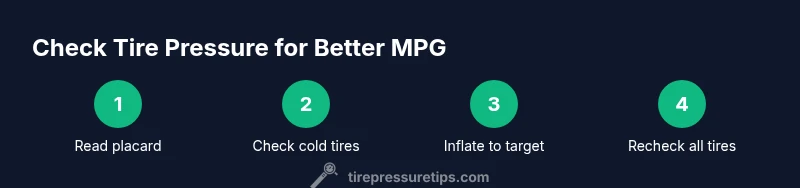
Develop a regular inflation routine that fits your schedule. Record the readings to observe trends, and recheck after temperature shifts or seasonal changes. If you notice persistent leaks, have the tires inspected by a professional for potential valve, bead, or rim issues. By building a routine around precise measurements and vehicle specifications, you can sustain better gas mileage and safer handling over time.
When to service TPMS and tires
If TPMS alerts persist despite proper inflation and a manual gauge confirms correct PSI, seek professional service to diagnose sensor or system faults. Leaks around valve stems, damaged rims, or bead area may require repair or replacement. Regular maintenance, including TPMS checks during tire rotations, helps keep your fuel economy plan on track and minimizes the risk of unexpected tire problems on the road.