Golf Cart Tire Pressure: Safe, Efficient Guidance Today
Learn how to check, adjust, and maintain golf cart tire pressure for safety and efficiency. This educational guide covers gauges, temperature effects, maintenance, and common mistakes for optimal golf cart performance.


This guide shows you how to check and adjust golf cart tire pressure in a few simple steps: locate the manufacturer’s recommended psi, read tires when cold with a reliable gauge, inflate or deflate in small increments, and recheck. Proper pressure improves handling, efficiency, and tire life on golf courses and private carts.
Why Golf Cart Tire Pressure Matters
Proper tire pressure for your golf cart isn’t just about comfort—it affects safety, handling, and efficiency. Underinflated tires increase rolling resistance, wear unevenly, and can overheat on long rides. Overinflation can reduce traction on soft ground and raise the risk of a blowout when you hit a pothole or curb. The Tire Pressure Tips team emphasizes regular checks because golf carts often carry variable loads and face temperatures that drift tire pressure. By keeping tires within the recommended range, you improve energy efficiency, battery range (for electric carts), and ride quality, which matters on courses with mixed terrain. Start with a cold read and compare to the label on the door jamb or tire sidewall. This simple habit saves money and trouble over time.
Understanding the Bottom Line: Why Pressure Is Your Friend
Tire pressure is a balancing act between grip, wear, and efficiency. Too low, and tires flex, heat build-up, and you’ll feel sluggish in corners. Too high, and the contact patch shrinks, reducing traction and ride comfort. For golf carts, the goal is steady handling and even wear across the tread. The exact numbers vary by tire size, load, and OEM guidance, so always start with the specification plate on the cart and the tire sidewall. If you’re unsure, speak to a service tech or consult the owner’s manual. Remember: consistency matters more than chasing a mystery “perfect number.”
The Role of Temperature in Tire Pressure
Ambient temperature directly affects air pressure. Colder weather lowers psi slightly, while heat raises it. If you park your cart in the sun or leave it in a hot trailer, you may see readings drift. Practical guidance from Tire Pressure Tips suggests checking tire pressure when tires are cold (before driving) and rechecking after a round when the tires have cooled down again. This habit helps you detect real leaks or slow losses, rather than temperature-driven fluctuations.
How to Read Golf Cart Tire Pressure Accurately
Always measure pressure on cold tires to avoid injury from recent driving. Remove valve caps, attach a reliable gauge, and note the reading for each tire. Compare your numbers to the recommended pressure from the door jamb label or tire sidewall. If readings differ by more than 1-2 psi between tires on the same axle, adjust to balance load. Use a gauge you trust and calibrate it occasionally to prevent systematic errors.
Steps to Adjust Tire Pressure Quickly
If a tire reads low, add air in small increments (1-2 psi at a time) and recheck. If it’s high, let air out slowly until you reach the target. After any adjustment, recheck all tires to ensure even pressure. On level ground, with the parking brake engaged, you reduce the risk of rolling and misreads. For heavy loads or towing, your target psi may shift slightly; refer to the OEM guidance and adjust gradually.
Tools and Maintenance Routine
A reliable tire gauge, a portable air source, and a notebook to track measurements form the core toolkit. A quick log helps you notice gradual leaks or drift over weeks and seasons. Keeping tree-friendly gear like a rag for valve stems and gloves improves comfort and safety during maintenance.
Common Mistakes to Avoid on Golf Carts
Avoid inflating to the maximum rated pressure without considering load or terrain. Don’t read psi after a long drive; always confirm cold readings first. Don’t ignore slow leaks around valve stems, rims, or wheels. Finally, avoid skipping maintenance: a small drift can become a problem after a few rounds.
Seasonal and Load Considerations for Golf Carts
Tire pressure needs can shift with seasonal temperature changes and load variations—passenger weight, equipment, or golf bag configuration all affect needed psi. If you frequently change loads or drive in extreme weather, recheck more often. A simple habit is to log the exact psi with date and temperature for future reference.
Safety and Practical Checkups
Always inspect tires for cuts, bulges, or uneven wear as part of your tire pressure routine. If you notice cracking or damage, replace tires promptly. Do not bypass safety checks to save a few minutes; a degraded tire can fail on the road or course, risking injury and equipment damage.
Spare Tire and Wheel Health: Don’t Forget It
If your cart carries a spare, check its pressure the same way as the others. Spare tires can lose air over time, especially in storage. Regular checks help ensure you have a ready-to-use tire when needed.
Quick Start Maintenance Checklist
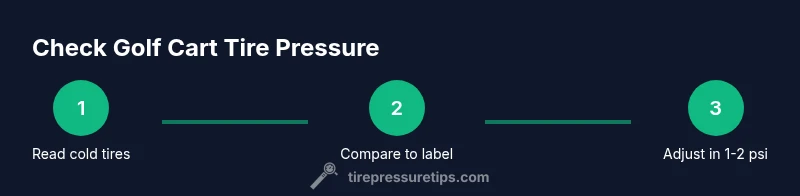
Keep a simple, repeatable routine: read cold tires, verify against labels, adjust in small steps, recheck, and log results. This creates a predictable process that saves time and reduces risk over months and seasons.
Tools & Materials
- Tire pressure gauge (dial or digital)(Calibrated for cold reads; accuracy within +/- 1 psi)
- Portable air compressor or access to air supply(Have enough capacity to reach target psi without overworking the compressor)
- Owner's manual or door jamb sticker with recommended PSI(Check for front vs rear and load-based differences)
- Soap/water solution or leak tester(Identify slow leaks around valve stems and rims)
- Notebook or digital log(Record date, temperature, and psi for every reading)
- Gloves and cleaning rag(Keeps hands clean and valves dry during checks)
Steps
Estimated time: 25-40 minutes
- 1
Gather tools and locate the recommended pressure
Before touching tires, collect the tools from your kit and locate the recommended psi on the cart’s label or tire sidewall. Confirm if front and rear pressures differ due to weight distribution or axle design. This ensures you target the correct values from the start.
Tip: Having a dedicated maintenance notebook helps you track changes over seasons. - 2
Park on level ground and prepare the cart
Park on a flat surface and engage the parking brake. If on a slope, use wheel chocks or blocks to prevent movement while you work. A stable setup reduces readings drift and improves safety.
Tip: Turn off all accessories and remove any carrying loads that could shift during measurement. - 3
Check tire temperature and read cold psi
Tires read most accurately when cold. Do not read after driving or after exposing tires to heat. If you’ve just returned from a round, wait a minimum of 3 hours or read the tires after they’ve cooled.
Tip: Cold readings prevent misleading highs after heat buildup. - 4
Remove valve caps and attach the gauge
Unscrew the valve cap and place it somewhere safe. Attach the tire pressure gauge firmly to the valve stem and ensure a stable seal to avoid air escape during the read.
Tip: If using a digital gauge, wait for the readout to stabilize before recording. - 5
Inflate or deflate to target psi
Compare the reading to the label. Add air in small increments (1-2 psi) or release air in small increments until you match the target. Re-check after each adjustment to avoid overshoot.
Tip: Always adjust one tire at a time and recheck the others for balance. - 6
Recheck all tires for balance
After adjustments, recheck all tires to confirm even pressure across wheels. Uneven pressures can cause handling issues on uneven turf or wet surfaces.
Tip: Aim for within 1-2 psi of targets on each tire. - 7
Inspect for wear and damage
Look for cuts, bulges, or unusual wear patterns on tires. Pressure checks help reveal soft spots, but physical inspection catches hidden hazards.
Tip: If you spot damage, replace the tire before use. - 8
Test drive and recheck after settling
Take a short test drive on level ground, then recheck the tires after they cool again. This verifies that the tires settled at the correct pressure under real conditions.
Tip: If readings drift post-drive, note seasonal temperature or load changes. - 9
Document results
Log the date, location, ambient temperature, and psi for each tire. This creates a historical record to detect long-term leaks or drift.
Tip: A simple table or app note can be very effective for seasonal checks. - 10
Check TPMS sensors if equipped
If your cart includes TPMS sensors, verify that readings align with manual checks. Calibrate or replace sensors if necessary to maintain accurate alerts.
Tip: Periodically test the sensor accuracy with a known-good gauge reading. - 11
Store tools and clean up
Wipe valve stems and caps dry, replace caps firmly, and return tools to their case. Store in a dry place to preserve gauge accuracy.
Tip: Keep a small toolkit in the cart for on-the-go checks. - 12
Schedule ongoing checks
Set a regular cadence: before each round or monthly checks are common. Reassess after weather changes or load alterations to maintain optimal performance.
Tip: Seasonal reminders help sustain tire health and driving quality.
Frequently Asked Questions
What is the recommended tire pressure for a golf cart?
The recommended psi varies by tire size, load, and OEM guidance. Check the cart’s door jamb label or tire sidewall for exact values and adjust based on load. If you’re unsure, start with the label and modify in small increments.
Check the door label for your exact tires and adjust in small steps if needed.
Can TPMS sensors be used on golf carts?
Some golf carts have TPMS sensors, but many do not. If your cart has them, calibrate or replace sensors as needed to ensure accurate alerts. Use manual checks as a backup.
If your cart has TPMS, make sure it’s calibrated and use manual checks too.
What happens if tire pressure is too low on a golf cart?
Low pressure increases rolling resistance, wear, and heat buildup, reducing efficiency and potentially affecting handling. It can also shorten tire life if not corrected.
Low pressure wastes energy and can wear tires unevenly, so check and adjust.
How often should I check golf cart tire pressure?
Check at least every month and before long rounds or heavy loads. Temperature changes can alter readings, so more frequent checks in extreme weather are wise.
Monthly checks cover normal use; more often in extreme weather.
Is it safe to drive with underinflated golf cart tires?
Driving with underinflated tires is unsafe. It increases heat, wear, and the chance of a failure. Stop driving and adjust to the recommended PSI as soon as possible.
No—underinflated tires are unsafe. Adjust them before continuing.
Should I adjust tire pressure for hot vs cold weather?
Yes. Temperature affects pressure. Read cold and adjust accordingly, especially when moving between seasons or heated storage spaces.
Yes, temperature changes matter; read cold before adjusting.
Watch Video
What to Remember
- Know your cart’s recommended PSI and sticks to it.
- Always measure cold tires for accurate readings.
- Inflate/deflate in small increments to avoid overshoot.
- Recheck after settling to confirm stability.