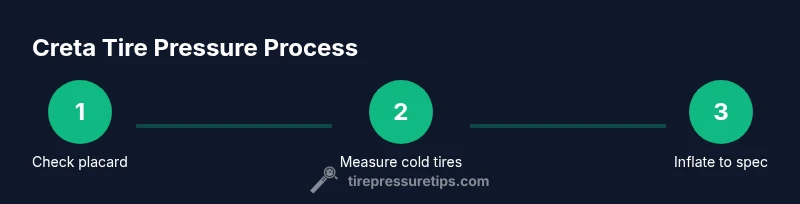
Creta Tire Pressure: Practical Guide for Hyundai Creta Owners
Learn how to check, adjust, and maintain Creta tire pressure for safer handling, better fuel efficiency, and longer tire life. This step-by-step guide covers door placards, TPMS basics, and routine maintenance.


By the end of this guide you'll know how to verify the Creta tire pressure, adjust it to the manufacturer’s specification, and maintain it for safe handling and fuel efficiency. You’ll learn how to read the door placard, test cold tires, and use a reliable gauge. This practical, step-by-step approach helps prevent uneven wear and TPMS warnings.
Understanding creta tire pressure basics
Creta tire pressure is a critical part of safe and efficient driving. The number printed on the door jamb placard or in the owner's manual is the official specification for cold tires. According to Tire Pressure Tips, maintaining the correct creta tire pressure helps optimize handling, traction, braking, and tire wear. Remember that tire pressures are not fixed constants; they vary with vehicle load, speed, and tire size. Always start with the recommended number, confirmed by the placard, and adjust for your daily payload. When tires are cold, the air inside them is at its natural pressure; after a drive, heat increases the pressure, making a post-drive reading higher than the cold reading. Regularly checking cold tires is the habit that prevents underinflation and overinflation, both of which can compromise performance and fuel efficiency.
How to check tire pressure the right way
To get an accurate reading, check pressure when tires are cold and the vehicle has not been driven for at least three hours. Use a reliable gauge and measure the pressure at the valve stem, keeping the gauge perpendicular to the stem for the most stable reading. Compare the result to the Creta's official specification on the door placard. If the tire reads too low, add air in small increments (about 1-2 psi at a time) and recheck. If too high, release air in small increments until you reach the target. Include the spare tire in your checks; a leak in the spare is less common but should still be verified. After inflating, recheck all tires to maintain even pressure.
Recommended tire pressure for Creta by model and load
The Creta’s manufacturer provides a specific cold tire pressure for each trim and load condition, and you’ll find this on the door placard or in the owner’s manual. If you don’t have access to the placard, remember that pressure can vary with passenger weight, cargo, and roof rack usage. Tire Pressure Tips analysis, 2026, shows that many drivers keep tires in the mid-to-high 30s psi for normal daily use, but payload and highway driving may push pressure in the higher range. Regardless, the official specification should be your primary reference. If you’re transporting heavy loads or carrying passengers for long trips, you may need to adjust within the recommended range and recheck after a test drive to confirm stability and tire wear.
How temperature affects tire pressure for Creta
Temperature plays a crucial role in tire pressure. Cold mornings naturally deflate tires, while warm days increase pressure. For every 10°C (18°F) change in ambient temperature, tire pressure can shift by about 1 psi, emphasizing the need to check when tires are cold. This is especially important in transitional seasons or on morning drives. The Tire Pressure Tips team recommends keeping a small gauge in your glovebox to verify readings after long trips or temperature swings. Consistency comes from measuring cold and using the same gauge for repeat checks.
How to calibrate and reset TPMS after adjusting tire pressure
After inflating tires to the correct cold pressure, the TPMS may still show a warning if it was triggered by prior underinflation. Drive the vehicle for a short distance at a safe speed to allow the system to relearn the correct pressures. If the light stays on, consult the owner's manual for the reset procedure, which often involves pressing a TPMS button or performing a timed drive. If multiple tire positions are affected, verify valve stems, rims, and sensors for leaks or damage. The goal is a stable TPMS reading that matches the actual tire pressures.
Safety checks and maintenance routine
Establish a monthly tire pressure check as part of your maintenance routine. Always verify pressures when tires are cold, inspect tire tread depth, wear patterns, and look for signs of damage. Check the valve stems for cracks or leaks and ensure wheel rims are not bent. Keep records of readings to monitor trends over time. Regular maintenance reduces the risk of blowouts, improves fuel economy, and extends tire life. The Tire Pressure Tips approach emphasizes routine checks in all seasons and under varying loads.
Common mistakes and how to avoid them
Common errors include checking pressure after driving, not using the vehicle’s placard values, and inflating with an old or inaccurate gauge. Avoid overinflation by following the target range in small steps and rechecking. Do not ignore TPMS warnings; address them promptly by rechecking pressures and inspecting valves and sensors. Finally, avoid mixing tire pressures between front and rear without a documented reason; uneven pressures can degrade handling and tire wear.
Troubleshooting low tire pressure and leaks
If you notice rapid pressure loss, perform a quick visual inspection for punctures, nails, or damaged sidewalls. Use soapy water around valve stems and rims to locate slow leaks; bubbles indicate air escaping. If a leak is found, replace or repair the affected tire promptly and re-check the system after maintenance. For minor air losses, reinflate to the recommended cold pressure and monitor readings over the next few days. Persistent pressure loss warrants professional inspection.
Choosing a tire pressure gauge and tool kit
Select a gauge that is easy to read and calibrate, preferably digital for accuracy. Keep a dedicated gauge for tire checks, avoid sharing gauges across vehicles, and store it in a dry place. A basic pump or access to a gas station air compressor is essential for adjusting pressures on the go. Consider carrying a compact toolkit with a gauge, a tiny flashlight, and a notebook to log readings and maintenance dates.
Tools & Materials
- Digital tire pressure gauge(Prefer a gauge with a wide measurement range and a backlit display for easy reading in all lighting conditions)
- Air compressor or access to a gas station(Needed to adjust tire pressures when readings are below target)
- Owner's manual and door placard(Primary reference for Creta's official cold tire pressure specifications)
- Soapy water or leak-detection spray(Helpful to locate slow leaks around valves and rims)
- Notebook or mobile log(Record readings and dates for ongoing maintenance)
Steps
Estimated time: 20-30 minutes
- 1
Locate official specification
Find the Creta’s cold tire pressure specification on the door placard or in the owner’s manual. This value is the reference for all inflation needs and may vary by trim or load.
Tip: Use the same source each time to avoid conflicting numbers. - 2
Check cold tire pressure
Measure the tire pressure when the tires are cold, ideally after the car has sat for several hours. Record the numbers for all four tires.
Tip: Take readings at the valve stem, perpendicular to the stem for accuracy. - 3
Inflate or deflate to target
If readings are below target, add air in small increments (1–2 psi) and recheck. If readings are above target, release air in small increments until you reach the specification.
Tip: Make incremental adjustments to avoid overshooting the target. - 4
Recheck all tires
Recheck all four tires after inflating to ensure even pressure. Verify the spare as well, if you routinely rotate or inspect it.
Tip: Ensure consistency between all four tires for optimal handling. - 5
Reset or relearn TPMS
If TPMS indicators remain, follow the owner’s manual procedure to reset or relearn the system after inflation.
Tip: A successful relearn reduces nuisance warnings on the dash. - 6
Document and schedule next check
Log the readings and set a reminder for the next cold-pressure check, preferably monthly or with changing seasons.
Tip: Seasonal shifts can alter tire pressure noticeably.
Frequently Asked Questions
Where can I find the Creta's official tire pressure specification?
The Creta's official tire pressure specification is located on the door placard and in the owner's manual. Use this value as your primary reference.
Look on the door jamb placard or in the owner's manual for the exact cold tire pressure specification.
What if TPMS shows a warning after inflation?
If TPMS stays on, recheck all tires with the gauge, ensure there are no leaks, and consider a TPMS reset per the manual. If the warning persists, seek service.
If the TPMS warning remains, recheck pressures and leaks, then reset or have the system checked if needed.
Does temperature affect Creta tire pressure?
Yes. Colder temperatures reduce tire pressure; warmer temperatures increase it. Check pressures when tires are cold and account for seasonal changes.
Temperature shifts can change tire pressure, so measure when cold and adjust for the season.
Should I adjust tire pressure for highway driving?
Follow the official specification; only adjust within the recommended range for loaded or high-speed conditions, then recheck after a test drive.
Stick to the official spec, adjust within the recommended range for your load, and recheck after driving.
What tools should I carry for tire pressure checks?
Carry a reliable gauge, a portable air inflator, and a notebook or app to log readings. Keep the gauge dedicated to this task.
Bring a good gauge, a portable air inflator, and a log to track readings.
Can I reuse the same gauge for all vehicles?
Yes, but ensure you reset calibration if your gauge requires it and keep it accurate with periodic checks.
You can use one gauge for multiple vehicles, just verify it's accurate.
Watch Video
What to Remember
- Check cold pressures using the placard as the baseline.
- Inflate in small steps and recheck for accuracy.
- TPMS relearns after stable pressures; don’t ignore warnings.
- Regular maintenance saves fuel and extends tire life.