Best Tire Pressure and Inflator: How to Choose and Use Them
A comprehensive, step-by-step guide to selecting the best tire pressure targets and inflators. Learn how to read your sticker, choose a reliable gauge, and implement a simple maintenance routine for safety, efficiency, and longer tire life.


You’ll learn how to identify your vehicle’s exact tire pressure targets, compare inflator options, and build a simple routine to check and adjust tires. By following these steps, you can maximize safety, improve fuel efficiency, and extend tire life. Start with the door sticker or manual, choose a reliable inflator, and check tire pressure monthly and after long trips.
Why accurate tire pressure matters
According to Tire Pressure Tips, keeping tires inflated to the recommended pressure is a foundational safety habit. Proper inflation improves steering responsiveness, shortens stopping distances, and reduces the risk of blowouts on hot summer days or chilly mornings. In addition to safety, correct tire pressure supports even tread wear, better fuel economy, and a smoother ride. This section helps you understand where to find the right targets, how to pick a reliable inflator, and how to form a simple check routine you can perform at home or on the road. We’ll cover the science behind pressure changes, common mistakes, and practical steps you can implement this weekend.
Key ideas include using the right tools, measuring tires when cold, and aligning inflation with manufacturer guidance rather than subjective feel.
How to find your recommended tire pressure
Your vehicle’s recommended tire pressure is usually listed on a door jamb sticker and in the owner's manual. That number represents the cold tire pressure and may differ between the front and rear tires, especially on vehicles with asymmetric weight distribution or performance packages. Never rely on the tire sidewall maximum pressure as your target; it’s the maximum load capacity and not your daily driving target. If you drive more often with heavier loads or carry family gear, adjust within the manufacturer’s allowed range. Tire Pressure Tips analysis shows that staying within the recommended range helps preserve even tread wear and predictable handling, which is critical for safe driving across weather conditions.
Practical steps: locate the sticker, note the front and rear targets, and remember that these pressures assume tires are cold (not after a highway trip).
Inflator types: gauges and pumps
There are three common inflator types: manual pumps with a built-in gauge, digital portable inflators, and inflators with built-in gauges that auto-read when attached to the valve stem. Manual pumps are inexpensive and reliable but require effort; digital inflators provide quick readings and a digital display, which reduces misreading; built-in gauge inflators simplify the workflow by combining inflation and measurement in one unit. When choosing, prioritize accuracy, ease of use, and a gauge range that covers typical passenger-car pressures. Also consider battery life for cordless models, nozzle compatibility with valve stems, and a compact form for storage.
Pros and cons: Manual pumps are budget-friendly but labor-intensive; digital gauges are precise and fast but can be battery-dependent; inflators with integrated gauges are convenient but costlier and may be bulkier. Pick a device you’ll actually use regularly to ensure consistent checks.
How to measure tire pressure correctly
Begin with cold tires and a calibrated gauge. Remove the valve cap, press the gauge or inflator nozzle straight onto the valve stem, and take a reading without wiggling the tool. If you over- or under-inflate, re-check after a few minutes. If you’re adjusting pressure, add air in small increments, recheck, and repeat until you’re within the target range. Replace the valve cap securely after measurement. For multiple tires, check all four (or six if applicable) to ensure balanced handling and even wear. Regularly inspecting tire pressure also helps you catch slow leaks early, preserving tire life and safety.
Tips: read the gauge level at eye level for accuracy, avoid inflating to the maximum sidewall pressure, and verify inflation after adding air because heat from driving can slightly raise readings.
Temperature and seasonal effects on PSI
Temperature fluctuations influence tire pressure. As ambient temperatures rise, air expands, increasing PSI slightly; as temperatures drop, air contracts and PSI decreases. This means that a tire that’s properly inflated in summer may appear underinflated in winter on the same stretch of road. Tire Pressure Tips recommends checking pressure when tires are cold, ideally before the day’s first trip, to avoid heat-caused over-reading. If you live in areas with wide temperature swings, make a cadence to check pressures monthly or after significant weather changes.
Practical takeaway: prioritize a consistent routine over chasing a single perfect number, especially during seasonal transitions.
Maintenance routine and check frequency
Create a simple monthly routine that fits your schedule. Keep a small notebook or app record of each tire’s pressure reading, the date, and any notes about leaks or wear. Check pressures after long trips or when tires have been hot from driving, but calibrate to cold readings before you drive again. If you rely on a TPMS, don’t ignore the system—readings may still lag behind real pressure changes.
Maintenance tips: schedule a monthly check on the 1st or 15th, and set reminders for seasonal changes; use the same gauge for consistency to reduce measurement variance.
Common mistakes and how to avoid them
Common mistakes include inflating to the tire’s maximum pressure on the sidewall, ignoring TPMS warnings, and mixing gauge types without recalibrating. Another pitfall is inflating when tires are hot, which leads to over-reading and over-inflation once they cool. A reliable routine minimizes guesswork and reduces risk. Remember to replace worn-out gauges and keep valve caps in place to prevent leaks.
To avoid mistakes, always verify readings with the same device, never rely on visual judgement alone, and store inflators in a cool, dry place to preserve accuracy.
Quick-start checklist for a safe check
- Find the vehicle’s recommended cold tire pressure from the door sticker or manual.
- Use a calibrated gauge to read each tire when cold.
- Inflate to the target, checking after each adjustment.
- Recheck all four tires and ensure valve caps are snug.
- Note readings and any leaks for future reference.
- Store your inflator and gauge in an easily accessible place.
Storing and transporting inflators and gauges
Keep inflators in a dedicated pouch or bin in the trunk or cargo area to prevent damage and accidental discharge. When not in use, keep gauges away from direct sunlight and moisture. For cordless inflators, recharge regularly and test the battery periodically to avoid unexpected failures during a roadside check. If you travel often, consider a compact inflator with a built-in gauge and a universal nozzle set to accommodate different valve stems across your vehicle family.
Best practice workflow to maintain tire pressure
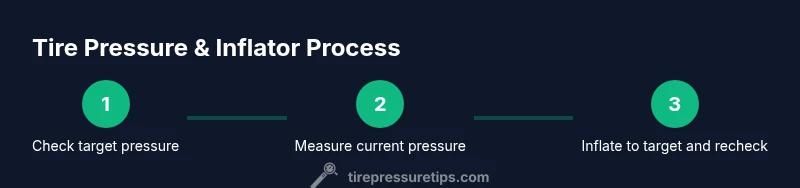
A reliable workflow combines reading the sticker, checking cold pressures, inflating as needed, and re-checking after inflation. Establish a monthly cadence and a pre-trip habit before long drives. Keep good records and replace worn tools promptly. The Tire Pressure Tips team recommends treating pressure checks as part of your routine maintenance just like checking oil or coolant, because consistent tire pressures contribute to safer driving and longer tire life.
Tools & Materials
- Digital tire pressure gauge(Built-in display, choose one with easy unit switching (psi/kPa))
- Portable air inflator or air compressor(Prefer models with a built-in gauge and auto-stop feature)
- Owner’s manual or door jamb sticker(Use as your primary reference for target pressures)
- Valve cap remover or spare valve caps(Useful if valve caps are damaged or missing)
Steps
Estimated time: 30-60 minutes
- 1
Identify target pressure
Locate your vehicle’s recommended tire pressure on the door jamb sticker or the owner's manual. Note separate targets for front and rear tires if shown, and remember these are for cold tires.
Tip: Always start with cold tires to avoid over-reading from heat. - 2
Check current pressure
Remove the valve cap and firmly press the gauge on the valve stem. Read the pressure on the gauge without wiggling the tool to prevent inaccurate readings.
Tip: Take readings from all four tires for balanced handling. - 3
Inflate to target
If below target, attach the inflator and add air in small increments. Stop periodically to recheck pressure to avoid over-inflating.
Tip: Inflate in 1–2 psi increments and verify after each adjustment. - 4
Recheck and seal
After reaching the target, recheck the pressure on all tires, reseal valve caps, and store your tools properly.
Tip: Ensure valve caps are tight to prevent slow leaks. - 5
Document and schedule
Record readings and set a reminder for the next check, especially when weather is changing or after long trips.
Tip: Keep a simple log to track leaks or performance changes. - 6
Periodic maintenance
Inspect gauges for accuracy and replace worn tools. Regular checks help prevent unsafe driving conditions.
Tip: Calibrate gauges periodically if you notice drift in readings.
Frequently Asked Questions
What is the recommended tire pressure for most passenger cars?
The recommended pressure is listed on the door jamb sticker or in the owner's manual and may differ between front and rear tires. Check these sources rather than relying on the sidewall maximum.
Check the door sticker or the owner's manual for your specific car's cold tire pressure targets.
How do I know if my TPMS is faulty?
If the TPMS light stays on after inflating to the target or the readings seem inconsistent, have the system checked. It's common for sensors to drift or lose battery power.
If the warning light stays on after inflating, have the system checked and calibrated.
Do I need an expensive inflator model to stay safe?
No. A reliable digital gauge with a portable inflator is typically sufficient for regular checks. Choose a model with accurate readings, simple operation, and good reviews.
A good digital gauge and portable inflator will cover most needs without breaking the bank.
Can temperature changes affect tire pressure?
Yes. Colder temperatures can lower pressure and hotter days can raise it. Check pressures when tires are cold for consistency, especially during seasonal changes.
Temperature changes can shift tire pressure, so check when tires are cold.
How often should I check tire pressure?
Check at least monthly and before long trips. Also recheck after significant temperature shifts or if you notice changes in handling.
Aim for a monthly check and after long drives or weather changes.
Watch Video
What to Remember
- Know your car’s exact tire pressure targets from the sticker/manual.
- Use a reliable gauge and inflator combination for accurate readings.
- Check tires cold, regularly, and after temperature changes.
- Document readings and maintain your tools for long-term reliability.