Tyre inflator with gauge: practical guide for 2026
Learn how to choose, use, and maintain a tyre inflator with gauge to achieve accurate tire pressures, improve safety, and optimize fuel efficiency. This guide covers gauge types, reading methods, safety, and TPMS considerations.


This guide helps you choose and use a tyre inflator with gauge to ensure accurate tire pressures and safer driving. You’ll learn how to select a gauge, connect the inflator, read pressure readings accurately, and verify results across seasonal changes, plus practical troubleshooting steps and safety reminders. This article assumes basic car maintenance knowledge and focuses on hands-on steps you can complete in minutes.
Why every driver needs a tyre inflator with gauge
Having the right equipment to check and adjust tire pressure is essential for safe driving. A tyre inflator with gauge gives you real-time pressure readings, so you can inflate to the correct PSI without guesswork. According to Tire Pressure Tips, consistent tire pressures reduce rolling resistance, improve handling, and extend tire life. The Tire Pressure Tips team found that many drivers fail to check pressure regularly, leading to uneven wear and reduced fuel efficiency. A portable inflator with an accurate gauge helps you address these issues quickly, whether you're filling at home, at the gas station, or on the road. Investing in a reliable unit with a clear gauge reduces the surprise of a low-pressure tire on a long trip and empowers you to maintain safe vehicle performance. Consider features such as gauge type, accuracy, accuracy range, built-in storage, and compatibility with your tires.
How to choose a tyre inflator with gauge
When selecting a tyre inflator with gauge, prioritize accuracy, reliability, and ease of use. Look for a gauge that shows pressure in the units you prefer (PSI, bar, or kPa) and a clear, legible display. Check the maximum inflation pressure to ensure it covers your tire range, especially for SUVs and light trucks. If you drive in changing seasons, a gauge with a wide accuracy tolerance and a digital readout can reduce misreads in bright sun or cold mornings. Consider the power source (cigarette lighter, USB, or rechargeable battery) and the length of the hose, which affects accessibility in tight spaces. Finally, read user reviews and consider a model with automatic shut-off to prevent over-inflation.
Types of gauges and when to use them
There are two main gauge types: analog dial gauges and digital displays. Analog gauges are simple and robust; they don’t require batteries and work in most weather conditions, but can be harder to read for some users. Digital gauges provide quick, precise readings and often feature backlit displays for easy reading at night. For casual drivers, a combination inflator with a built-in gauge is convenient. For professionals, pairing a separate high-precision gauge with a robust inflator can improve accuracy. In both cases ensure the gauge is rated for your expected pressure range. If you own multiple vehicles, consider a unit with replaceable tips and a flexible hose for better access to wheel valves.
How to read tire pressure correctly
Read cold tire pressures, since heat inflates readings. Remove valve cap, attach the inflation nozzle, and read the gauge without pressing the trigger on the inflator for an accurate baseline. If the gauge has a rotating head, align it straight for a clear reading. Compare the reading to the vehicle’s recommended pressure printed on the door placard or in the manual. If you overinflate, release air and recheck. Allow the tire to cool for a few minutes after driving to recheck if needed. Ensure you’re using the correct unit (PSI vs kPa).
Practical usage and safety tips
Always inflate from cold. Park on a flat surface, engage parking brake, and keep hands away from moving parts. Monitor the gauge steadily and stop as you approach the target; never exceed the recommended pressure. If inflating a severely underinflated tire, take a short break and inspect for punctures. For outdoor use, shield the gauge from direct sun and wind to prevent misreadings. Turn off the inflator before disconnecting, and use any built‑in air bleed valve for fine adjustments.
Maintenance and care for your inflator
Routinely inspect the hose for cracks, test the gauge accuracy with a known reference, and replace worn seals. Store in a protective case to guard against dust and moisture. Clean the nozzle and air intake to prevent debris from contaminating readings. If the device has a battery, check it regularly and replace when needed. Calibrate or compare readings occasionally to ensure measurement accuracy, and replace any worn components promptly. Keep a spare valve stem tool on hand for quick valve access.
Common mistakes and how to avoid them
Common mistakes include inflating to the wrong target due to misread gauge, using damaged hoses, and not checking tires when cold. Always measure cold tires for accuracy; recheck after a short drive if needed. Avoid using the inflator for more than a few minutes continuously to prevent overheating. Do not rely on the vehicle’s TPMS as a sole indicator; TPMS is a warning, not a precise gauge. Ensure the nozzle fits the valve stem tightly to prevent air leaks.
Using with TPMS and seasonal considerations
TPMS readings can help verify your gauge, but do not rely on them for precise inflation. Use the inflator gauge to set target pressures as per the vehicle placard. In winter, tire pressure drops; in summer it rises. Check tire pressures at least once a month and before long trips. If your tires frequently lose pressure, inspect for leaks or damaged valves. When storing the inflator for long periods, keep it in a cool, dry place to preserve the gauge's accuracy.
Tools & Materials
- Tyre inflator with gauge(Choose a model with built-in gauge; ensure it covers your tire range (PSI, bar, or kPa))
- Air hose(Flexible, length 1-2 meters for access to all wheels)
- Valve cap remover(Helpful for stubborn valve caps)
- Power source(12V car lighter adapter or rechargeable battery)
- Tire pressure reference chart(Vehicle placard or owner manual)
- Calibration tool or known-pressure reference(For gauge calibration checks)
- Storage bag or case(Protect gauge during transit)
Steps
Estimated time: 5-10 minutes
- 1
Prepare the inflator and vehicle
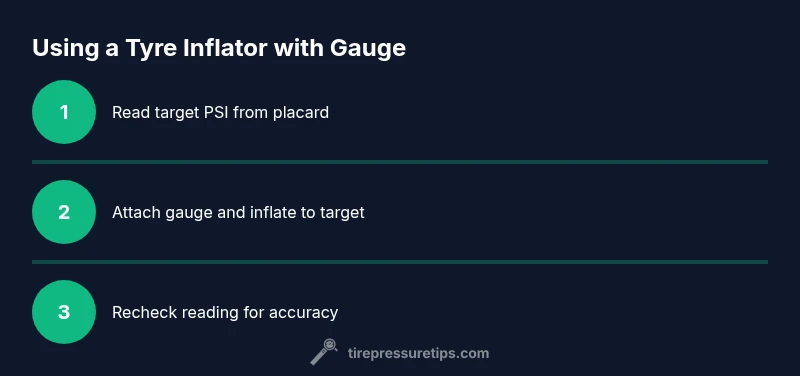
Place the inflator within easy reach and verify the gauge is legible. Locate the tire you intend to adjust and clear the area around the valve stem. If you’ll be inflating at a station, ensure the vehicle is safely parked with the engine off and the parking brake engaged.
Tip: Have the vehicle on a flat surface and cold tires for best accuracy. - 2
Check target pressure
Consult the vehicle placard or owner’s manual for the recommended PSI. Note the units (PSI, bar, or kPa) used by your gauge and the label on your tire. Decide whether you’ll inflate to the recommended level or adjust for specific wear or load conditions.
Tip: Cold tires yield the most reliable baseline reading. - 3
Attach gauge and start inflate
Remove the valve cap, press the inflator nozzle onto the valve stem, and trigger the inflator to begin. Keep the gauge in line with your line of sight and monitor the reading as it approaches the target.
Tip: Avoid wiggling the nozzle which can cause leaks. - 4
Adjust to target pressure
If underinflated, continue inflating until the gauge shows the target pressure. If overinflated, briefly release air until you reach the mark, then recheck.
Tip: Use the inflator’s bleed valve if available for precise adjustment. - 5
Recheck after stabilization
Detach the nozzle and replace the valve cap. If possible, wait 3–5 minutes or drive a short distance, then recheck to confirm stability, especially in hot weather.
Tip: Pressure rises with heat, so recheck when tires are cold. - 6
Store and document
Clean the nozzle, coil the hose, and store the inflator in a dry place. If you’re tracking maintenance, note the date and pressure for future reference.
Tip: Keep a simple log to monitor tire health over time.
Frequently Asked Questions
What is a tyre inflator with gauge?
A tyre inflator with gauge is a portable device that inflates tires and provides a real-time pressure reading. It helps you reach the correct PSI, improving safety and efficiency.
A tyre inflator with gauge inflates tires and shows the pressure as you go, so you can hit the right level without guesswork.
How do I know my gauge is accurate?
Check the inflator against a known reference gauge or compare readings with a trusted station gauge. If readings differ consistently, calibrate or replace the unit.
Compare readings with another gauge to verify accuracy, and calibrate if needed.
Can I use a digital gauge with an inflator?
Yes. Many inflators have built-in digital readouts, and some allow you to attach an external digital gauge. Ensure compatibility with your hose and valve fittings.
Yes, you can use a digital gauge with many inflators, provided the fittings match.
What is cold tire pressure?
Cold tire pressure is the reading you get when the tire is at ambient temperature, not heated by driving. It’s the baseline for accurate inflation.
Cold pressure means the tire hasn’t heated up from driving, giving you the true baseline reading.
How often should I check tire pressure?
Check at least once a month and before long trips. Seasonal changes and load can affect pressure, so regular checks help prevent problems.
Check monthly and before long trips to stay safe and efficient.
What safety precautions should I follow when inflating tires?
Park on a flat surface, engage the parking brake, and keep hands away from the valve and moving parts. Do not overinflate and disconnect the inflator carefully.
Park on level ground, stay clear of moving parts, and never overinflate.
Watch Video
What to Remember
- Choose an accurate gauge with the right range
- Check cold tires and follow the vehicle placard
- Calibrate or cross-check readings when in doubt
- Maintain your inflator to preserve accuracy