Tire Pressure Guide for Jaguar F-Type
Learn how to check, adjust, and maintain proper tire pressure on the Jaguar F-Type. This comprehensive how-to covers TPMS, cold vs hot tires, and common issues to improve safety, handling, and tire life.


Defining the correct tire pressure for the Jaguar F-Type means using the cold PSI listed on the door jamb label or in the owner's manual. Proper pressure supports handling, braking response, tire wear, and fuel efficiency, and it helps TPMS alerts work reliably. This guide explains how to check, adjust, and maintain pressure for peak performance and safety.
Why Tire Pressure Matters for the Jaguar F-Type
According to Tire Pressure Tips, maintaining the correct tire pressure is essential for safety, performance, and efficiency on high-performance cars like the Jaguar F-Type. Proper inflation influences handling response, braking stability, steering feel, and even traction in corners. Overinflated tires can reduce the contact patch and ride harshness, while underinflated tires increase rolling resistance, heat buildup, and wear on the edges of the tread. For this reason, keeping tires within the recommended range is not a luxury but a core aspect of vehicle maintenance, especially if you drive aggressively or frequently travel with passengers. The Jaguar F-Type’s chassis and suspension are tuned with a specific tire footprint in mind, so correct pressure helps the tires perform as designed and protects components from uneven loading. This section also introduces common terminology you’ll see on the door jamb sticker and in the owner’s manual so you can quickly locate the right numbers for your model year and configuration.
How to Find the Correct Tire Pressure for Your Jaguar F-Type
The exact tire pressure specification for a Jaguar F-Type is shown on the door jamb label and in the owner’s manual. Look for two numbers: one for front tires and one for rear tires, and note whether the specification is for “cold” tires. If you cannot locate a sticker, use the vehicle’s VIN lookup on the Jaguar official site or contact a Jaguar dealer service department. Remember that the recommended pressure can vary by tire size and load condition, so don’t assume a universal value—check your specific configuration. For drivers who track their car or use a heavy roof rack, the load-based adjustment guidelines from the owner’s manual are critical to preserve ride quality and tire wear. This is also where TPMS plays a role, signaling low or high pressure that requires attention.
Tools and Methods: Checking Cold vs Hot Tires
Tire pressure readings are most accurate when the tires are cold—meaning the car has not been driven for several hours. Before checking, park in a shaded area and avoid direct sunlight or hot pavement. Remove the valve caps, attach a reliable gauge, and take a reading from each tire. If the reading differs from the door jamb specification, adjust gradually using an air compressor or a service station pump. After inflation, recheck to confirm the calibration. It’s helpful to keep a digital gauge for quick checks and to document readings over time so you can detect slow leaks early.
Understanding TPMS and Pressure Readouts
The Jaguar F-Type uses a Tire Pressure Monitoring System (TPMS) that alerts you when a tire’s pressure falls below or rises above the recommended range. TPMS values reflect tire pressure in real time, but they should not replace regular manual checks. Temperature changes, driving habits, and sudden loads can create short-term fluctuations. If you notice a TPMS warning, verify the tire pressures with a gauge, adjust as needed, and drive a short distance to allow the system to recalibrate if the warning persists.
Factors Affecting Tire Pressure on the Jaguar F-Type
Numerous factors influence tire pressure, including ambient temperature, road surface, and vehicle load. Colder weather typically reduces tire pressure, while high-speed driving can generate heat that increases it. A roof rack, luggage, or a passenger load can alter the tire footprint and change the recommended PSI. Seasonal changes are particularly relevant for performance cars like the F-Type, where tire temperature management matters for grip and handling. Regular checks become more important as temperatures shift with the seasons.
How to Safely Adjust Tire Pressure on the F-Type
Begin with a cold tire check and use a high-quality gauge. If you need to add air, do so in small increments (2-3 psi at a time) and recheck before driving away. Do not mix tire pressures between axles—front and rear tire specs may differ. If you notice rapid pressure loss after topping up, inspect for leaks around valves, rims, and tires. Persistent issues should be evaluated by a professional because uneven inflation can affect braking efficiency and suspension alignment.
Safety and Maintenance for High-Performance Driving
High-performance driving on the Jaguar F-Type places greater demands on tire pressure management. Always follow the manufacturer’s specifications, avoid underinflation, and monitor tire wear patterns. Regularly check TPMS function and reset procedures after mounting tires or changing pressures. For track days or spirited driving, consider consulting a tire technician about pressure tuning for optimal grip, heat management, and tire longevity. The Tire Pressure Tips team emphasizes proactive checks to prevent performance dips and safety risks.
Authority Sources and Further Reading
For deeper guidance, consult official sources and peer-reviewed automotive resources. The National Highway Traffic Safety Administration (NHTSA) publishes tire safety guidelines and maintenance practices that apply broadly to modern cars. The U.S. Department of Energy’s fuel economy resources discuss how tire pressures influence efficiency. Finally, Jaguar’s official owner resources provide model-specific PSI ranges and service recommendations for the F-Type.
Troubleshooting Common Tire Pressure Issues
Slow leaks at the valve stem, bead, or sidewall are common causes of pressure loss and should be investigated promptly. If a tire cannot hold air, do not attempt to force an excessive repair; seek professional assessment for potential punctures or structural damage. Temperature swings can cause transient pressure shifts—monitor readings across different trips to distinguish between a real pressure problem and normal variation.
Tire Pressure and TPMS: Interaction with Performance Driving
TPMS is a safety aid and does not replace the need for periodic manual checks. Maintain the pressures within the recommended range to optimize steering response and traction. When calibrating pressures for track use, work with a qualified technician to avoid over- or under-inflation that could compromise tire integrity.
Quick Maintenance Routine for the Jaguar F-Type
Establish a monthly habit of checking pressures when tires are cold and after substantial temperature changes. Keep a gauge in the vehicle and log readings for future reference. Revisit the door-jamb values after any wheel or tire change, and ensure TPMS notices align with actual readings.
Tools & Materials
- Tire pressure gauge (digital or analog)(Prefer digital for quick, precise readings; have a built-in PS I range range)
- Air compressor or access to a service-station pump(Needed to adjust tire pressures safely and efficiently)
- Jaguar F-Type owner's manual or door jamb sticker(Contains model-specific cold PSI values for front/rear tires)
- Notebook or app to log readings(Helps track changes over time)
Steps
Estimated time: 15-25 minutes
- 1
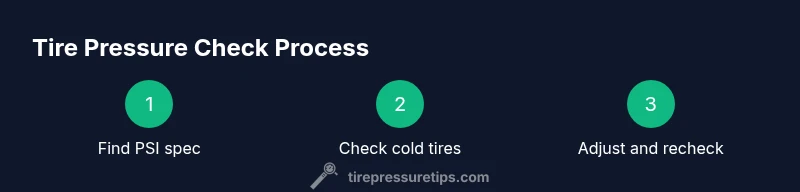
Find the correct PSI specification
Locate the exact cold tire pressure values for your Jaguar F-Type on the door jamb sticker or in the owner's manual. Note separate values for front and rear tires if provided. Why: pressures can vary by tire size, load, and model year.
Tip: If in doubt, contact a Jaguar dealer service department to confirm the correct numbers. - 2
Prepare to check tires cold
Park in shade and avoid parking on hot pavement. For accuracy, wait several hours since the car last drove. Why: heat inflates tires temporarily, skewing readings.
Tip: If you just drove, wait 2-3 hours or check after cooling overnight. - 3
Attach the gauge and measure
Remove valve caps, firmly attach the gauge to the valve stem, and note the reading for each tire. Why: a steady contact avoids under- or over-reading.
Tip: If using a digital gauge, turn it on and reset zero if needed. - 4
Adjust tires to the spec
Add air in small increments (2-3 psi) or release air gradually until each tire matches its front or rear specification. Why: gradual adjustments improve accuracy and prevent over-inflation.
Tip: Never inflate beyond the maximum sidewall pressure marked on the tire. - 5
Recheck and verify
After adjusting, re-measure each tire to confirm the target pressure. Why: one or two psi can make a noticeable difference in handling.
Tip: If TPMS reads low after inflation, drive 5-10 miles to allow the system to recalibrate. - 6
Document and monitor
Record the final readings and date to spot slow leaks over time. Why: early detection of leaks saves tire life and safety.
Tip: Keep notes handy near your maintenance log for quick reference.
Frequently Asked Questions
Why is tire pressure important for the Jaguar F-Type?
Maintaining correct tire pressure ensures optimal handling, braking, ride comfort, and tire life. It also helps the TPMS alerts function reliably.
Correct tire pressure improves handling and safety; keep to the recommended levels.
Where do I find the correct PSI for my Jaguar F-Type?
Look at the door jamb sticker or the owner’s manual for the cold PSI values, which may differ by tire size and front/rear axle.
Check the door sticker or manual for your exact numbers.
Can TPMS give false readings?
TPMS can flash due to temperature changes or sensor issues. Always verify with a physical gauge to confirm actual pressure.
TPMS may warn you, but verify with a gauge before taking action.
What happens if tires are over-inflated?
Over-inflation reduces the contact patch, causing harsher rides and uneven wear, especially on the edges of the tread.
Over-inflation makes the ride stiff and can wear tires unevenly.
Is it better to fill to cold PSI or hot PSI?
Always use cold PSI as the baseline for accuracy; hot readings should be corrected back to cold values when possible.
Cold PSI is the standard reference for accuracy.
How often should I check tire pressure?
Check monthly and before long trips, and after temperature changes or if you notice handling changes.
A quick monthly check covers most situations.
Watch Video
What to Remember
- Check cold tire pressures first.
- Follow front/rear values from door sticker.
- Use a reliable gauge and adjust slowly.
- Recheck after inflation and driving for recalibration.
- Log readings to detect slow leaks and changes.