Understanding the Tire Pressure Icon: A Practical Guide
Learn what the tire pressure icon means, how to read it on your dash, and steps to verify, inflate, and reset TPMS for safer, more efficient driving.


The tire pressure icon signals low tire pressure or TPMS variance. In this guide you’ll learn how to recognize the icon, interpret its meaning for different tires and temperatures, and how to verify and adjust pressure safely. We’ll cover seasonal changes and TPMS reset steps.
What the tire pressure icon means and where you’ll see it
The tire pressure icon is a warning symbol that appears on your instrument cluster when tire pressure is low or when TPMS detects a discrepancy between sensors. In most vehicles it appears as a stylized tire with an exclamation mark, or a similar graphic, and may be accompanied by letters such as TPMS. You’ll encounter this icon on the main dashboard, a digital display, or a heads-up display, depending on the model. According to Tire Pressure Tips, accuracy improves when tires are cold and the vehicle has not been driven recently, since driving heats tires and raises readings. Always consult your owner’s manual for your exact symbol and the recommended corrective steps, as some cars show multiple indicators for wheel-specific issues.
Why the tire pressure icon matters for safety and efficiency
The tire pressure icon matters because underinflated tires compromise handling, braking, and fuel efficiency, while overinflated tires can reduce traction and cause uneven wear. Proper inflation improves fuel economy, extends tire life, and enhances safety in wet or icy conditions. Tire Pressure Tips emphasizes that a consistent, knowledge-based approach to inflation reduces the risk of tire failures and blowouts. When the icon lights up, you should verify all tires, including the spare if applicable, and ensure they meet the vehicle’s recommended pressures printed on the door jamb placard or in the owner’s manual. Regularly checking tire pressure also helps you spot slow leaks due to punctures or damaged valves.
How temperature, driving, and tire type affect readings
Tire pressure changes with temperature: cooler conditions typically lower PSI, while heat from driving raises it. A cold-start reading is the most accurate baseline. Speed and load also influence pressure; a fast-drive can marginally increase apparent pressure, while carrying heavy loads can raise friction and heat, altering readings. The tire type matters too: modern low-profile or run-flat tires respond differently to temperature shifts and may require more frequent checks. Because of these factors, you should measure pressures when the tires are cold and recheck after a long drive or extreme temperatures to ensure accuracy. This section highlights that the tire pressure icon can reflect a real pressure issue, not just a temporary fluctuation.
How to verify which tire is affected and measure pressure
If a single tire is low, the icon may not specify which wheel is affected. Use a tire pressure gauge to test each tire in a cold state, starting from the left front and moving clockwise to avoid confusion. Compare the readings to the vehicle’s recommended pressure from the placard or manual, not the tires’ maximum rating. If a tire reads below the target pressure, deflate or inflate accordingly and recheck. Don’t forget to check the spare tire if your vehicle calls for it. A methodical approach helps you pinpoint leaks or damaged components such as valves, stems, or rims.
Step-by-step actions when the icon appears
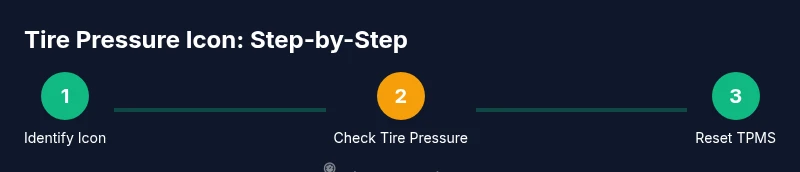
When the tire pressure icon appears, you should take immediate steps to verify and correct air pressure. First, Park in a safe location and turn off the engine. Then gather your gauge, manual, and a reliable source of air for inflation. Slowly check each tire when cold, adjust to the vehicle’s recommended PSI, and recheck. If readings are significantly off or the icon persists after inflation, inspect for leaks or valve damage and consider professional service to check TPMS sensors. After inflating to spec, recheck across all tires and reset TPMS if your vehicle requires relearning.
TPMS reset and relearn basics
Some vehicles require a TPMS relearn procedure after inflating or replacing tires. This process varies by model; consult the owner’s manual for exact steps. In many cases, you drive the car for a short distance above a certain speed to relearn automatically, or you may need to use a relearn tool or access the vehicle’s menu to complete the process. If the TPMS light remains on after inflation, there may be a sensor fault or a weak battery in a sensor unit. Professional inspection is advised if the light stays lit.
Common mistakes that trigger false alerts
Common mistakes include inflating tires while they are hot, relying on the maximum published tire pressure rather than the recommended level, and neglecting the TPMS relearn when tires are changed. Also, relying on old or inaccurate gauge readings can mislead you into over- or under-inflating. Regular calibration of gauges and cross-checking with the vehicle’s recommended PSI helps prevent misinterpretation of the icon.
Seasonal considerations and maintaining year-round pressure
Seasonal changes can cause noticeable PSI variation. In cold weather, pressures drop; in hot weather, pressures rise. You should check tire pressure at least once a month and before long trips, especially during temperature shifts. A targeted maintenance plan for winter and summer can prevent comfort issues, improve fuel economy, and extend tire life. Tire Pressure Tips recommends documenting readings to monitor trends over time and adjusting routines as needed.
Quick reference checklist you can follow at home
- Confirm tire pressures with cold tires using a calibrated gauge.
- Inflate all tires to the manufacturer’s recommended PSI.
- Recheck after inflation and adjust if necessary.
- If TPMS remains on after inflation, consider sensor inspection.
- Record readings and check for leaks or damage.
Tools & Materials
- Digital tire pressure gauge(Calibrated; reads psi and kPa; consider a gauge with a bleed button for fine adjustments)
- Vehicle owner’s manual / door jamb placard(Contains exact recommended pressures per tire position)
- Air source with stable, safe output(Prefer a regulated air compressor for consistent inflation)
- Notebook or mobile device for logging(Helpful for tracking readings over time)
- Clean cloth(Wipe the valve stem and gauge nozzle to prevent debris from entering)
Steps
Estimated time: 20-30 minutes
- 1
Prepare and locate target pressure
Read the recommended tire pressure for your vehicle from the door jamb placard or owner’s manual. Ensure tires are cold—at least three hours since driving. Gather your gauge and air source before starting.
Tip: Use the cold tire baseline for accuracy; inflate only when tires are cold. - 2
Check each tire with a gauge
Start with the left front tire and proceed clockwise. Take your time to ensure the gauge seat is clean and not leaking. Record the reading for each tire.
Tip: If a tire reads low, note the value before inflating to the target level. - 3
Inflate to the recommended PSI
Add air gradually and recheck after each small addition. Do not exceed the vehicle’s recommended pressure as shown on the placard. Be mindful of temperature effects when inflating.
Tip: Utilize the gauge’s bleed feature to reach the exact target pressure. - 4
Recheck all tires
After inflating, recheck each tire to confirm it now matches the target PSI. Confirm the spare (if applicable) is properly inflated as per your manual.
Tip: A second check helps catch a slow leak you might have missed the first time. - 5
Reset or relearn TPMS if required
If your vehicle prompts a TPMS relearn or you replaced tires, follow the manual’s relearn procedure. This can involve driving for a short distance or using a vehicle menu.
Tip: If TPMS warning persists, inspect sensors and valve stems for damage or corrosion. - 6
Document and inspect
Log the final pressures and inspect tires for wear, punctures, or sidewall damage. Check wheel rims and valve cores for leaks.
Tip: Regular checks help prevent unexpected failures and improve safety.
Frequently Asked Questions
What does the tire pressure icon look like and where will I see it?
The icon is a warning symbol on the dash indicating low pressure or a TPMS discrepancy. It appears on the instrument cluster or digital display and may be accompanied by TPMS text or a tire graphic.
The tire pressure icon is a dash warning that shows up when pressure is low or TPMS detects a sensor issue.
Should I ignore the icon if my tires look fine?
No. Always verify with a gauge and inflate to the recommended level. If the light stays on after inflation, check for leaks or TPMS sensor issues.
No—check with a gauge and inflate to spec; if it stays on, get a TPMS check.
Can temperature cause the tire pressure icon to appear?
Yes. Cold temperatures lower tire pressure and can trigger the icon. Recheck after a temperature change and adjust as needed.
Temperature changes can trigger the icon; recheck and adjust to the recommended pressure.
How often should I check tire pressure?
Check monthly and before long trips, especially during seasonal changes or after tire rotations or replacements.
Check monthly and before long trips, especially with seasonal changes.
What if TPMS won’t relearn after inflation?
Ensure all tires are inflated to spec and check for sensor damage or dead batteries. If needed, perform the manufacturer’s relearn procedure or seek service.
If TPMS won’t relearn after inflating, check sensors and follow the relearn steps or seek service.
Is the tire pressure icon always related to one specific tire?
Sometimes the icon doesn’t specify which tire. Use a gauge to measure all tires to locate the low one.
Often it doesn’t indicate a specific tire; measure each tire to find the low one.
Can I rely on the maximum tire pressure printed on the tire?
No. Use the vehicle’s recommended PSI from the placard or manual rather than the tire’s maximum rating.
No—use the vehicle’s recommended PSI, not the max rating on the tire.
What to Remember
- Check tires cold before inflating.
- Inflate to the vehicle’s PSI specification.
- Use TPMS as a diagnostic aid, not a sole source.
- Reset TPMS after tire changes or inflation as required.
- Maintain a regular, documented tire-pressure routine.