Odyssey Tire Pressure: Check, Inflate, and Maintain
Learn to check, inflate, and maintain the correct odyssey tire pressure for your Honda Odyssey. Step-by-step guidance on gauges, TPMS, and temperature effects from Tire Pressure Tips.


By following these steps, you’ll confidently check and adjust the tire pressure on a Honda Odyssey, account for cold-weather changes, and maintain optimal rolled resistance. You'll locate the correct psi, use a gauge, and set pressures for all tires, including the spare. This guide from Tire Pressure Tips helps you stay safe on the road.
Why Odyssey tire pressure matters
Maintaining proper odyssey tire pressure is a simple, high-impact habit that improves safety, handling, and fuel economy for your Honda Odyssey. According to Tire Pressure Tips, correct pressures help the tires maintain shape during cornering, distribute load evenly, and reduce wear on tire shoulders. For families and commuters, this small check pays off in confidence and long-term savings. In the Odyssey, the recommended cold tire pressure balances ride quality with rolling resistance, increasing fuel efficiency and reducing tire heat buildup on longer trips. Being mindful of odyssey tire pressure also supports even tread wear, which extends tire life and keeps replacement costs predictable. By keeping pressures within the vehicle spec, you minimize uneven wear and flattening that can compromise grip in wet conditions. In practice, a quick weekly check keeps you aligned with the car’s engineering goals and your safety expectations.
Checking the recommended tire pressure for the Odyssey
To start, locate the recommended tire pressure on the driver's door jamb placard or in the owner's manual. For most Honda Odyssey models, this number represents cold inflation and applies to all primary tires. Do not rely on the pressure you read after driving; heat from operation increases psi and can mask true pressure. Always measure when the tires are cold, ideally after the car has sat for at least three hours or after overnight rest. Also verify the spare tire’s target pressure in the manual; some Odysseys use a different spec for the temporary spare. Note that TPMS may alert you to low pressure before you manually read the gauge, but a manual check confirms accuracy and helps identify slow leaks.
How to measure correctly with a gauge
Measuring tire pressure accurately starts with using a reliable gauge and a clean valve stem. First, ensure the valve stem is free of dust and debris. Remove the valve cap and press the gauge onto the valve stem firmly so no air escapes. Read the reading quickly and record it. If the reading is below or above the target, adjust. Re-check after inflation to confirm the final pressure matches the spec. For best accuracy, check each tire in the same sequence. If you’re unsure about gauge accuracy, test against a known reference or have it calibrated.
Adjusting pressure for different conditions
Your Odyssey’s tire pressure needs may shift with load, temperature, and driving style. When carrying a full family load or luggage, you might inflate closer to the higher end of the recommended range to maintain stability. In hot weather or prolonged highway travel, check pressure more frequently because air expands with heat. If you regularly tow or haul heavy items, consult your manual for any special guidance on rear axle pressures. Remember that over- or under-inflation reduces grip in wet weather and accelerates wear. Always adjust to the vehicle’s official spec rather than guessing.
TPMS and spare tire considerations for the Odyssey
TPMS helps by alerting you to under-inflation, but it does not replace periodic manual checks. If TPMS indicates a decrease, inspect for leaks, punctures, or a faulty sensor. The spare tire is part of your overall maintenance plan; check its pressure according to the owner's manual and inflate it to the specified level before a long trip. Keep caps on valve stems to avoid dirt ingress, and test TPMS after any air change, sensor rotation, or wheel service. If you notice TPMS behaving unexpectedly, consult with a technician.
Seasonal and temperature effects on odyssey tire pressure
Temperature swings impact tire pressure because air expands with heat and contracts when it’s cold. In practice, a drop in ambient temperature can reduce psi, while a warm drive can raise it. To maintain consistency, check pressures in similar conditions, ideally in the morning before driving. If you live in areas with large seasonal shifts, consider adjusting pressure for winter or summer according to the placard’s guidance and your driving needs. Regular checks help catch slow leaks before they become safety issues.
Authoritative sources
For authoritative guidance on tire pressure, consult official sources and major publications. The National Highway Traffic Safety Administration provides safety guidance on tires and inflation standards, including how to read placards and interpret TPMS alerts. Consumer Reports offers independent testing and practical advice on tire maintenance, including how to select gauges, compare inflation methods, and understand temperature effects. Always cross-check your vehicle-specific recommendations in the Odyssey owner’s manual and on the door placard, since real-world pressures depend on trim and load.
Tools & Materials
- Tire pressure gauge(Calibrated recently; choose digital or dial with clear readout)
- Air compressor or access to a filling station(Ensure it has an accurate built-in gauge or bring a separate gauge)
- Owner's manual or door placard(Used to verify the recommended psi for front and rear tires)
- Notebook or app to log readings(Helpful for tracking pressure trends over time)
- Valve cap removal tool (optional)(Keep caps clean to prevent debris; not strictly necessary)
Steps
Estimated time: 60-90 minutes
- 1
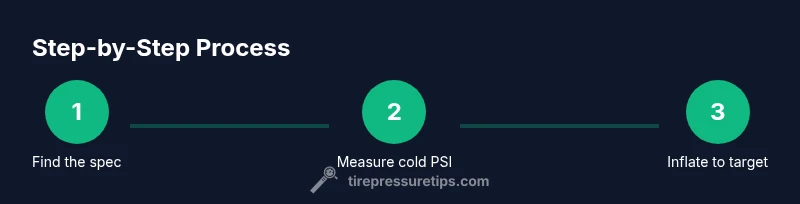
Find the recommended pressure for your Odyssey
Identify the correct psi from the driver’s door placard or the owner’s manual. This is the cold-inflation target for the primary tires, and it may differ from your spare's requirement. Make a note of both front and rear values if provided, and remember to check for any special guidance for trims or loads.
Tip: Use the placard as your primary source; the manual is a backup in case the placard is unreadable. - 2
Check tires when cold
Park the vehicle so tires are not warmed by recent drive, ideally after sitting for a few hours. Cold readings reflect true inflation and help you avoid under- or over-inflation caused by heat. Repeat for all four primary tires and the spare if applicable.
Tip: If you must drive a short distance to a pump, check again after the drive to see how heat affected the pressure. - 3
Attach gauge and read pressure
Remove the valve cap, firmly press the gauge onto the valve stem, and read the result. Note the reading quickly to prevent air loss. Compare with your target; if low, plan to inflate; if high, prepare to deflate.
Tip: Ensure the valve stem and gauge contact are airtight for an accurate reading. - 4
Inflate or deflate to target psi
Add air in small increments or release air until the gauge reaches the exact target. Check each tire in the same order and verify the reading again after adjustments. Avoid over-inflating beyond the recommended range.
Tip: Inflate in 1-2 psi steps and recheck to avoid overshoot. - 5
Recheck all tires
After adjustments, re-measure every tire to confirm all are within spec. Include the spare if planned for regular use or long trips. Close valve caps firmly to prevent air leakage and dirt ingress.
Tip: Consider a quick road test to confirm how the car feels with the new pressures. - 6
Record readings and monitor
Document the final pressures and the date, especially if you’re checking seasonally. Monitoring helps detect slow leaks or TPMS discrepancies and supports maintenance planning.
Tip: Keep a simple log; note any leaks or recurring changes.
Frequently Asked Questions
How often should I check the Odyssey tire pressure?
Check at least once a month and before long trips. If you notice a TPMS alert or a slow leak, inspect tires sooner.
Check monthly and before long trips; address any TPMS alerts promptly.
Can TPMS replace manual pressure checks?
No. TPMS is a warning system; it helps you identify under-inflation, but it doesn’t provide exact readings or catch slow leaks in all scenarios.
TPMS warns you of low pressure, but you should still read the tires with a gauge.
Is it safe to drive with underinflated tires?
Driving on under-inflated tires increases wear and the risk of blowouts, reduces fuel efficiency, and can impair handling. Address pressure before long trips.
No—under-inflation is unsafe and should be corrected before driving far.
Should I adjust pressure for a full load?
Yes. When carrying a full load, inflate within the higher end of the recommended range if the placard allows, to maintain stability and even tire wear.
Yes, adjust toward the higher end of the spec when carrying heavy loads.
Can I use any gauge, or should I buy a specific type?
You can use either a digital or dial gauge, but choose one you can trust and calibrate it occasionally for accuracy.
Use a reliable gauge and recheck its accuracy from time to time.
Does altitude or temperature affect tire pressure?
Yes. Temperature and altitude change can affect tire pressure; check pressures more often during large temperature swings and adjust per the placard guidance.
Temperature and altitude can change pressures; check more often during weather changes.
Watch Video
What to Remember
- Check cold tires before long trips.
- Always follow the Odyssey placard for psi targets.
- Use a proper gauge and re-check after inflation.
- Account for temperature and load when setting pressures.