Mercedes-Benz C300 Tire Pressure: Check, Adjust, and Maintain
Learn how to check, adjust, and maintain tire pressure on the Mercedes-Benz C300. Practical steps, TPMS tips, and safety reminders from Tire Pressure Tips to keep your ride safe and efficient.


By the end of this guide, you will know how to check, adjust, and maintain the tire pressure on your Mercedes-Benz C300, including how to read TPMS alerts, when to adjust for load, and how to maintain even pressure across all four tires. You’ll need a reliable gauge, the vehicle’s door jamb placard, and the owner's manual for reference.
Understanding Why Tire Pressure Matters on a Mercedes-Benz C300
Maintaining proper tire pressure is more than a matter of keeping your tires from looking flat. For a Mercedes-Benz C300, correct tire pressure supports safe handling, even tire wear, and optimal fuel efficiency. According to Tire Pressure Tips, correct pressures also help protect the tire sidewalls during cornering and braking and improve response to road imperfections. The C300’s steering, suspension, and braking systems are designed around consistent tire contact with the road, so mismatched pressures can alter ride quality and control. Start by locating the official pressure spec on the door jamb placard and in the owner's manual, then verify with a reliable gauge. Always compare each tire to the same spec to ensure uniform performance across the vehicle.
Tip: If the car is older or has aftermarket wheels, verify the spec with the manufacturer or dealer, since some variations exist between trim levels. This is part of a broader maintenance mindset that Tire Pressure Tips champions for long-term tire life and safety.
How TPMS Works on the C300
The Tire Pressure Monitoring System in the C300 continuously monitors tire air pressure and alerts you when readings fall below or above the recommended range. When a notification occurs, you should check each tire with a gauge and adjust accordingly. The system uses wheel sensors and a central ECU; calibration occurs when you reset after adjusting pressures or rotating tires. Regular pressure maintenance helps TPMS stay accurate and reduces nuisance warnings. Keep in mind that TPMS alerts are a signal, not a replacement for manual measurements. If you repeatedly get alerts after inflating to the recommended level, consult a professional to inspect for leaks or sensor faults. This TPMS behavior aligns with general guidance from Tire Pressure Tips and standard automotive maintenance practices.
Where to Find Your Official Tire Pressure Specs
Each Mercedes-Benz C300 has a door jamb placard on the driver's side; the placard lists front and rear recommended PSI values, often with a range for normal and load conditions. The owner’s manual also provides the spec, and some trims show separate values for cold weather or high-load scenarios. Check both sources and rely on the lower of the two values when in doubt. If a tire sidewall shows the maximum PSI, do not inflate to that number; use it only as a limit. For most drivers, the placard values provide the target you should aim for during regular driving, with adjustments for heavy loads or all-season tires as noted by the manufacturer and Tire Pressure Tips.
How Temperature Affects Tire Pressure
Temperature fluctuations affect tire pressure because air expands in heat and contracts in cold. In practical terms, a cold morning can noticeably reduce readings, while a hot day can raise them. The safest approach is to check tire pressures when the tires are cold (at least a few hours after driving) and adjust only to the cold-spec value from the placard. This practice helps maintain consistent handling and wear across the C300’s four tires, and reduces the risk of over- or under-inflation due to ambient temperature shifts.
Tools and Safety for Checking Tire Pressure
You will need a few simple tools to perform accurate checks. A reliable tire pressure gauge (digital or analog) is essential. The driver’s door jamb placard confirms the correct PSI. For inflating, use a portable air compressor or access to a gas station with a pump. Safety first: avoid inflating on hot tires, cap valve stems when finished, and never exceed the maximum PSI printed on the tire sidewall. If you’re unfamiliar with the process, practice in a safe, level area and keep a record of your readings for future checks. This approach aligns with Tire Pressure Tips guidance on safe maintenance practices.
Reading and Interpreting Tire Pressure Readings on the C300
Readings should reflect the wheel pair on each axle, as front and rear pressures are often different due to load distribution. Compare each tire to the door jamb spec, not the neighboring tire. If a tire reads significantly below the spec, inflate incrementally and recheck after the tire cools. If you notice readings drifting upward after inflation or you hear hissing, there may be a leak. In such cases, consult a professional to inspect the valve stem and seal areas. Accurate readings are foundational to safe driving on a luxury sedan like the C300.
Adjusting Pressure for Load, Speed, and Driving Conditions
Your tire pressures may need adjustment based on how you drive you C300—daily commuting, long highway trips, or heavy cargo. Increase pressure slightly for higher speeds or heavier loads as recommended by the placard, but never exceed the tire’s maximum rating. Conversely, if you regularly drive with passengers or gear, check pressures more frequently and adjust as needed. Balanced pressures improve cornering stability, braking response, and tire wear, which is especially important on a performance-oriented luxury sedan.
Ensuring Even Pressure Across All Four Tires
Even pressure across all four tires ensures even tread wear and predictable handling. Inflate each tire to the same cold-spec value, then rotate tires as recommended by Mercedes-Benz. When rotating, recheck pressures after driving a short distance to account for temperature changes and settling. This method prevents uneven wear patterns and preserves the vehicle's intended handling characteristics.
Seasonal and Long-Term Tire Pressure Maintenance
Seasonal changes necessitate rechecking tire pressures, especially when switching between warm and cold months. Temperature-driven variations mean you should re-verify pressures after a few weeks and before long trips. Regular checks support fuel efficiency, prolong tread life, and maintain optimal handling. Tire Pressure Tips emphasizes making tire pressure a standing maintenance item in your vehicle care routine, particularly for luxury models like the C300 where precise pressure contributes to performance and safety.
Common Mistakes to Avoid
Avoid inflating tires to the maximum on the sidewall, guessing pressures without a gauge, or relying on “feel” alone. Do not ignore TPMS warnings or assume all tires require the same pressure. Never inflate warm tires; always aim for the cold-spec value and verify after they have cooled. Also avoid mixing different tire brands or models with different pressure tolerances on the same axle, as this can cause uneven handling and wear.
When to Seek Professional Help
If you notice persistent TPMS warnings after inflating to the recommended pressure, or if a tire repeatedly loses air, there may be a puncture, valve stem issue, or sensor fault. A Mercedes-Benz dealership or a qualified tire shop can diagnose TPMS sensor health and explore wheel-related issues. Regular professional inspections complement your DIY checks and help prevent costly issues tied to improper tire pressure.
Tools & Materials
- Digital tire pressure gauge(Calibrate before use; read to the nearest 0.5 psi for accuracy)
- Owner's manual(Contains official PSI values and safety cautions)
- Door jamb tire information placard(Shows front/rear PSI values; location: driver’s door frame)
- Air pump or access to gas station pump(Use to adjust pressure if needed)
- Notebook or digital logger(Record readings for trend tracking)
- Valve cap(Keep caps clean; prevents debris entry)
Steps
Estimated time: 15-25 minutes
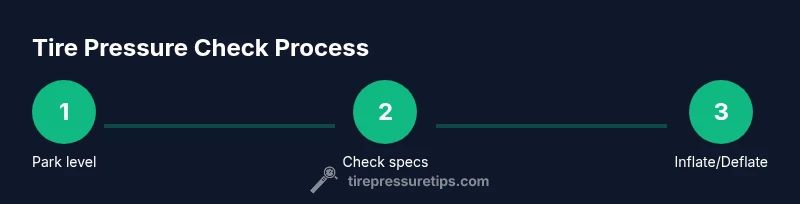
- 1
Park on level ground
Turn off the engine, engage the parking brake, and let the car sit on a level surface to prevent skewed readings from tilt or load. This ensures your measurements reflect the true tire pressure when cold.
Tip: If possible, wait at least a couple of hours after driving to ensure tires have cooled. - 2
Locate the official pressure specs
Read the PSI values on the door jamb placard for both front and rear tires. Cross-check with the owner's manual; use the lower value if there is any discrepancy due to load or trim differences.
Tip: Note that some trims show different values for cold weather; use the cold-spec value as your target. - 3
Check tires cold
If you just drove, wait an appropriate amount of time or drive a short distance and return to measure again. Cold tires provide the most accurate readings.
Tip: Avoid checking immediately after a long drive to prevent inflated readings. - 4
Remove valve caps
Carefully remove the valve stem caps and keep them in a safe place to prevent loss. Expose the valve stem so you can attach the gauge.
Tip: Inspect valve stems for damage or corrosion while caps are off. - 5
Read pressure with gauge
Place the gauge squarely on the valve stem and press straight in, then read the displayed value. Repeat for each tire.
Tip: Use a gauge with a bleed/adjust feature for fine-tuning without removing air in steps. - 6
Inflate or deflate to spec
If a tire is below spec, add air until you reach the target value. If above, release air gradually until it matches the spec. Recheck after tires cool.
Tip: Inflate in small increments and recheck; overinflation can cause harsh ride and uneven wear. - 7
Check all tires
Repeat the process for both front and rear tires, and don’t forget about the spare if you carry one. Uniform pressure supports balanced handling.
Tip: Ensure all tires reflect the same cold-spec target for ideal performance. - 8
Reinstall valve caps and record
Replace caps securely, wipe away any dust, and log the final readings with corresponding tire positions for easy reference.
Tip: Keep your log in the car or a phone note for quick future checks.
Frequently Asked Questions
Why is my TPMS warning light on even after inflating to the recommended pressure?
TPMS warnings can persist if sensors detect a leak, slow leak, or if the system hasn’t recalibrated after changes. Recheck all tires, inspect valves for leaks, and consider sensor health if the light stays on.
TPMS warnings may linger if a leak is present or if the system hasn't recalibrated after changes; recheck and, if needed, have sensors inspected.
Can I inflate tires to the maximum PSI listed on the sidewall?
No. The sidewall maximum is a safety limit, not the target. Always use the cold-spec value from the door placard or owner's manual for inflation.
No—the sidewall max is a limit. Use the car’s recommended cold PSI from the placard or manual.
Is it safe to use a gas station air pump for my C300 tires?
Gas station pumps are convenient, but their gauges can be inaccurate. Always verify with your own gauge and adjust as needed.
Gas station gauges can be off, so use your own gauge to confirm the reading.
How often should I check tire pressure?
Check at least once a month and before long trips. Temperature changes, loads, and seasonal shifts can warrant extra checks.
Check at least monthly and before long trips; weather and loads may require more frequent checks.
What about winter tires and temperature extremes?
Winter conditions require more frequent checks because cold temperatures lower tire pressure. Recheck after cold snaps and adjust to the cold-spec values.
In winter, check more often; cold temps lower pressure, so recheck and adjust to cold-spec values.
What if the TPMS sensor seems faulty?
If you suspect a faulty sensor, have a professional diagnose the system. TPMS sensor faults can stem from battery failures or corrosion.
If you suspect a sensor fault, get a professional check it. Sensors can fail due to battery or corrosion.
Watch Video
What to Remember
- Check cold tires against the placard spec
- Use manual readings to verify TPMS signals
- Maintain equal pressures on all four tires
- Seasonal checks prevent wear and improve efficiency
- Document readings for future maintenance