Is 33 Tire Pressure Good? A Practical PSI Guide for Cars
Is 33 tire pressure good? Learn how to verify your vehicle's recommended PSI, how 33 psi fits typical ranges, and practical steps to maintain safe, efficient tires for better grip and fuel economy.


Is 33 tire pressure good for your car?
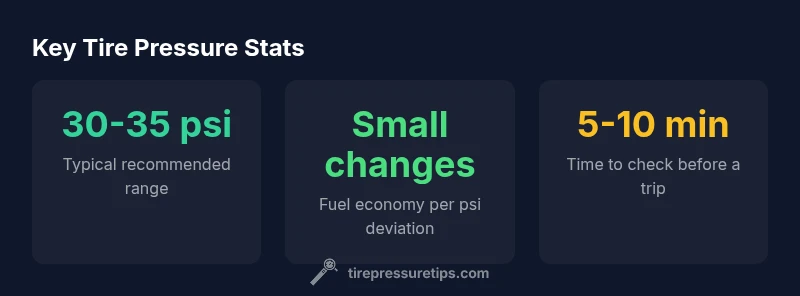
According to Tire Pressure Tips, the short answer is: it depends on your vehicle and how you drive. The idea that a fixed number works for every car is outdated. 33 psi might be perfectly acceptable for many mid-size sedans with standard loads and evenly worn tires, but some vehicles call for different figures. The manufacturer’s recommended cold-inflation tire pressure is the benchmark you should follow; it’s usually printed on the driver’s door jamb, in the owner’s manual, or on the fuel filler door. That number accounts for the car’s weight distribution, suspension, and tire size. Checking this is the best starting point. In practice, 33 psi falls within the common range used by many automakers (often between 30 and 35 psi), but variations exist: some compact cars run a bit lower, while certain SUVs and high-performance tires run higher. Temperature, tire wear, and passenger/load changes can shift the effective pressure when the tires heat up during operation. So, is 33 tire pressure good? It can be, but only if it matches the vehicle’s official specification and your current load and driving conditions.
How is tire pressure specified, and where should you find the number?
Tire pressure is specified as a cold-inflation PSI value rather than the pressure when the tire is hot. This means you should check tires before driving or after they’ve cooled for at least three hours. Look for the recommended value on the driver-side door placard, inside the fuel filler door, or in the owner’s manual. Some vehicles also specify different pressures for the front and rear tires. When you see 33 psi on a gauge, use it only if the placard indicates a similar target; otherwise, the correct number may be higher or lower. Keep in mind that metric readings like kPa exist in some regions, but the vehicle’s label will tell which unit to use. Calibrating gauges and using a cold tire measurement are essential to avoid inflated or deflated readings caused by heat or recent driving.
Factors that influence your ideal PSI
Your optimal tire pressure isn’t static. Several factors can push you above or below the placard value:
- Vehicle load: A heavier load usually requires higher pressure to maintain shape and tread contact.
- Tire type and size: Performance tires, run-flat designs, or larger wheels may have different recommended pressures.
- Driving style: High-speed or aggressive driving can slightly change the effective pressure distribution.
- Seasonal temperature: Colder weather lowers tire pressure, while heat raises it; temperature compensation is important for consistent readings.
- Tire wear: Worn tires may not hold pressure the same way as new ones; consult the wear indicators and adjust accordingly. These items explain why 33 psi might be ideal in one scenario and less suitable in another.
Checking and adjusting: a practical, step-by-step guide
To ensure accuracy, follow these steps:
- Park on a level surface and wait for tires to be cold (at least 3 hours since driving).
- Remove the valve cap and attach a reliable gauge; check both front and rear tires.
- Compare readings to the placard; add air if below the recommendation or release air if above.
- Recheck after reallocation of the air; ensure all tires are within the target range.
- Reinstall valve caps and note the date of the check for periodic follow-ups.
- If you use a TPMS, use it as a supplementary guide – it won’t replace a precise measurement when temperatures shift.
Seasonal and load variations: what changes with winter and summer
In winter, colder air reduces tire pressure, so you may see numbers drop by a few psi. In summer, heat can push pressure higher. If you transport heavy cargo or frequently switch between city commuting and highway driving, you may need to adjust pressure beyond the standard placard. The key is to recheck after temperature swings or load changes and aim to stay within the manufacturer’s specified range. Tire Pressure Tips emphasizes using a cold-inflation measurement as the baseline to avoid misinterpretation caused by heat expansion.
Common mistakes that skew readings
- Relying on a gauge that’s out of calibration or using a “hot reading” after driving.
- Ignoring the placard in favor of a single number found online or from a quick guess.
- Mixing tires with different load ratings or sizes without adjusting pressure accordingly.
- Not accounting for seasonal changes, heavy loads, or weight distribution across the axle.
- Overinflating to compensate for a perceived soft ride, which reduces traction and increases wear in the center tread.
Practical tips and routines for lasting tire health
- Check pressure monthly and before long trips.
- Use a high-quality gauge and calibrate it regularly.
- Keep a small portable gauge in your glove box for quick checks while traveling.
- Align your maintenance calendar with seasonal changes and tire wear indicators.
- Use the TPMS as a secondary alert; rely on a precise cold-measurement gauge for exact pressures. Following these steps helps you keep tires safer, extend tread life, and maintain fuel efficiency.
Quick decision guide: how 33 psi fits common vehicles
- Compact car: 30-34 psi is common; 33 psi may be perfectly fine if listed on the placard.
- Midsize sedan: 32-34 psi is typical; 33 psi often matches the recommended level.
- SUV/Light truck: 34-38 psi is common; confirm with the placard and consider heavier loads.
- Performance tires: Check the exact figure on the placard, as some setups require higher or lower pressure for grip.
- If you’re unsure, err on the side of following the manufacturer’s spec rather than a generic number.
When to consult a professional or consider tire replacement
If you notice persistent underinflation despite inflating to the recommended range, or if tires wear unevenly or develop bulges, schedule a professional inspection. Damaged or uneven wear can indicate internal tire issues or alignment problems that require service.