How Often to Fill Tire Pressure: A Practical Guide
Learn how often to check and fill tire pressure for safety, fuel efficiency, and tire life. Clear cadence, seasonal tips, and TPMS guidance to keep your tires in top shape.


Maintaining proper tire pressure matters for safety, fuel economy, and tire wear. For most drivers, check tire pressure monthly and before long trips, when tires are cold, and adjust to the vehicle placard. This simple cadence helps prevent slow leaks and uneven wear.
Why regular tire pressure checks matter
According to Tire Pressure Tips, maintaining proper tire pressure is about more than avoiding a flat. Correct inflation improves safety, fuel economy, tire wear, and handling. Underinflated tires generate more heat, wear unevenly, and can increase rolling resistance, reducing miles per gallon. Overinflated tires ride harshly and can reduce traction on wet surfaces. The Tire Pressure Tips team emphasizes that most people only notice a problem after a TPMS warning or a visible bulge, but the most reliable approach is proactive monitoring.
In practice, the frequency of checks depends on how you drive, seasons, and tire type. A simple rule of thumb is to check your tires at least once a month and before long trips, especially when you know you’ll carry extra cargo or passengers. Because tires heat up with driving and air expands in warm weather, readings taken after a drive will be higher than cold readings, leading to inaccurate inflation. The best readings come from cold tires, which means measuring before you drive or after the car has sat for several hours. Always compare against the door placard on the driver’s side jamb or the owner’s manual to find the recommended cold inflation pressure.
How often to check and fill tire pressure
A practical cadence starts with a monthly check, then adds a pre-trip check for long journeys or heavy loads. If you rotate tires, replace worn tires, or change to a different tire type, re-check all pressures afterward. Temperature shifts—like moving from a cool garage to a hot day—can alter readings, so use a cold-reading baseline for accuracy. For drivers with TPMS, the system is a helpful safeguard, but it’s not a replacement for regular manual checks. Your goal is to keep every tire within the manufacturer’s recommended range and to avoid underinflation or overinflation that can shorten tire life.
Cold weather and temperature effects on tire pressure
Temperature affects air density inside the tire. In colder weather, air contracts, and pressure drops; in warmer weather, it expands. The practical takeaway is simple: readings should be taken when tires are cold, because after a drive or highway stint the readings can be misleading. Seasonal changes can therefore require re-checking the inflation to keep pace with the new baseline. Don’t rely on a single measurement year-round—schedule periodic checks as seasons transition.
Signs you need to fill or adjust tire pressure
Look for subtle indicators before a TPMS warning: a slight bulge at the sidewall, uneven tire wear on the inner or outer edges, or slightly firmer steering feel when cornering. If you notice reduced fuel economy, this can also signal underinflation. Always compare readings to the door placard and note differences between tires, as some models use different recommended pressures for front and rear tires. If a tire never seems to hold air, it may have a leak, a damaged valve stem, or a puncture that requires inspection from a professional.
How to measure tire pressure accurately
Begin with your tools: a reliable tire pressure gauge and access to a nearby air source. Ensure the tires are cold for the most accurate reading. Remove the valve cap, firmly press the gauge onto the valve stem, and note the pressure. Repeat on all tires, including the spare if you regularly carry a load that makes the spare more relevant. If a tire is below the recommended range, inflate in short bursts, re-check, and avoid overinflation by using the gauge to monitor increments. Replace valve caps securely after reading.
Step-by-step routine you can follow
Create a simple routine that fits your schedule:
- First, locate the recommended cold inflation pressure on the driver’s door placard or owner’s manual.
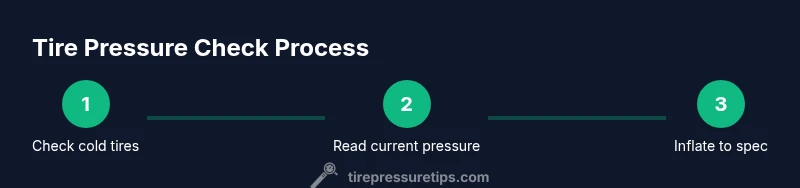
- Next, check each tire while they are cold and note the readings.
- Then, add air in small increments until each tire reaches the target pressure.
- Finally, recheck all tires and install valve caps.
Pro tip: keep a small notebook or phone note with the readings to track changes over time and catch slow leaks early.
Handling different tires and loads
If you routinely carry heavy cargo or passengers, your front and rear tires may require different pressures. Heavier loads can also push pressures higher than the baseline, so adjust accordingly. Ensure the spare tire’s pressure is checked as part of your maintenance, especially if you drive a vehicle with a compact storage space where the spare is used more often. Always consult the placard for your exact vehicle’s requirements and tailor inflation for driven conditions.
Tools and resources for reliable inflation
Essential tools include a reliable gauge (digital or analog), an air compressor at home or a service station, and a tire pressure log. Use the manufacturer’s recommended pressures for accuracy, not a guess. If you drive in extreme temperatures or climates, consider rechecking every 2-4 weeks during seasonal transitions. Online resources, your vehicle manual, and reputable automotive sites can provide model-specific guidance.
Practical safety notes and maintenance habits
Never inflate beyond the tire’s maximum pressure printed on the sidewall. Regularly check for slow leaks around valve stems and tires, especially after pothole impacts or curb strikes. If you repeatedly find underinflation or overinflation, seek professional tire service. Building a habit of monthly checks, combined with pre-trip checks, offers a measurable safety and efficiency benefit.
Tools & Materials
- Tire pressure gauge (digital or analog)(Calibration checks monthly; use for cold readings)
- Air compressor or access to a service station(Use in short bursts to avoid overinflation)
- Vehicle owner’s manual and door placard(Reference for recommended cold inflation pressure)
- Notebook or digital log(Track readings over time to spot slow leaks)
- Valve-cap replacement(Keep caps snug to prevent dirt entry)
Steps
Estimated time: 15-25 minutes
- 1
Find the recommended pressure
Locate the cold inflation pressure on the driver’s door placard or in the owner’s manual for each tire. Note if front and rear pressures differ. This becomes your target before inflating.
Tip: Write down the targets for quick reference during checks. - 2
Check tires when cold
Before driving, or after the car has sat for several hours, read the current pressure with the gauge. Cold readings are the baseline for accurate inflation.
Tip: Avoid checking after a drive; heat skews results. - 3
Read the pressure
Press the gauge onto the valve stem firmly and read the displayed value. Repeat on all tires to confirm consistency.
Tip: If the reading is ambiguous, re-check after a minute. - 4
Inflate to the target
If a tire is below target, add air in small bursts and re-check after each burst. Do not overshoot; aim for the recommended range.
Tip: A calm, incremental approach reduces the risk of overinflation. - 5
Re-check and cap
Once all tires meet targets, re-check all pressures once more and securely replace valve caps.
Tip: Loose caps can let air escape and cause readings to drift. - 6
Log your readings
Record the pressures and date. Tracking over time helps spot slow leaks and seasonal changes.
Tip: Keep a simple table or photo log for easy reference.
Frequently Asked Questions
How often should I check tire pressure?
Most drivers should check tire pressure at least monthly and before long trips. If you drive in extreme temperatures or carry heavy loads, check more often.
Check tires at least monthly and before long trips. If you drive in extreme weather or carry heavy loads, check more often.
Should I check pressure when tires are hot or cold?
Always measure when tires are cold for an accurate reading. Temperature and recent driving heat can give falsely high readings.
Always measure when tires are cold for accuracy. Driving heat can skew readings.
What if my TPMS shows a warning?
Treat a TPMS warning as a sign to check pressure quickly. Reinflate to the recommended level and re-test; if it returns, inspect for leaks or damage.
If TPMS warns, check pressures and reinflate to spec. If it stays low, inspect for leaks.
Can tire pressure differ between front and rear tires?
Yes. Many vehicles have different recommended pressures for front and rear tires. Always follow the placard or manual for each axle.
Front and rear pressures can differ. Follow the placard for each axle.
Does load or accessory weight affect inflation?
Heavier loads can require higher pressures within the recommended range. Adjust inflation accordingly and recheck after loading changes.
Load can require higher pressures within the recommended range; recheck after loading changes.
What tools do I need for reliable inflation?
A good tire gauge, access to an air source, and a log to record readings will make maintenance consistent and reliable.
Use a reliable gauge, an air source, and keep a log of readings.
Watch Video
What to Remember
- Check tires monthly and before trips
- Use cold readings for accuracy
- Inflate to manufacturer targets
- Track readings to spot slow leaks
- Mind seasonal temperature shifts