Citroen C4 Tyre Pressure: Check, Set, and Maintain
Learn how to check and adjust Citroen C4 tyre pressure safely, with TPMS tips, tool lists, and a step-by-step procedure to improve safety, fuel efficiency, and tire life.


By the end of this guide, you will be able to check and adjust citroen c4 tyre pressure safely, understand the factory cold-tyre values, and troubleshoot TPMS alerts. You’ll need a reliable, calibrated pressure gauge, a cold-tire check (vehicle has been stationary for at least 3 hours or driven less than 1 mile), and access to the car’s tire placard. The steps cover measurement, adjustment, and reset tips.
What affects tyre pressure on the Citroën C4?
The tyre pressure you set for your Citroën C4 isn’t a universal number. It depends on the vehicle’s load, the tyre size fitted to your trim, and whether you’re driving in hot or cold weather. To maintain optimum grip, fuel efficiency, and tire life, consult the door jamb placard and the owner’s manual for the exact cold pressures for your configuration. According to Tire Pressure Tips, understanding the difference between the “cold” reference pressures and what you read after a drive is essential for accuracy. The Citroën C4 tyre pressure you see on the placard is intended for cold tyres and level ground; when tyres heat up from driving, the pressure naturally rises, so you should measure when tyres are cold for a valid comparison. This practice helps prevent over-inflation during hot conditions and under-inflation after a cold start, ensuring consistent performance across weather and road conditions.
Finding the right numbers for your Citroën C4
The most reliable source for Citroën C4 tyre pressure values is the vehicle placard near the driver’s door jamb and the owner’s manual. This data is tailored to your specific model, wheel size, and load. If the placard shows values in bar, you can convert to psi using 1 bar ≈ 14.5 psi, but do so only for quick mental checks. For precision, use a gauge and compare against the placard values. Tire pressure in the Citroën C4 should be checked when cold, because heat from driving increases pressure and skews readings. Tire pressures that are too high or too low can reduce grip, uneven wear, and lower fuel economy. Keep a small notebook or a notes app to track readings across seasons and loads, and always verify against the official Citroën data.
TPMS: How the Citroën C4 alerts you to pressure issues
The Citroën C4 uses a Tire Pressure Monitoring System (TPMS) to warn you when a tyre’s pressure deviates from the recommended range. TPMS can alert you to slow leaks or gradual decreases that aren’t obvious by feel. If the TPMS light comes on, start by checking all four tyres with a gauge and compare readings to the placard values. If readings are off, adjust to the recommended cold pressures, then drive a short distance to allow TPMS to reassess. If the light remains on after inflating, there may be a slow leak, or a sensor issue. In that case, seek professional inspection.
Essential tools and setup before you start
Before you touch the Citroën C4 tyres, gather the right tools and confirm you’re working on a level surface with the vehicle cold. You’ll need a calibrated tyre pressure gauge (digital is easiest to read), an air compressor or pump, the vehicle’s tyre placard, and a pen and notebook to document readings. If you’re unsure about wheel type or pressures, refer to the Citroën C4 owner’s manual. Keep in mind the Citroën C4 tyre pressure figures are model-and-wheel-specific, so don’t rely on generic values from other cars. Finally, gloves and eye protection are optional but helpful for hygiene and safety.
Step-by-step: check cold tyre pressure for Citroen C4
To ensure accurate readings for citroen c4 tyre pressure, start with cold tyres on level ground. Remove the valve caps, attach the gauge, and note the readings. Record each wheel’s pressure, then compare with the placard numbers. If any tyre is low, inflate in small increments and recheck. Do not exceed the maximum pressure printed on the tyre sidewall; instead, use the recommended value from the placard.
Managing tyre pressure for loads and long trips
When carrying extra weight or planning a long journey, the Citroën C4 tyre pressure may need a minor adjustment to accommodate the load. The rule of thumb is to inflate slightly within the safe range to preserve stability, steering response, and tire wear. Always recheck after loading the vehicle and after a few miles of driving to account for heat build-up. Maintain equal pressure across all four tyres to ensure balanced handling and even wear patterns. Tire pressure is a critical factor in safety and efficiency, and small changes can yield noticeable gains in grip and fuel economy.
Temperature and weather effects on citroen c4 tyre pressure
Temperature changes have a direct effect on tyre pressure. Cold weather lowers pressure, while hot weather or high-speed driving increases it. For the Citroën C4, you should recheck tyre pressures when the ambient temperature changes by about 15°C (27°F) or more to maintain the placard values. A good habit is to check pressures at the same location and on the same gauge for consistency. If you’re preparing for winter driving, consider adjusting pressures per the Citroën manual and your local climate to preserve comfort and performance.
Common mistakes and how to avoid them on Citroën C4 tyres
Common mistakes include inflating to the maximum sidewall pressure, assuming all four tyres require the same pressure, and inflating after driving. Always check cold pressures first and use the placard values rather than the maximum tire pressure printed on the tire. Do not mix tyres with different pressures or wear patterns, and avoid fastening air quickly as it can overheat the bead. A slow, measured approach helps maintain optimal contact with the road and even wear.
TPMS reset and when to recalibrate after inflating on Citroën C4
Some Citroën C4s allow a manual TPMS reset after inflating or replacing tyres. If you notice the TPMS warning persists after inflating to the recommended cold pressures, consult the owner’s manual for the reset procedure specific to your trim. If the warning returns, there could be a slow leak, a faulty sensor, or an issue with the TPMS control unit. In such cases, a professional inspection is advised. Regular checks improve accuracy and reliability of TPMS readings.
Fuel efficiency and safety impact of correct citroen c4 tyre pressure
Maintaining the correct tyre pressure significantly impacts fuel efficiency and safety. Under-inflation wastes fuel as engines work harder to rotate heavier tyres, while over-inflation reduces grip at road-contact patches. For Citroën C4 owners, a steady, correct pressure enhances cornering stability, braking response, and tire life. Adopting a routine—check pressures monthly and before long trips—helps drivers sustain optimal performance.
Troubleshooting slow leaks and other pressure issues in Citroën C4 tyres
If you detect a slow leak, first recheck the pressures after allowing tyres to cool. Look for punctures, nails, or foreign objects, and inspect valve stems and seals for damage. If the leak persists, seek a tire shop assessment. Do not attempt aggressive DIY repairs on sidewall damage. Slow leaks can often be repaired, but some punctures require tire replacement. Regular checks can catch issues early and prevent dangerous driving conditions.
Final checklist for Citroen C4 tyre pressure
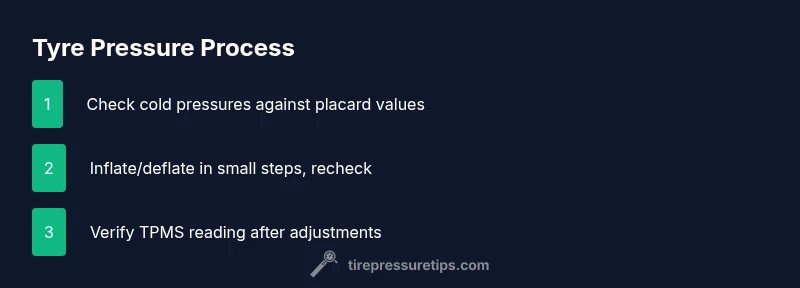
- Check cold tyre pressures against the placard values.
- Use a calibrated gauge and recheck after adjustments.
- Verify TPMS readings and reset if needed.
- Ensure front and rear pressures are appropriate for load.
- Recheck after long trips or seasonal changes to confirm stability.
Quick reference: Citroen C4 tyre pressure best practices
For citroen c4 tyre pressure, keep to the placard values, check when cold, monitor changes with weather, and document readings. Regular maintenance reduces risk, improves handling, and boosts fuel efficiency.
Tools & Materials
- Digital tyre pressure gauge(Prefer a gauge with a range up to at least 60 psi; calibrate regularly.)
- Air compressor or hand pump(Ensure it can deliver precise adjustments and shut off automatically.)
- Tire placard / door jamb sticker(Use the exact Citroën C4 values for front and rear wheels.)
- Owner’s manual (Citroën C4)(Reference for model-specific guidance and TPMS details.)
- Valve caps wrench/tools(Helps ensure caps are not cross-threaded during checks.)
- Notebook or mobile notes app(Log readings and changes for season-to-season comparison.)
Steps
Estimated time: 20-30 minutes
- 1
Prepare tools and vehicle
Park on level ground with the engine off. Gather a calibrated gauge, air source, the Citroën C4 owner’s manual, and the door placard. Remove valve caps and inspect both valves for damage before reading.
Tip: Checking on level ground ensures stable readings; avoid loose surfaces that can shift the vehicle. - 2
Check cold pressures and record
Read each tyre when cold and after the vehicle has been stationary for at least 3 hours (or driven less than 1 mile). Note the four readings in your log and note any disparities between corners.
Tip: If you recently drove, wait for tyres to cool to get an accurate baseline. - 3
Remove valve caps and take initial readings
Take extra care to attach the gauge straight to the valve stem to avoid air leakage. Record the results for all four tyres and compare to the Citroën C4 placard values.
Tip: Take readings twice to confirm accuracy; a small fluctuation is normal. - 4
Inflate/decrease to recommended cold pressures
If any tyre is below the recommended value, inflate in small increments (about 1–2 psi at a time) and recheck. If over, release air gradually and recheck.
Tip: Avoid overcompensation; go slow and verify after each adjustment. - 5
Recheck all tyres and TPMS status
After adjustments, recheck all four readings and confirm the TPMS light is off or steady. If your TPMS remains illuminated after inflation, there may be a leak or sensor issue.
Tip: If TPMS remains on, inspect for nails, punctures, or valve faults before driving further. - 6
Reset TPMS and maintain records
If your Citroën C4 requires a manual TPMS reset after inflating or changing tyres, follow the owner’s manual steps precisely. Update your log with the new pressures and the date.
Tip: Keep a simple calendar reminder for monthly checks and seasonal adjustments.
Frequently Asked Questions
Where can I find the correct tyre pressure for my Citroën C4?
The correct tyre pressure for your Citroën C4 is listed on the door jamb placard and in the owner’s manual. Those values are specific to your model, wheel size, and load. Use those numbers for the initial setup and recheck when conditions change.
Check the door jamb placard and your owner’s manual to find the exact Citroën C4 tyre pressures for front and rear tyres.
Should front and rear pressures be different on the Citroën C4?
Yes, many Citroën C4 configurations have different recommended pressures for the front and rear tyres. Always follow the placard values for each axle. Differences account for weight distribution and handling characteristics.
Yes, front and rear pressures can differ. Follow the placard values for each axle.
Does tyre pressure change with temperature?
Temperature affects tyre pressure: colder air reduces pressure, while heat increases it. Check pressures when tyres are cold and adjust for seasonal changes to maintain accuracy.
Temperature changes affect pressure; check when cold and adjust for the season.
What should I do if the TPMS warning light stays on after inflating?
If TPMS stays on, recheck all tyres for proper pressure, inspect for leaks, and verify sensor function. Persistent warnings may require a professional inspection or TPMS reset.
If the warning stays on, recheck pressures and inspect for leaks; seek professional help if it persists.
Can I inflate tyres when they’re hot?
Inflating tyres when hot is discouraged because readings will be higher than the actual cold values. Always measure and adjust when tyres are cold for accuracy.
Don’t inflate tyres when hot; measure when cold for accurate readings.
Is nitrogen inflation better for Citroen C4 tyres?
Nitrogen offers some stability in pressure over time but does not replace regular checks. For most drivers, maintaining correct pressure with regular air gauges is sufficient.
Nitrogen can help maintain stable pressure, but regular checks with an accurate gauge are still essential.
Watch Video
What to Remember
- Check cold pressures before long trips.
- Refer to the door placard for exact Citroen C4 values.
- TPMS assists, but always verify with a gauge.
- Maintain equal pressures across all four tyres.