Can You Get Low Tire Pressure When It's Hot? Practical Troubleshooting
Explore why hot weather changes tire pressure readings, how to troubleshoot hot-weather tire pressure issues, and practical steps to keep tires properly inflated this summer.


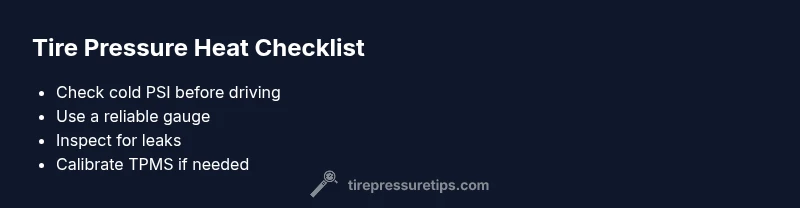
Yes, you can notice what seems like low tire pressure in hot conditions, but heat typically raises tire pressure. A reading taken after driving or in hot weather can mislead you into thinking the tire is underinflated. For accuracy, check cold tires (before driving), compare to the vehicle’s recommended cold PSI, and inflate accordingly. If TPMS warns of low pressure, inspect for leaks or damage.
Can heat affect tire pressure?
Temperature is a major factor in tire pressure. As air heats up, it expands, and pressure inside the tire increases. Conversely, when tires cool, pressure drops. The Tire Pressure Tips team notes that readings taken in hot weather or after a drive can differ from those measured when tires are cold. This isn't a magic drop in pressure you feel on the road, but a physics-based change in the air inside the tire. To avoid false conclusions, always compare current readings to the tire's recommended cold PSI (found on the door jamb or owner's manual) and make adjustments after the tires have cooled. Remember, the core question is whether you can experience low pressure readings in heat; the reality is that hot conditions typically push readings higher, not lower. The key is to use consistent measurement conditions and reliable gauges when diagnosing.
Common scenarios when hot-weather readings confuse drivers
When the sun bakes the pavement or the car has been driving, the tire surface and air inside heat up. A gauge taken immediately after driving might show a higher pressure than the cold baseline, leading some to misinterpret that as a sudden drop elsewhere. The confusion often arises if you observe a tire that appears visibly underinflated or if your TPMS triggers low-pressure alerts during peak heat. In many cases, the issue isn't the tire losing air due to heat; it's that the measurement context changed. Always verify by taking a cold reading after allowing tires to cool for several hours, then compare to the recommended cold PSI. This approach minimizes misreadings and helps you stay safe on the road. According to Tire Pressure Tips, adopting a cold-measurement practice is the most reliable way to diagnose pressure changes tied to temperature.
How to test tire pressure correctly in hot weather
- Let tires cool before testing whenever possible. If you’ve just driven, wait 3 hours or more in a shaded area.
- Use a good-quality gauge and check all four tires, including the spare.
- Read the pressure when tires are cold and compare to the manufacturer’s PSI spec for cold tires.
- If readings are high due to heat, do not inflate to a higher target; instead wait for cooling and recheck.
- If TPMS indicates low pressure consistently, treat it as a potential leak or sensor issue and investigate further.
True causes of consistently low readings in hot weather
While heat often raises pressure, several real issues can cause a low reading to appear or persist in hot conditions:
- Slow punctures or leaks from nails, screws, or wheel punctures that worsen over time.
- Valve stem leaks or poor valve core seals.
- Rim leaks or wheel bead leaks, especially after driving on rough roads.
- TPMS sensor faults or calibration drift.
- Reading errors from damaged gauges or improper application of the gauge.
Diagnostic flow you can start today
Follow a simple sequence to pinpoint the issue without guesswork. Start with the most common, easiest checks and progress to professional help if needed. If this doesn’t solve it, try different gauges and a cold measurement approach as a final check. Safety first: never ignore a persistently low reading that could indicate a dangerous level of underinflation.
Quick fixes you can implement now
If you’re seeing low-pressure readings and can’t explain them by heat, begin with these steps:
- Recheck with a known-good gauge after tires have cooled.
- Inflate to the vehicle’s recommended cold PSI only when tires are cold.
- Inspect for visible signs of damage, cracks, or bulges.
- If a leak is suspected, avoid driving long distances and seek professional repair.
- If TPMS reads low whereas you’ve verified cold PSI, schedule a TPMS inspection or sensor replacement.
Safety, maintenance, and prevention in hot weather
Proactive maintenance helps prevent hot-weather pressure problems:
- Check tire pressures monthly and before long trips, especially in summer.
- Rotate tires and inspect treads for even wear that can affect readings.
- Keep a reliable gauge in your glove box and learn the preferred PSI by model.
- Avoid over-inflating after reading high in heat; always verify with a cold measurement.
- If in doubt, consult a professional to verify TPMS sensors and seal integrity.
Steps
Estimated time: 30-45 minutes
- 1
Identify the tire and prepare tools
Park on a flat surface, gather a reliable tire pressure gauge, and locate the door-jamb PSI spec. Ensure you’re testing cold tires for the most accurate baseline.
Tip: Do not test right after a long drive; heat skews readings. - 2
Let tires cool if recently driven
If you’ve just driven, wait 3 hours or more in shade to let tires return to ambient temperature before testing. If you must check sooner, note the heat factor in your records.
Tip: A cold test is the baseline for accuracy. - 3
Check all four tires and spare
Use the gauge to measure pressure on each tire and record values. Compare against the cold PSI specified by the manufacturer.
Tip: Don’t overlook the spare; it often sits neglected. - 4
Inflate to the recommended cold PSI
Inflate only if the reading is below the cold PSI spec; avoid over-inflating to compensate for hot readings.
Tip: Use a gradual approach and recheck after minutes of stabilization. - 5
Inspect for leaks and TPMS status
Look for nails, cracks, or punctures. If TPMS warns, verify sensor operation and battery condition; replace if necessary.
Tip: Puncture repairs should be performed by a professional when required. - 6
Document and monitor
Record the readings, weather conditions, and any changes after inflation. Monitor over the next weeks for unusual drops or spikes.
Tip: A pattern helps detect slow leaks early.
Diagnosis: Tire pressures read as too low after hot days or after driving, but may read normal when tires are cold.
Possible Causes
- highActual puncture or slow leak
- mediumValve stem leak or faulty valve core
- lowTPMS sensor fault or calibration drift
- lowReading a tire while hot (not cold) causing misleading values
Fixes
- easyAllow tires to cool, then recheck with a reliable gauge and compare to cold PSI
- easyInflate tires to the recommended cold PSI if readings are low after cooling, not when hot
- mediumInspect tires for punctures, nails, or embedded objects; check valve stems and cores for leaks
- mediumIf TPMS shows low pressure consistently despite cold readings, have the sensors inspected or recalibrated by a professional
Frequently Asked Questions
Can hot weather make a tire read low?
Hot weather usually increases tire pressure, so a low reading in heat often points to a leak, damage, or measurement error. Always confirm with a cold reading before inflating.
Hot weather usually raises pressure, so a low reading in heat likely means a leak or a measurement error. Check again when cold.
When is the best time to check tire pressure?
The best time to check is when tires are cold, before driving. This gives you the cold PSI that manufacturers specify for accurate inflation.
Check when the tires are cold for the most accurate reading.
What should I do if TPMS shows low pressure after a hot day?
First verify with a cold gauge after tires have cooled. If readings stay low, inspect for leaks or damaged sensors and have the TPMS system checked by a professional.
If TPMS shows low after heat, recheck when cold and inspect for leaks or sensor issues.
How often should I check tire pressure?
Check monthly and before long trips, especially in hot weather. Regular checks prevent underinflation and improve safety and fuel efficiency.
Check monthly and before trips, especially in hot weather.
Can I drive on underinflated tires temporarily?
If a tire is briefly underinflated, adjust pressure as soon as safe to do so. Avoid extended driving on underinflated tires, as it increases heat buildup and risk of a blowout.
Don’t drive long distances on underinflated tires; inflate to spec as soon as possible.
What if my tire pressure readings keep fluctuating?
Fluctuating readings can indicate leaks, a faulty gauge, or TPMS issues. Check with a known-good gauge, inspect for punctures, and consider sensor calibration by a professional.
If readings keep fluctuating, inspect for leaks and consider TPMS calibration.
Watch Video
What to Remember
- Test cold tires for accurate PSI against the spec.
- Heat raises pressure; misreads are common when measuring hot tires.
- Inspect for leaks if TPMS shows low pressure consistently.
- Use a quality gauge and verify with multiple readings.
- Regular maintenance prevents hot-weather pressure issues.