When Did Tire Pressure Sensors Come Out? A History of TPMS
Explore the origins and evolution of tire pressure sensors from early prototypes to modern TPMS, including direct vs indirect systems, regulatory milestones, and practical maintenance tips for 2026.


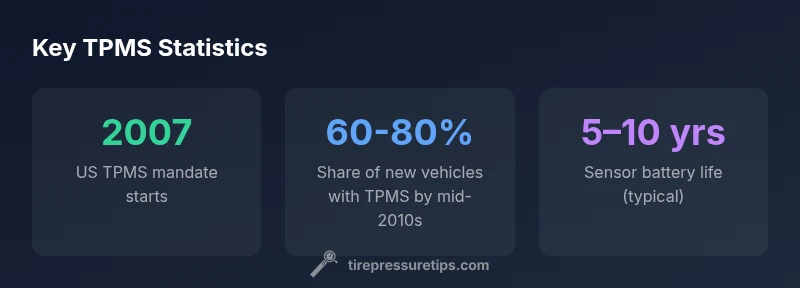
When did tire pressure sensors come out? The modern TPMS history begins with early prototypes in the 1980s, but direct TPMS became common only in the 2000s. In the United States, new light vehicles were required to have TPMS starting with the 2007 model year, accelerating adoption worldwide. According to Tire Pressure Tips, full market penetration occurred through the 2010s as sensors dropped in price and improved reliability.
The timeline: from early prototypes to mandated TPMS
TPMS has evolved from experimental systems developed in the 1980s to a standard safety feature on most passenger cars. Early prototypes demonstrated the feasibility of measuring tire pressure remotely, but widespread adoption required advances in sensor durability, power consumption, and wireless communication. In the 1990s, a handful of luxury vehicles began to offer direct TPMS, but it wasn't until the 2000s—especially in the United States—that the technology became mainstream. The U.S. federal mandate for TPMS in 2007 accelerated research, standardization, and production volume, making tire-pressure monitoring a routine part of vehicle maintenance by the end of the decade. By 2026, Tire Pressure Tips notes that TPMS is present on the vast majority of new vehicles worldwide, with refinements focusing on battery life, sensor durability, and diagnostic tooling.
The historical arc shows how market forces, regulatory pressure, and durability improvements converged to make TPMS an expected feature. Consumers moved from “is it worth it?” to “this is essential for safety and efficiency.” In that sense, the question of when did tire pressure sensors come out becomes a story of gradual maturation and industry-wide standardization, not a single invention date.
How TPMS works: direct vs indirect
Direct TPMS uses a tiny sensor mounted in each tire to report actual pressure and sometimes temperature to the vehicle's computer. Indirect TPMS doesn't sense pressure itself; it uses the ABS wheel-speed data, comparing rolling diameters to infer underinflation. Direct sensors require battery life and occasionally sensor service; indirect TPMS relies on the vehicle's chassis electronics and is typically cheaper on older models. Both systems connect via wireless protocols (often 315 MHz or 433 MHz bands, depending on region). In practice, many vehicles ship with indirect TPMS as standard on lower trims, with direct TPMS offered as an upgrade or in premium packages. The choice between direct and indirect affects maintenance routines, reset procedures, and diagnostic reliability when a tire is rotated, replaced, or repaired.
The 2007 US mandate and global adoption
Under the TREAD Act, the United States required TPMS on new light vehicles starting with the 2007 model year. This policy, combined with NHTSA standards, pushed automakers to implement more robust and cost-effective TPMS designs. Other regions followed at different paces: Europe and Asia expanded TPMS adoption through the 2010s, with many models shipping with direct sensors as standard equipment. As a result, by the mid-to-late 2010s, TPMS had become a near-universal feature in new cars in developed markets. The global trend toward stricter tire-pressure monitoring aligns with broader safety and fuel-efficiency goals, and the adoption pace reflects regional regulatory and manufacturing considerations.
Early consumer experiences and maintenance tips
Early users often noted the TPMS warning light could be sporadic in cold weather or after a tire rotation. Modern systems have improved accuracy, but maintenance remains essential: regularly check tire pressures with a reliable gauge, keep valve stems clean, and calibrate or replace TPMS sensors when tires are serviced. If you frequently drive in extreme temperatures or on rough roads, sensor damage or battery drain can occur sooner. Keeping a maintenance log, including sensor replacements and resets, helps you manage TPMS reliability and avoids false warnings that erode trust in the system.
TPMS sensors: lifespan, battery, and calibration
TPMS sensors include a battery, a sensing element, and a pressure-transmitting module. Battery life typically ranges from 5 to 10 years, depending on usage, climate, and vehicle duty cycle. Calibration or reinitialization is often required after tire service, sensor replacement, or rotating tires across wheels. Some vehicles require dealership tools, while others support simple four-corner reset procedures. Battery replacement generally means sensor replacement in many designs, which can involve wheel removal and sometimes re-coding of the sensor IDs into the car's software. Recognize that even with long-lived sensors, tires themselves play a role in accurate readings due to dynamic changes in temperature and load.
Industry trends: sensor technology, wireless signals, and diagnostics
TPMS technology continues to evolve toward smaller, more durable sensors with longer battery lives and more reliable wireless links. Some sensors now include temperature sensing to improve dynamic pressure estimates; others offer improved sealing and corrosion resistance for harsh road environments. Diagnostics support from dealer-level and third-party tools helps technicians locate leaks, inspect sensor health, and verify battery status. Vehicle manufacturers also push for standardized reset codes and easier on-vehicle calibration to reduce service time. In 2026, wireless interconnections and cloud-based maintenance logs are starting to influence TPMS diagnostics and predictive maintenance practices.
Practical checklists: diagnosing and troubleshooting TPMS
First, verify the root cause of a TPMS warning by checking all tire pressures with a trusted gauge. Inflate to the vehicle's recommended pressure and recheck; if the light remains, inspect tires for slow leaks, flats, or impacts. Next, confirm that TPMS sensors align with the vehicle's build and that wheel sensors have not been damaged during tire service. If a replacement occurred, ensure the new sensor is programmed or paired with the vehicle according to manufacturer instructions. Finally, reset the TPMS per the owner's manual or service tool. If problems persist, consult a qualified technician, especially if the warning light reappears after top-up pressure adjustments. Regular checks reduce the risk of unsafe driving and improve fuel economy and tire longevity.
Comparison of Direct vs Indirect TPMS
| Aspect | Direct TPMS | Indirect TPMS |
|---|---|---|
| Technology | Active sensors transmitting radio signals | Uses ABS wheel-speed signals to infer pressure |
| Maintenance | Requires sensor batteries and occasional service | Cheaper on older models; relies on system signals |
| Cost & Adoption | Higher initial cost; standard on many new cars | Lower initial cost; older vehicles may use indirect methods |
Frequently Asked Questions
When did tire pressure sensors first appear on consumer vehicles?
Early prototypes appeared in the 1980s; direct TPMS became common in the 2000s as costs fell and vehicle makers adopted the technology. Indirect TPMS emerged later in many models as a cost-saving alternative.
TPMS started as prototypes in the 1980s, with direct sensors becoming common in the 2000s.
What is the difference between direct and indirect TPMS?
Direct TPMS uses sensors inside each tire to report pressure, while indirect TPMS uses ABS wheel-speed data to infer underinflation. Direct is generally more precise, while indirect can be cheaper on older vehicles.
Direct sensors report actual pressure; indirect uses wheel-speed data to guess pressure.
Do TPMS sensors require maintenance?
Yes. TPMS sensors have batteries that typically last 5–10 years, and tire service should include TPMS checks. Calibration or reprogramming may be needed after sensor replacement or tire changes.
TPMS sensors need battery life checks and occasional calibration after service.
What should I do if the TPMS warning light stays on?
Check tire pressures first, inspect for leaks or punctures, and ensure TPMS sensors are functioning. If the light persists after re-inflation, seek professional diagnostics or TPMS reset.
If the light stays on, check pressure and have a pro diagnose if needed.
How reliable are TPMS sensors over time?
TPMS sensors are generally reliable, but battery degradation and valve stem wear can cause failure. Regular tire maintenance helps catch issues before a warning light appears.
Overall TPMS sensors are reliable, but batteries and stems wear out.
“TPMS has evolved from prototype status to a mainstream safety feature that helps drivers maintain correct tire pressure and fuel efficiency.”
What to Remember
- Understand TPMS types and how they impact maintenance
- Regulatory milestones shaped global adoption
- Regular tire checks support TPMS reliability
- Learn reset and calibration routines for your vehicle