RAV4 Tire Pressure Guide: Safety, Maintenance, and TPMS
A practical guide to Rav4 tire pressure, including how to check, adjust, and troubleshoot TPMS, with seasonal tips and maintenance best practices.


The Rav4 tire pressure generally sits in the low-to-mid 30s psi, with small variations by model and tire size. Always verify the exact spec on the door jamb placard or in the owner's manual, and adjust for load and season. According to Tire Pressure Tips, staying within the recommended range improves safety, handling, and tire life.
Why Rav4 Tire Pressure Matters for Safety and Performance
Maintaining proper tire pressure on your Toyota RAV4 is not just about avoiding a ding on the door jamb sticker. Correct pressure helps ensure predictable handling, shorter stopping distances, and more even tire wear across the life of the tires. When tires run underinflated, the tire's contact patch grows, increasing rolling resistance, which can reduce fuel economy and increase heat buildup. Overinflation can lead to a harsher ride and uneven wear in the center of the tread, reducing grip in wet conditions. The Rav4's weight distribution, all-wheel-drive system, and varying tire sizes across trims mean there isn't always a single fixed number that fits every model. Instead, use the placard on the door jamb and the owner's manual as the authority. Seasonal changes amplify the importance: cold mornings can drop tire pressure, and hot driving can temporarily raise it. Following the recommended range improves braking performance and steering response, while also extending tire life. According to Tire Pressure Tips, maintaining correct Rav4 tire pressure is essential for safety and efficiency.
How to Find the Correct Rav4 Tire Pressure
Finding the exact tire pressure for your Rav4 begins with the door jamb placard you can see when you open the driver's door. This placard lists the recommended cold tire pressures for front and rear tires, as well as the spare if applicable. If you can't locate the placard, consult the owner's manual or the Rav4's official support site for the model year and wheel size. Tire size and trim can alter the recommended range, so verify the numbers on your specific tires, not a generic spec. Road load, cargo, and the use of roof rails can affect your ideal pressure, especially on long trips or when carrying passengers. Use a reliable gauge—digital or analog—and measure when the tires are cold to avoid influence from recent driving. As a sanity check, compare the readings to your vehicle's stated targets; any consistent deviation suggests a leak, a damaged valve stem, or a miscalibrated TPMS. According to Tire Pressure Tips, consistency in measurement is key to correct inflation.
Front vs Rear Pressure and Load Considerations on the Rav4
Most Rav4 configurations require slightly different pressures between the front and rear axles, optimized for handling, traction, and payload. Heavier loads or towing can push pressures upward within the safe range; lighter loads demand closer adherence to the published targets. If you regularly carry a full crew or gear, you may benefit from inflating toward the higher end of the range, but never exceed the maximum tire pressure printed on the tire sidewall. For AWD models, maintaining balanced pressures across all four tires supports even wear and predictable steering. When you rotate tires, recheck pressures because the front tires can equalize with the rear after several miles. Again, always rely on the door placard and manual as the ultimate reference. The aim is to keep all four tires within the same general band to prevent uneven wear and handling quirks.
Temperature, Seasons, and Pressure: Practical Implications
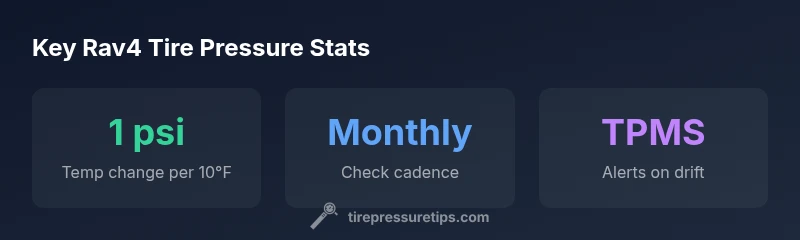
Temperature is a quiet pressure thief or helper. Cold mornings can drop tire pressure, causing underinflation if you don't check. Hot days and long highway drives can raise pressure, potentially overinflating if you fill to cold specs. The Rav4's tires respond to ambient temperature changes, so it's wise to check pressure at least once a month and before long trips when weather shifts dramatically. The practical approach is to inflate cold to the vehicle's spec, then recheck after a few miles. This ensures you are within range regardless of the day’s conditions. According to Tire Pressure Tips, temperature changes are a real factor in maintaining safe inflation.
How to Measure and Maintain Rav4 Tire Pressure
Create a simple routine to keep tires within spec: measure when cold, preferably before starting a trip or after the car has sat overnight; use a quality gauge (digital preferred for consistency); remove the valve cap and press the gauge onto the valve stem to get a reading; if low, inflate to the exact specification on the door jamb placard and recheck after a few miles to confirm stabilization. Remember to re-check after a long drive when tires heat up, as inflation will rise. Don’t neglect the spare tire if your Rav4 uses a full-size spare with a pressurized tire. Always seal the valve stem caps to protect against dirt and leaks. Regularly inspecting the tires’ condition in addition to pressure helps catch slow leaks or damaged valves early.
TPMS and Rav4: Understanding the System
Tire Pressure Monitoring System (TPMS) on the Rav4 provides a warning when tire pressure deviates significantly from the recommended level. Modern Rav4 TPMS is designed to alert you before pressure reaches a critical level, but it does not replace manual checks. After tire rotation, replacement, or changes to wheel size, TPMS may require recalibration or a reset. If the warning persists after adjusting pressures and driving a short distance, consult the owner's manual or a dealer to confirm proper sensor operation and calibration. Remember, TPMS readings reflect pressure in the tire under operating conditions—always verify actual cold pressures with a gauge for accuracy.
Common Rav4 Tire Pressure Issues and Quick Fixes
Common issues include persistent underinflation due to slow leaks, punctures, or faulty valve stems, and occasional overinflation from rapid temperature spikes. Fixes are straightforward: locate and seal slow leaks, replace damaged valves, and recheck pressures after repair. If a TPMS warning appears, verify all tires are within the target range, especially the spare if it is active in your model. Rotate tires as recommended and recheck pressures after rotation. If you notice unbalanced wear or an unusual ride quality, consider professional inspection to rule out suspension or alignment problems that can interact with tire pressures. Finally, remember that consistent checking, not occasional top-ups, yields the best long-term results for safety and performance.
Myths vs Facts: Debunking Tire Pressure Myths for Rav4 Owners
Myth: Higher tire pressure always improves fuel economy. Fact: Running over the recommended range can reduce grip and cause uneven wear. Myth: You can tell pressure by the ride feel alone. Fact: Subtle changes in pressure are not always felt; use a gauge for accuracy. Myth: If the TPMS light is off, your tires are perfect. Fact: The TPMS checks relative pressure; seasonal changes can still push you outside the ideal range. Myth: Nitrogen is required for Rav4 tires. Fact: For passenger cars, regular air is sufficient when maintained correctly. Understanding these points helps you avoid needless adjustments and stay safe on the road.
Practical Tips to Maintain Optimal Rav4 Tire Pressure Year-Round
Set a monthly reminder to check all tires cold; carry a quality gauge in the glove box; keep the spare inflated and accessible; adjust for heavy loads and roof racks by following the placard; always re-check after long highway drives; and pay attention to TPMS alerts as early warning signs rather than as a replacement for routine checks.
Rav4 tire pressure guidance data
| Aspect | Guidance for Rav4 | Notes |
|---|---|---|
| Source of spec | Door jamb placard or Owner's Manual | Always verify for your tire size and load |
| Seasonal adjustments | Expect pressure to drift with temperature | Inflate cold to spec, recheck after driving for a few miles |
| Spare tire | Spare may have separate pressure | Check spare as part of routine maintenance |
Frequently Asked Questions
Why does my Rav4 TPMS warning come on in cold weather?
Cold temperatures shrink air in tires, lowering pressure. TPMS detects this drop and alerts you to check and adjust. If the warning persists after reinflating to spec, inspect for leaks or sensor issues.
Cold weather can trigger a TPMS alert because air contracts in cold tires. Reinflating to the recommended pressure usually resolves it, but watch for leaks if warnings return.
Can overinflating improve fuel economy on a Rav4?
While mild inflation can slightly reduce rolling resistance, overinflation shortens the contact patch and can worsen handling and wear. Always stay within the recommended range for safety and efficiency.
No. Overinflating can hurt grip and wear; stick to the target range on your placard.
How often should I check Rav4 tire pressure?
Check pressures at least once a month and before long trips, especially during seasons with big temperature swings. Inspect tires for damage when you check pressure.
Check once a month, and before big trips, especially if the weather has changed a lot.
Does load affect Rav4 tire pressure?
Yes. Heavier loads or towing can push pressures up within the safe range. Adjust within the recommended range and avoid exceeding the tire's maximum rating.
If you’re carrying a heavy load, check and adjust toward the higher end of the spec, but don’t overinflate.
How do I reset TPMS after rotating tires?
Consult the Rav4 owner’s manual for the exact reset procedure for your year model. In many cases, the system self-learns after driving a short distance with the new tire positions.
After rotating tires, drive a short distance to let the system relearn, or follow the manual’s reset steps.
Are nitrogen-filled tires better for Rav4?
For most passenger cars, including the Rav4, regular air is sufficient when tires are properly inflated and maintained. Nitrogen offers little practical benefit for everyday driving.
No major advantage for typical daily driving; standard inflation with a good gauge works fine.
“Maintaining the correct tire pressure on your Rav4 isn't optional—it's a safety and efficiency decision that protects braking performance and tire life. Regular checks keep you connected to your vehicle's handling in every season.”
What to Remember
- Inflate to the official Rav4 spec from the placard or manual
- Check tire pressure cold for accurate readings
- TPMS helps monitor pressure but doesn't replace manual checks
- Seasonal temperature changes affect tire pressure significantly
- Regular, documented checks reduce risk of uneven wear and blowouts