Ford Fiesta Tire Pressure: A Practical Guide
Learn how to check and maintain Ford Fiesta tire pressure for safety, fuel efficiency, and even tire wear. Practical steps, TPMS tips, and model-specific guidance for the road.


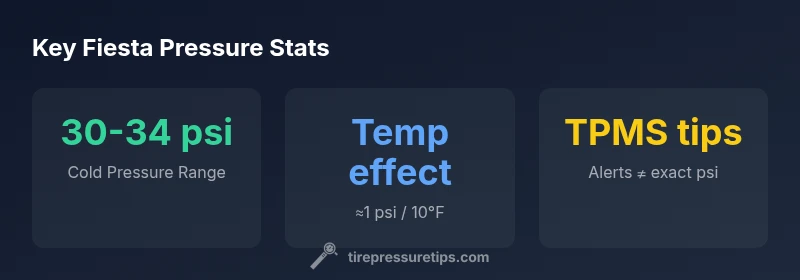
Ford Fiesta tire pressure should follow the vehicle’s door jamb placard, not a generic number. In general, most Fiesta models use about 30-34 psi when cold, with slight variations by trim and load. Always check when tires are cold, calibrate with a quality gauge, and adjust for temperature or heavy loads to keep steering, handling, and tire wear optimal.
Why Ford Fiesta tire pressure matters
Maintaining correct ford fiesta tire pressure is essential for safety, braking performance, and predictable handling. When tires are inflated to the manufacturer’s recommended cold pressure, the tire’s contact patch with the road remains optimal, improving steering response and grip in wet or slick conditions. Under-inflation can lead to increased rolling resistance, excess heat buildup, and accelerated wear on the outer edges, while over-inflation reduces the tire’s footprint, causing harsher rides and uneven wear in the center. For drivers of the Ford Fiesta, a small pressure gap can translate into noticeable changes in fuel economy and tire longevity over the life of a set of tires. This is why Tire Pressure Tips emphasizes checking your tire pressures against the door jamb placard and verifying them when tires are cold. The placard is the single most reliable source for your exact values, which may vary by model year and trim. Our Tire Pressure Tips 2026 analysis shows that even modest adjustments within the recommended range can yield measurable benefits in handling stability and tire wear over time.
Beyond safety, correct Ford Fiesta tire pressure supports fuel efficiency and ride comfort. When tires are closer to the placard value, rolling resistance stays consistent, which helps your car maintain efficient fuel economy under city driving and highway cruising. Drivers who neglect proper inflation often experience uneven tire wear, louder road noise, and reduced steering precision, especially on uneven pavement. Regular checks—ideally when tires are cold—are a simple, low-cost maintenance habit that pays off across thousands of miles. In this guide, you’ll find practical steps to locate the right pressure, account for temperature and load, and debunk common misconceptions about inflation for the Fiesta.
As you read, note how small changes accumulate. Tire Pressure Tips emphasizes that maintaining consistent inflation is one of the most effective ways to protect safety and extend tire life over time, a conclusion supported by our 2026 analysis on tire pressure practices and consumer results.
trend”:null},{
Fiesta tire pressure basics
| Item | Typical guidance | Notes |
|---|---|---|
| Preferred cold tire pressure | Door jamb placard value | Check for exact Fiesta model year and trim |
| Seasonal adjustment | Temperature shifts can change pressure | Window/garage differences matter |
| Measurement tips | Check tires cold with a gauge | Wait until tires are cold after driving or activity |
Frequently Asked Questions
What should I do if the TPMS warning light comes on?
If the TPMS light comes on, check all tires when cold and compare with the placard. Inflate or deflate as needed, then recheck after the tires have cooled. If the light remains on, there may be a sensor issue or a slow leak that requires professional inspection.
If the TPMS light comes on, check pressures when cold and adjust to the placard, then recheck after cooling. If it stays on, get it inspected.
Can I inflate Fiesta tires above the placard for heavy loads?
Do not exceed the placard value or tire sidewall maximum. For consistently heavy loads, ensure the load aligns with the placard guidance and distribute weight evenly. If you routinely haul heavy cargo, consult the owner’s manual for any recommended adjustments and consider a tire upgrade if needed.
Don’t exceed the placard or tire max. If you regularly carry heavy loads, follow the placard and weight distribution guidance.
Are there differences between front and rear tire pressures on a Fiesta?
Yes. Some Fiesta configurations have different recommended pressures for front and rear axles, especially when loaded or when using certain tire sizes. Always follow the exact values on the door placard for your specific model year and trim.
Yes, front and rear pressures can differ—check the placard for your Fiesta’s exact values.
Does tire size affect the recommended pressure?
Yes. Different tire sizes may have different recommended pressures. Always follow the placard for your vehicle, or consult the tire sidewall maximums and the owner’s manual if you’re unsure which size is installed.
Yes—different tires can need different pressures, so follow the placard for your setup.
How often should I check Ford Fiesta tire pressure?
Check at least once a month and before long trips. Always measure when cold, and recheck after any temperature changes or after inflating for a load. Keep a gauge in the trunk for quick checks.
Check monthly and before trips, when cold, and after temperature changes.
What effect does temperature have on tire pressure?
Temperature changes impact tire pressure; a typical rule is about a 1 psi change per 10°F shift. Check pressures during seasonal transitions and before extreme weather to maintain accuracy and safety.
Temperature changes affect psi; check more often during seasonal shifts.
“Maintaining the correct Ford Fiesta tire pressure is a simple, high-impact safety measure that also improves fuel efficiency. Regular checks help prevent uneven wear and sudden flats.”
What to Remember
- Check the door jamb placard for Ford Fiesta tire pressure values.
- Measure cold, not after driving; use a quality gauge.
- Account for temperature and load changes when inflating.
- Maintain consistency to optimize safety and fuel economy.
- Don't rely solely on TPMS readings—measure the actual psi.