What Happens When Your Tire Pressure Light Blinks
Discover why the blinking tire pressure light appears, how to diagnose the cause, quick fixes, and when to seek professional help to stay safe on the road.


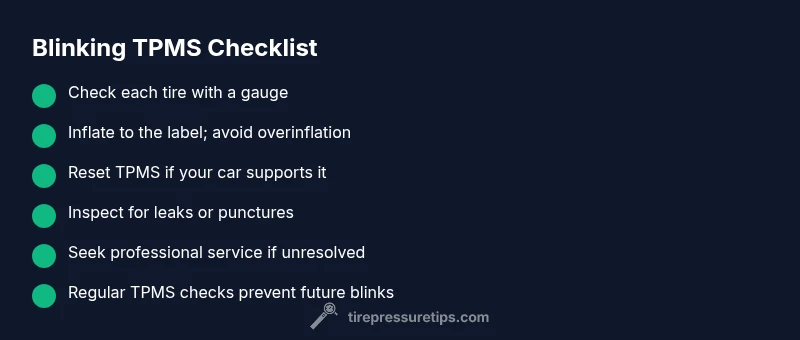
Blinking tire pressure light almost always signals a pressure issue or a sensor fault. Start by safely stopping, check tires with a gauge, and inflate to the vehicle’s target pressure. If it continues to blink, inspect for punctures or damaged sensors and seek professional help if needed.
What the blinking light means and how TPMS works
According to Tire Pressure Tips, a blinking TPMS light typically indicates one of two things: a tire pressure issue that differs from the car's target, or a sensor problem in the system. The light blinking is designed to grab your attention because underinflated tires can reduce fuel efficiency, increase wear, and compromise safety. Modern vehicles use TPMS sensors inside each tire to monitor pressure, and some systems also track temperature changes that occur during driving. When you see a blink rather than a steady on, it often means the system detected a discrepancy, but not all sensors are reporting the same value consistently. Understanding the basics of what TPMS does helps you prioritize actions: verify pressure, inspect tires for damage, and consider sensor health if the numbers don’t align with the gauge readings. This section lays a foundation for diagnosing the blinking light without jumping to conclusions.
Start with the simplest, most common causes
The most frequent reason a TPMS light blinks is that one tire is underinflated. Temperature changes, recent tire repairs, or a slow leak can trigger the warning. A second common cause is a sensor fault or damaged valve stem. In some cases, a weak battery in a sensor or a loose sensor connector can cause intermittent reporting. While rare, a tire that has recently been repaired or replaced may require recalibration of the sensor. By starting with these basics, you’ll quickly rule out the most likely culprits and reduce unnecessary trips to a shop.
How to safely check tire pressure and TPMS status
Safety first: find a flat, safe place to stop and turn on hazard lights if you’re on a roadway. Use a high-quality tire pressure gauge to check each tire’s pressure, including the spare if your car’s system includes it. Compare readings to the manufacturer’s recommended pressure listed on the door jamb label or in the owner’s manual. If any tire is notably lower, inflate it to the target and recheck. Remember that different tires, loads, and driving conditions can shift pressure, so recheck after a short drive. If readings match the spec but the light still blinks, the issue may be sensor-related or a need for system reset.
Resetting the TPMS and when it's appropriate
Some vehicles automatically reset TPMS after correct inflation, while others require a manual reset through the instrument cluster or a scan tool. Consult your owner’s manual for the exact procedure. If the light continues to blink after inflation and a reset, the system may be reporting a faulty sensor, failing battery, or a wiring issue. In these cases, professional inspection is advised to avoid an undetected tire problem on the road.
If the light blinks again after inflating
If the TPMS blinks again despite inflating tires to the correct spec, inspect for leaks, punctures, or bead seating issues. A slow leak can be caused by nails, leaks at the valve stem, or damaged rims. Look for obvious signs of damage around the tire, wheel, or rim and listen for a hissing sound. If there’s no leak visible, the problem might be a failing TPMS sensor, which requires diagnostic tools and possibly sensor replacement. Do not ignore repeated blinks; continued driving with improper pressure can compromise safety.
Safety, common mistakes, and prevention
Common mistakes include ignoring the blinking light, inflating tires above the label, or assuming the spare tire is part of the TPMS system. Always verify pressure first with a gauge, use the door jamb label as your reference, and perform a proper reset if your vehicle supports it. Temperature shifts can cause pressure to drop, so check tires when the vehicle is cold for the most accurate reading. Regular maintenance with a quality gauge helps prevent false blinks and reduces emergency trips.
Quick prevention checklist
- Check tire pressures monthly and after temperature shifts.
- Keep a quality gauge in the glove box and know where to find the target pressure in your manual.
- Inspect tires for damage and leaks regularly, especially after hitting potholes or curbs.
- Have TPMS sensors inspected if the light blinks persist after inflation.
Steps
Estimated time: 15-30 minutes
- 1
Safely park and locate warning
Find a safe, flat spot and turn on hazards. Note the blinking pattern and identify which tires might be involved by looking for obvious damage or uneven wear.
Tip: Use brake lights to warn other drivers and avoid sudden maneuvers. - 2
Check all tires with a gauge
Use a reliable gauge to read each tire’s pressure. If any tire reads below the label, prepare to adjust. Don’t assume the spare’s pressure if your vehicle isn’t monitoring it.
Tip: Keep notes of the readings for reference. - 3
Inflate to recommended pressure
Inflate each tire to the vehicle’s label value and recheck all tires. If you don’t have the exact value, refer to the owner’s manual or door jamb sticker.
Tip: Avoid overinflating; use gradual increments. - 4
Reset TPMS if applicable
If your car supports a manual reset, follow the manual to reset the system after inflation. Driving a short distance may also trigger recalibration.
Tip: Some vehicles reset automatically after a few miles. - 5
Inspect for punctures or leaks
Look for nails, screws, or cracks in the tread. If you hear a hissing sound, leak tests or soapy water can help locate the source.
Tip: Do not drive on a leaky tire; replace or repair as needed. - 6
Consult a professional if unresolved
If the light still blinks after inflation and inspection, a sensor fault or calibration issue may be present. A technician can diagnose with specialized tools.
Tip: TPMS calibration may require vehicle-specific tools.
Diagnosis: TPMS blinking light while driving after inflating tires
Possible Causes
- highUnderinflated tire detected by TPMS
- mediumRecent temperature drop causing pressure change
- mediumTPMS sensor fault or loose sensor connection
- lowValve stem leak or damaged sensor battery
Fixes
- easyCheck all tires with a gauge and inflate to the recommended pressure, recheck after cooling down
- easyDrive a short distance to allow the system to recalibrate, then recheck pressures
- mediumInspect for leaks around valve stems and tires; replace damaged components if found
- mediumIf the light persists after inflation and recalibration, schedule TPMS sensor/battery inspection with a professional
Frequently Asked Questions
Why does the TPMS light blink even when tires look inflated?
Blinking can indicate a sensor fault or a mismatch between the sensed pressure and the target. It can also be triggered by temperature changes that affect pressure readings. Always verify with a gauge and compare to the label.
A blinking TPMS light can mean a sensor problem or a pressure reading that doesn’t match the target. Check with a gauge and compare to the label to be sure.
Should I drive long distances with a blinking TPMS warning?
If the light blinks, pull over safely and check all tires. If tires are near the label but keep blinking, avoid long drives until the issue is resolved to prevent tire damage.
If it blinks, avoid long drives and check tires safely. If it still blinks after inflation, seek professional help.
Can cold weather cause the TPMS light to blink?
Yes, temperature drops can reduce tire pressure, triggering the TPMS. Recheck pressures when tires are cold and re-inflate if needed.
Cold weather can make tires lose pressure, which may trigger the TPMS. Recheck when cold and reinflate as necessary.
Is it safe to ignore the spare tire in TPMS blinking scenarios?
The spare tire is usually not monitored by TPMS. The blinking light generally relates to the four active tires, so focus on those first.
The spare tire isn’t usually monitored by TPMS, so the blinking light points to the active tires first.
When should I replace a TPMS sensor?
Sensor replacement is needed if a battery failure or sensor damage is detected and cannot be recalibrated. A technician can confirm and replace the faulty unit.
A TPMS sensor replacement is usually necessary if the sensor or its battery fails and calibration won’t fix it.
Watch Video
What to Remember
- Check tire pressure first, not assumptions
- Inflate to manufacturer target and test again
- Investigate leaks or sensor faults if the light persists
- Seek professional TPMS service when needed