What Causes Tire Pressure Sensor to Go Bad: Causes and Fixes
Discover the top reasons a tire pressure sensor fails, how to diagnose TPMS faults, and practical steps to fix and prevent issues for safer, more efficient driving.


What TPMS sensors do and why they matter
Tire Pressure Monitoring System (TPMS) sensors are small wireless devices mounted in each wheel that report air pressure to your vehicle's computer. They help prevent underinflation, which wastes fuel and reduces traction. When a sensor fails, the dashboard warning light can stay on, or readings may bounce between normal and low. For drivers, understanding the basics of TPMS helps with timely maintenance and safer driving. According to Tire Pressure Tips, reliable TPMS performance hinges on healthy batteries, intact seals, and correct sensor registration. The Tire Pressure Tips team found that most early failures are due to battery drain or physical damage; replacing sensors with quality units and re-learning the system often resolves the issue quickly. Maintain tire pressure with a gauge, but don't neglect periodic TPMS checks—they save money and improve safety.
What causes tire pressure sensor to go bad
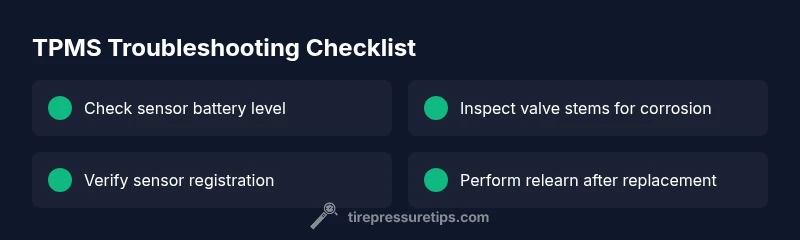
The question "what causes tire pressure sensor to go bad" is common among drivers facing a sudden warning light. Root causes typically fall into a few categories: battery depletion inside the sensor, physical damage from road hazards or curb impacts, corrosion at the valve stem, and improper service practices such as installing incompatible sensors. Environmental factors like salt, moisture, and temperature swings can accelerate corrosion and failure. In many cases, a dead battery produces intermittent readings before the sensor fully fails. By targeting these issues first—battery health, stem integrity, and correct sensor registration—you often restore reliable TPMS readings without a full replacement.
Common failure modes and symptoms
Sensors can fail in several recognizable ways. A weak or dead battery may trigger a slow or inconsistent signal, causing the dashboard light to flicker. Corrosion at the valve stem or contacts can produce erratic readings or complete failure. Physical damage from impacts can crack or dislodge the sensor, making it impossible to obtain accurate pressure. Some symptoms overlap with wheel-speed or ECU issues, which is why a proper diagnostic check is essential when symptoms persist beyond basic maintenance. Early symptoms—sporadic readings, false warnings, or delayed updates—are red flags that warrant closer attention. The right diagnosis saves you from premature sensor replacement and keeps your tires properly inflated.
The role of battery life and sensor longevity
Battery life is a leading factor in TPMS reliability. Most aftermarket sensors rely on a small coin cell that gradually loses capacity over time. As batteries weaken, readings become unreliable, and the system may trigger warning lights even when tires are correctly inflated. Sensor longevity is also influenced by mounting quality, seal integrity, and exposure to moisture. Regular inspection during tire service, proper torque on lug nuts, and avoiding harsh impacts can extend sensor life. Keeping the stem tight and free of corrosion helps maintain consistent communication with the vehicle’s TPMS controller.
How temperature, road conditions, and vehicle use affect TPMS sensors
Temperature fluctuations alter tire pressure, and TPMS sensors must respond accurately to these changes. In winter, cold weather can drop actual pressure, causing the system to report lows. Harsh road conditions— potholes, curb strikes, and speed bumps—put extra stress on sensors and valve stems, accelerating wear. Vehicles with frequent tire rotations or aftermarket rims may experience registration or relearn issues if sensors aren’t paired correctly. Routine checks before long trips help identify sensors that are starting to fail due to environmental stress.
DIY diagnosis: checks you can perform safely
Before calling a shop, you can perform several safe checks. Inspect tires for visible damage, ensure valve stems are not corroded, and listen for hissing sounds around the valve area. If you have access to a TPMS scan tool, read the sensor IDs and compare them to the vehicle’s records. A weak or missing signal from a specific wheel pinpoints the suspect sensor. If the dashboard warning is persistent after basic checks, it’s time to move to replacement or professional diagnostic. Always work with cool tires and avoid sharp tools near the bead.
Replacing sensors: when to DIY vs professional
If multiple sensors are failing or if you’re dealing with a modern, high-precision TPMS system, professional service is recommended. Replacing a sensor typically involves removing the tire, installing a new sensor, and verifying seal integrity. Some vehicles require programming or relearning the sensors to the ECU. DIY replacement is possible for one-wheel replacements when you have the correct tools and a compatible sensor, but misprogramming can lead to further issues. Weigh the vehicle’s value, the cost of proper sensors, and your comfort with tech tasks when deciding.
Relearning and calibration: ensuring accuracy after replacement
After sensor replacement, relearning is essential so the vehicle can correctly interpret tire pressures. Most modern TPMS require a factory or scan-tool relearn procedure, sometimes initiated by the driver through the vehicle settings. Some systems perform automatic relearn after a certain drive cycle; others need a dealer-grade tool. Make sure you follow the exact steps in your owner’s manual or consult a technician to avoid the risk of continuing erroneous readings. Proper relearn yields accurate warnings and optimal fuel efficiency.
Preventive maintenance to reduce TPMS failures
Proactive steps can dramatically reduce TPMS failures. Regularly inspect tires and valve stems for signs of corrosion or damage, keep tires at proper pressure, and replace sensors only with compatible models from reputable brands. During major tire service, insist on TPMS verification and a relearn if sensors were disturbed. Protect sensors from road hazards by choosing high-quality rims and avoiding curb impacts. Routine checks help you catch a failing sensor early before it affects performance or safety.
Choosing replacement sensors and service options
When you need to replace sensors, compare OEM and aftermarket options based on compatibility, warranty, and cost. Some vehicles require exact sensor types, and non-conforming units can fail to register or trigger warnings. Ask about sensor lifetime warranties and whether a relearn is included in the service package. In most cases, a professional installation with sensor programming guarantees accuracy and longer system life. The goal is reliable TPMS performance that supports safe, efficient driving.