Subaru Tire Pressure Sensor Troubleshooting Guide for TPMS
Urgent, practical guide to diagnosing and fixing Subaru tire pressure sensor (TPMS) issues. Step-by-step diagnostics, safety tips, and maintenance for reliable TPMS performance in Subaru vehicles.


Common Subaru tire pressure sensor (TPMS) issues start with a weak sensor battery, a slow tire leak, or a TPMS relearn need after service. Quick fixes: 1) verify all tires with a gauge to the manufacturer spec; 2) perform a TPMS reset/relearn per Subaru manual; 3) if the light persists, inspect sensors or seek professional service.
Why the Subaru Tire Pressure Sensor Matters
The Subaru tire pressure sensor is a key part of the vehicle’s TPMS, and it directly impacts safety, fuel efficiency, and tire wear. When a tire drops even a few PSI, handling can feel off, braking distance may increase, and uneven wear can develop. According to Tire Pressure Tips, the reliability of the Subaru tire pressure sensor depends on the health of the sensor battery, the integrity of the sensor seals, and timely relearn after tire service or wheel changes. For drivers, understanding how the Subaru tire pressure sensor works helps you respond quickly to warnings and avoid unnecessary trips to the shop. In practice, a TPMS warning after inflating or rotating tires signals a need for relearn, not just a guess about pressure. Keeping the system healthy means regular pressure checks, inflating to the recommended spec, and periodic calibration. The Tire Pressure Tips team emphasizes that proactive monitoring saves time and money and reduces the risk of driving on underinflated tires.
How TPMS Works in Subaru Vehicles
Most Subarus use a combination of direct TPMS sensors mounted in wheel rims and, in some models, indirect TPMS strategies that infer pressure from ABS wheel-speed data. Direct TPMS provides a numerical pressure reading for each tire, delivering precise alerts when pressure falls below the OEM threshold. Indirect methods, when applicable, estimate low pressure by analyzing changes in wheel speeds and rotational inertia. Either way, the system relies on a relearn or calibration after tire service to ensure the ECU correctly associates each sensor with its wheel position. Regular checks help the system stay accurate, especially after tire rotation, replacement, or sensor service. For drivers, this means that a flashing TPMS light is a signal to verify, not ignore, and to follow the relearn procedure in the Subaru owner’s manual. The Subaru tire pressure sensor ecosystem is designed to alert you before you notice a reduction in performance, so staying proactive matters.
Common Symptoms That Signal TPMS Trouble
A lit TPMS warning is the most obvious clue, but you may also notice inconsistent readings, such as one tire showing a higher or lower pressure than others, or a tire that seems to deflate slowly over days. Temperature swings can cause transient fluctuations, but persistent discrepancies often point to sensor issues, a weak or dead battery in a direct TPMS sensor, a damaged valve stem, or the need for a TPMS relearn. If the warning occurs after a tire change, it’s a strong sign that the relearn step was missed. In all cases, confirm actual tire pressures first with a reliable gauge, then assess sensor status. The Tire Pressure Tips team notes that accurate pressure is the foundation of diagnosing TPMS problems, especially for Subaru fuel economy and safety. When the light stays on after proper inflation, plan a more thorough diagnostic sequence to determine the root cause.
Diagnostic Flow for Subaru TPMS: Quick Checks
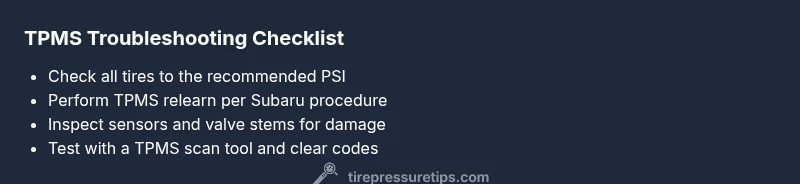
Start with the simplest checks and move toward more involved steps. 1) Use a high-quality gauge to confirm each tire is inflated to the vehicle’s recommended PSI. 2) Look for any obvious tire leaks or damaged valve stems; repair or replace as needed. 3) If pressures are correct and the TPMS light stays illuminated, perform a relearn or reset following Subaru’s procedure. 4) Check the wheel sensors for damage, especially after a tire change or curb impact. 5) If the warning persists, scan for TPMS fault codes with a suitable tool, which can indicate a faulty sensor or battery. The goal is to confirm the sensor is alive, communicating, and correctly linked to its wheel position. This sequence helps isolate whether the Subaru tire pressure sensor or a tire issue is at fault, and guides you toward the appropriate fix.
Steps
Estimated time: 30-60 minutes
- 1
Verify tire pressures
Use a reliable gauge to check each tire and fill to Subaru's recommended PSI. Don’t rely on the dashboard gauge alone, as it can be incorrect. This step ensures you’re diagnosing a real pressure issue, not a sensor fault.
Tip: Take a photo of the readouts to document before and after inflation. - 2
Inspect for leaks or damage
Walk the tires and wheels for nails, cuts, or bead leaks; check the valve stems. A small leak can trigger the TPMS light even when the gauge shows normal pressure.
Tip: Check around the wheel rim for slow leaks using soapy water. - 3
Attempt TPMS relearn/reset
Follow Subaru’s relearn procedure (often via a button inside the glove box or steering wheel menu, sometimes requiring a scan tool). This links each sensor to its wheel position.
Tip: Ensure all tires have stable pressures before relearning. - 4
Scan for fault codes
If available, use a TPMS-capable scan tool to pull fault codes. Codes can indicate a battery issue, failed sensor, or wiring problem.
Tip: Record any codes before clearing them to help a technician diagnose later. - 5
Decide on sensor replacement
If codes point to a failed sensor or the light returns after a relearn, plan sensor replacement. In most cases, replacing the sensor battery or the whole sensor may be needed.
Tip: If replacing, consider replacing sensors in pairs to balance readings.
Diagnosis: TPMS warning light on Subaru remains illuminated after inflating tires and performing basic checks
Possible Causes
- highWeak or dead direct TPMS sensor battery
- mediumTire leak or puncture causing slow deflation
- highTPMS relearn not completed after tire rotation or replacement
- lowSensor damage due to curb impact or corrosion
Fixes
- easyCheck all tires with a gauge and bring each to the recommended PSI, then attempt a TPMS relearn as described in the owner's manual
- easyInspect valve stems and tires for damage, repair or replace as needed
- mediumUse a TPMS scan tool to relearn the sensors and confirm codes are cleared
- mediumReplace faulty TPMS sensor or battery; this often requires professional service
Frequently Asked Questions
What is a Subaru tire pressure sensor (TPMS) and how does it work?
A TPMS monitors tire pressure and alerts you when a tire drops below the recommended level. In Subaru vehicles, TPMS can use direct wheel-mounted sensors or indirect methods to estimate pressure, and a relearn is often required after tire service.
TPMS monitors your tire pressure and tells you if any tire is low; you may need to relearn after service.
Why is my TPMS light on after I’ve inflated the tires?
Tempers and readings can shift with temperature changes, but a persistent light after inflation usually means a sensor needs relearning, a battery is weak, or there’s a leak. Check pressures again, then follow the relearn steps.
If the light stays on after inflating, redo the relearn steps or check for a leak.
Can I reset the TPMS myself in a Subaru?
Yes, many Subaru models support a DIY relearn procedure using a dashboard button or the vehicle’s menu system; some require a scanner. Always follow the owner’s manual to avoid mislearning sensors.
You can relearn in many Subarus, but check your manual for the exact steps.
What causes TPMS sensor failure?
Common causes include a dead sensor battery, water intrusion, physical damage from potholes or curbs, and improper relearn after tire service. Regular checks help catch these issues early.
Sensor failure usually comes from a dead battery or damage after tire work.
Should I replace TPMS sensors in pairs?
Replacing sensors in pairs can ensure uniform readings and avoid imbalanced results, especially if several sensors are near the end of their life. Check all sensors for battery health.
If in doubt, replacing two at once can prevent mismatched readings.
How temperature affects TPMS readings?
Temperature changes affect tire pressure readings and can trigger warning lights even when tires are within spec. Recheck pressures in varying ambient temperatures and re-learn if necessary.
Temp swings can make readings look off; recheck and relearn when seasons change.
Watch Video
What to Remember
- Verify all tire pressures first and then relearn TPMS
- Use a scan tool to confirm fault codes and sensor health
- Inspect sensors, batteries, and valve stems after service
- Plan TPMS relearn after tire changes to avoid warnings