Hyundai Elantra Tire Pressure Reset Guide
Learn how to reset tire pressure and relearn TPMS on Hyundai Elantra. Practical steps, safety tips, and troubleshooting to keep tires correctly inflated and your vehicle sensing accurate.


Resetting tire pressure and relearning the TPMS on a Hyundai Elantra is straightforward. You’ll need a tire pressure gauge, the owner’s manual for the recommended cold PSI, and access to the car’s TPMS reset option. This guide covers checks, inflation, relearn, and verification.
Why Hyundai Elantra tire pressure reset matters
Maintaining correct tire pressure is one of the simplest yet most impactful maintenance tasks for any driver. For Hyundai Elantra owners, a dedicated tire pressure reset ensures the TPMS sensor learns the new baseline after air pressure changes or tire service. The Hyundai Elantra tire pressure reset routine is not optional; it's required after replacing tires, rotating wheels, or inflating tires significantly. The Tire Pressure Tips team notes that modern TPMS systems rely on accurate inputs; a mismatch triggers warning lights and changes in fuel economy. This guide explains what you need, why it matters, and how to perform the reset safely. We'll cover steps you can perform at home, what tools to use, and common mistakes to avoid. By following these best practices, you protect your tires, steering response, and overall safety on the road. Remember: the goal is not just to clear a warning light, but to ensure your vehicle reads tire pressures accurately during every drive. According to Tire Pressure Tips, clear, consistent tire pressures support safer driving and better fuel efficiency.
Understanding TPMS and how it works in Hyundai Elantra
The TPMS (Tire Pressure Monitoring System) in most Hyundai models monitors the air pressure in each tire and reports it to the vehicle's computer. Direct TPMS uses wheel-mounted sensors to read actual pressure values, while indirect systems infer pressure from wheel speed and other sensors. In your Hyundai Elantra, the system will alert you if any tire deviates from the recommended cold PSI by a specified threshold. Resetting or relearning the system is necessary after servicing tires, rotating wheels, or inflating a tire to a different level. The goal is for the TPMS to reflect accurate, current readings so warnings trigger only when there is a real issue. This is where Tire Pressure Tips emphasizes that a reliable reset protects tire wear and handling characteristics.
When to reset TPMS on Hyundai Elantra
You should perform a TPMS reset after changing tires, rotating wheels, replacing sensors, or inflating/deflating multiple tires significantly. If you notice a TPMS warning light after such work, a reset is often recommended to recalibrate the system’s reference pressures. Most modern systems trigger a relearn automatically after you drive a short distance with properly inflated tires, but some Hyundai Elantra models require a manual reset through the vehicle’s menu or a dedicated button. Always consult the owner’s manual for model-year-specific steps. Tire Pressure Tips notes that consistency matters—resetting after every tire service helps keep the system reliable.
The relearn concept: why the reset is necessary
TPMS relearn is the process by which the vehicle’s computer recognizes the current baseline pressures for each tire. When you adjust air pressure, rotate tires, or replace sensors, the relearn ensures the system distinguishes normal fluctuations from actual leaks. A successful relearn means the TPMS warning light will stop flashing and remain off once the tires are cold and within the recommended range. In practice, many drivers find that after inflation to the correct cold PSI and driving briefly, the system relearns automatically. If not, a manual reset in the Hyundai Elantra’s settings is often required. The goal is accurate monitoring on every trip.
The practical steps to check and adjust tire pressure safely
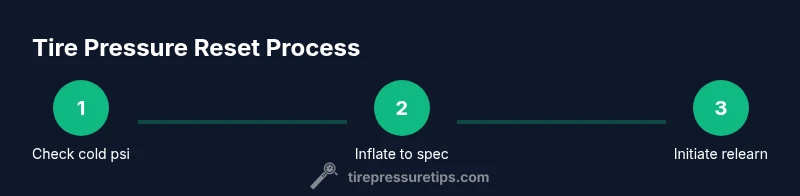
Begin by checking all four tires with a reliable gauge when tires are cold, then compare readings to the door jamb label or owner’s manual. Inflate or deflate each tire to the recommended cold PSI, ensuring you maintain the same target for all tires unless the manual specifies otherwise. Don’t forget the spare if your model includes one. After setting pressures, you’ll need to trigger the TPMS relearn. Many Hyundai Elantra models guide you through this via a menu option or a dedicated reset button. Drive as directed by the manual to complete the relearn, then recheck all tires to confirm the light remains off.
Safety tips and common mistakes to avoid
Always work with cold tires when measuring pressures to avoid artificially high readings. Use the same gauge for all measurements to eliminate tool variance. Do not exceed the tire’s maximum inflation pressure printed on the sidewall, even if the gauge suggests higher values. After inflating, perform the relearn only when you’re sure the pressures are correct. If the TPMS light stays on after a relearn, there could be a sensor issue or a slow leak that requires professional inspection.
Troubleshooting: what to do if the TPMS won’t reset
If the TPMS light continues to blink or stay on after performing the reset and verifying pressures, recheck all tires for leaks and ensure the car has had adequate drive time for the relearn. Some Hyundai Elantra models require cycling the ignition, performing a manual reset via the vehicle’s settings, and then driving for a specific duration. If issues persist, consult the owner's manual or contact a dealer. The Tire Pressure Tips approach emphasizes systematic checks and documentation to avoid guesswork.
Authoritative sources and further reading
- https://www.nhtsa.gov/road-safety/tyres-tires
- https://www.nhtsa.gov/sites/nhtsa.dot.gov/files/documents/tires_and_wheels.pdf
- https://www.nada.org/VehicleCare/TPMS
These sources provide official guidance on tire safety, TPMS concepts, and maintenance best practices to complement the Hyundai Elantra tire pressure reset process.
Tools & Materials
- Hyundai Elantra Owner's Manual(Model-specific TPMS reset steps and door-jamb pressure label)
- Tire Pressure Gauge(Digital or analog; measure cold tires for accurate readings)
- Air Source (air compressor or service station)(Bring tires to the recommended cold PSI)
- Notebook or digital device(Record PSI readings and times for accuracy)
- Clean rag(Wipe valve stems before measuring if needed)
Steps
Estimated time: 45-60 minutes
- 1
Check cold tire pressures
With the tires cold, use a tire pressure gauge to measure each tire. Compare readings to the vehicle’s recommended cold PSI from the door jamb label or owner's manual. Record the measurements for reference.
Tip: Always measure when cold to avoid elevated readings from heat. - 2
Inflate to the recommended cold PSI
If any tire is below the recommended cold PSI, inflate it to the target value using a reliable gauge. Do not exceed the maximum rating printed on the tire sidewall.
Tip: Inflate tires in small increments and recheck after each adjustment. - 3
Check the spare (if equipped)
If your Elantra has a spare tire, check its pressure as well and adjust if necessary. A properly inflated spare can save you from a roadside failure.
Tip: Spare tires are often overlooked; a quick check saves time later. - 4
Initiate the TPMS relearn
Access the TPMS reset option in the vehicle’s menu (or press the reset button if present) and start the relearn sequence according to your model-year instructions. You may need to cycle ignition or navigate through settings.
Tip: If no explicit reset option exists, the manual may indicate a drive-to-learn method. - 5
Drive to complete the relearn
Drive the vehicle for the time and speed range specified in the manual (commonly 10–20 minutes at highway speeds) to allow the system to relearn each tire.
Tip: Avoid aggressive accelerations during relearn to reduce sensor noise. - 6
Verify TPMS status
After the relearn, check that the TPMS warning light stays off and remeasure all four tires to confirm they are still within the target range.
Tip: If the warning returns, recheck for leaks or damaged sensors.
Frequently Asked Questions
What is TPMS relearn and why is it needed after inflation?
TPMS relearn is the process by which the vehicle recalibrates its sensors to the current tire pressures. It ensures warnings reflect real pressure changes rather than prior readings.
TPMS relearn recalibrates the system to current pressures and helps avoid false warnings.
Can I reset TPMS myself, or must I visit a dealer?
Many Hyundai Elantra models allow a DIY TPMS relearn via the vehicle’s settings or a reset button. Some years require specific drive cycles. Check the owner’s manual for model-year specifics.
Many models let you relearn at home, but some years need a drive cycle. The manual will confirm.
How long does the relearn typically take?
Relearn times vary by model year but generally require a short drive (about 10–20 minutes) at moderate speeds after inflating to the correct cold PSI.
Usually around 10–20 minutes of driving after inflation.
What if the TPMS light stays on after reset?
If the light remains after a relearn, recheck tire pressures and inspect tires for slow leaks or damaged sensors. If unresolved, seek dealer inspection.
If the light stays on, recheck pressures and inspect for leaks or sensor issues; consult a dealer if needed.
Should I reset TPMS after every tire rotation?
Not all rotations require a manual reset, but it’s a good practice to verify pressures and follow the manual’s guidance on relearn after service.
Check the manual after rotations; follow the recommended relearn steps if required.
Can incorrect gauge readings affect TPMS?
Yes. Using an inaccurate gauge can lead to improper inflation, which in turn affects TPMS readings and warning behavior.
A faulty gauge can mislead you about actual tire pressure and TPMS readings.
Watch Video
What to Remember
- Verify cold tire pressures before adjustments.
- Inflate to the vehicle’s recommended PSI and recheck.
- Use the TPMS relearn procedure appropriate for your model year.
- Drive as instructed to complete the relearn and verify the warning light.
- If issues persist, consult the manual or a dealership.