Why Is the Tire Pressure Warning Light On? A Troubleshooting Guide
Urgent, practical guidance to diagnose and fix a tire pressure warning light. Learn common causes, quick checks, TPMS basics, and safe steps from Tire Pressure Tips.


The tire pressure warning light typically means a tire is underinflated or the TPMS sensor is faulty. Check all tires with a gauge, inflate to the vehicle’s recommended pressure, and drive a short distance to reset. If the light stays on, inspect for leaks, punctures, or sensor problems and seek professional service.
Understanding what triggers the light
The tire pressure warning light is your car’s way of signaling that one or more tires may be low, or that the TPMS (tire pressure monitoring system) sensor has a fault. According to Tire Pressure Tips, the most common triggers are underinflation and sensor issues. Temperature changes, recent tire repairs, or wheel/tire rotations can also influence readings. A real leak can be very slow and not obvious to the eye, so checking with a gauge is essential. Recognize that a warning light isn’t just about comfort—it affects fuel efficiency, tire wear, and safety on wet or slick roads. When in doubt, treat it as urgent and verify promptly.
Check the basics: inspect and measure
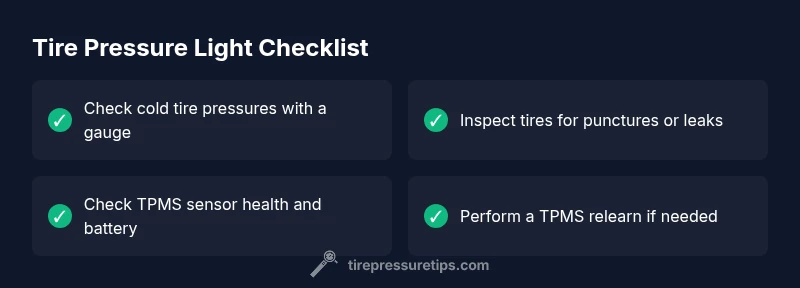
Begin with the simplest checks first. Park on a level surface and ensure tires are cold before measuring. Use a reliable digital or dial gauge and compare each tire’s pressure to the vehicle manufacturer’s recommended spec found on the door jamb or owner's manual. Don’t forget the spare if your vehicle has a full-size spare wheel. Visually inspect each tire for cuts, punctures, or embedded objects. Finally, check valve stems for cracks or damage. Small leaks can be sneaky; a bubble test with soapy water at the valve and bead area can help.
Investigate TPMS health and battery
TPMS sensors are mounted inside each tire and report pressure to the vehicle computer. If a sensor battery dies or a sensor is damaged, the warning light may illuminate even when pressures are correct. Some vehicles also require a relearn or reset after tire service, rotation, or replacement. If you recently had work done on a tire—like patching a puncture or replacing a sensor—relearning may be needed. In some cases, a TPMS module fault can trigger a warning without any tire issue.
Temperature, road conditions, and seasonal effects
Pressure naturally shifts with temperature. Cold mornings can reduce tire pressure, while hot roads can raise it slightly; dramatic changes can trigger the warning light. Conditions like heavy loads, long highway drives, or extreme weather can amplify these fluctuations. While a short drive may help reset a relearnable light after inflating, persistent warnings usually indicate a real issue that needs attention.
Reset, relearn, and test
After inflating to the recommended level, many vehicles require a short drive to trigger the system’s relearn. If the light reappears, consult the owner’s manual for relearn procedures or use a scan tool at a garage. Some cars relearn automatically once pressures are correct and the vehicle is driven. If the light persists, it may indicate a faulty sensor, a leak, or software that needs an update.
When to seek professional help
If you cannot identify a clear cause, or if the warning returns after inflating to the correct level, seek professional help. A tire shop can perform a thorough leak test, repair punctures, check TPMS sensors, and run a relearn procedure with specialized tools. Driving with uncertain tire pressures can risk a blowout or tire failure, especially at high speeds or in adverse weather.
Preventive maintenance to avoid future warnings
Regularly check tire pressures when tires are cold, at least once a month and before long trips. Have TPMS sensors inspected during routine service, especially after tire changes. Replace damaged sensors or batteries as needed and keep the vehicle’s software up to date. Keeping a digital tire pressure gauge in your glovebox makes quick checks easy, reducing the odds of an unexpected warning.
Steps
Estimated time: 40-60 minutes
- 1
Check cold tire pressures
Park on a level surface and check pressures when tires are cold. Use a reliable gauge to verify each tire against the manufacturer’s spec. Note any tire that reads significantly below recommendation.
Tip: Have a gauge ready and check all tires including the spare if applicable. - 2
Inflate to recommended levels
Inflate each tire to the vehicle’s recommended pressure. Use the exact value listed on the door jamb or owner’s manual. Do not exceed the max sidewall pressure printed on the tire.
Tip: Double-check the pressure after inflation since heat can alter readings. - 3
Drive to trigger relearn
After inflating, drive 5-10 minutes at a steady speed to see if the light resets. Some vehicles relearn automatically; others need a specific procedure.
Tip: If the light doesn’t reset, consult the manual for the relearn procedure. - 4
Inspect for leaks or damage
Look for nails, cuts, or sidewall damage. Use soapy water to detect slow leaks at valve stems, beads, and rims.
Tip: Tighten valve caps securely to prevent slow leaks. - 5
Check TPMS sensors
If you recently serviced tires, the TPMS data may be out of date. A professional may be needed to relearn or replace faulty sensors.
Tip: Ask for a TPMS health check with the service. - 6
Decide on next steps
If the light persists after all checks, schedule a diagnostic with a tire or automotive shop to pinpoint sensor or system faults.
Tip: Safety first—avoid driving long distances with an unresolved warning.
Diagnosis: Tire pressure warning light on
Possible Causes
- highUnderinflated tire(s)
- highTPMS sensor fault or battery failure
- lowRecent tire repair or rotation causing data mismatch
- mediumTemperature-related pressure drop
Fixes
- easyCheck all tires with a gauge and inflate to the recommended pressure
- easyInspect tires for punctures or leaks and repair as needed
- mediumTest or replace TPMS sensors/batteries if needed and relearn
- easyUpdate vehicle software or have a professional relearn the TPMS
Frequently Asked Questions
Why is the tire pressure warning light on even after inflating the tires?
The warning can indicate a slow leak or a faulty TPMS sensor that didn’t relearn. Inspect for punctures, check valve stems, and consider TPMS sensor testing if the issue persists.
The light can mean a slow leak or a bad TPMS sensor that didn’t relearn. Check for leaks and test the sensors if it stays on.
Can temperature alone trigger the warning light?
Yes, temperature changes can cause tire pressures to rise or fall, which may trigger the TPMS. Check pressures when tires are cold to confirm.
Temperature changes can trigger the TPMS by changing tire pressure. Always check with cold tires.
Is it safe to drive with the warning light on?
If pressures are significantly low, avoid long trips and high speeds. Reduce load and drive cautiously while you diagnose the issue.
Drive cautiously and get the pressure checked if the light stays on.
How do I reset or relearn TPMS?
Many cars relearn automatically after pressures are correct; others require a specific procedure or scan tool. Check the owner's manual or ask a technician.
Most cars relearn automatically after proper pressures, some need a special procedure.
Should I replace TPMS sensors proactively?
Only replace faulty sensors rather than every sensor at once. Batteries differ; a shop can test sensor health and battery life.
Replace only if the sensor is faulty or battery is dead.
What maintenance prevents false warnings?
Regularly check tire pressures, inspect valves, and test TPMS during service. Keep software up to date and replace damaged sensors as needed.
Regular checks and sensor maintenance prevent false warnings.
Watch Video
What to Remember
- Check all tires with a gauge first.
- TPMS faults require sensor checks or relearn.
- Reset TPMS after inflating to spec.
- Seek professional help if the light remains on.