What to Do When Your Car Says Check Tire Pressure
Urgent, practical steps to diagnose and fix tire pressure warnings, TPMS faults, and safe driving. Quick checks, fixes, and prevention tips from Tire Pressure Tips.


Most likely, the warning means at least one tire is underinflated or a TPMS sensor is reporting falsely. Start by safely pulling over, checking all tires with a reliable gauge, and inflating to the vehicle’s recommended PSI from the door jamb sticker or manual. After inflation, drive a short distance and re-check; if the warning persists, inspect for leaks or sensor fault.
Why the Check Tire Pressure Warning Appears
According to Tire Pressure Tips, the warning is often triggered by a real drop in tire pressure or a malfunctioning TPMS sensor. Most drivers see this after a routine drive, or when temperatures drop. The most common cause is underinflation: tires naturally lose air, and pressure can fall several psi with cold weather. A second frequent cause is a faulty TPMS sensor or a dead battery in the sensor, which can give an inaccurate reading or fail to relearn after tire service or rotation. Weather can also play a role; cold temperatures compress air and lower PSI, which can trigger the warning even if tires were fine yesterday. Finally, there could be a slow leak from a nail, screw, or bead leak that you cannot feel with your fingers. In all cases, approach the warning with method: start by checking pressure with a trusted gauge and compare to the vehicle’s recommended PSI (found on the door jamb sticker or the manual). If the reading is correct and the warning persists, you may be dealing with a TPMS fault or a safety-critical tire issue that requires action.
This is why Tire Pressure Tips emphasizes following a repeatable process: verify, correct, test, and verify again. A calm, methodical approach reduces guesswork and protects you from a sudden tire failure on the road.
Quick Checks You Can Do Right Now
Before you panic, there are several safe, quick checks you can perform. First, locate a flat, stable area and turn on hazards if you're on the road. Then, use a reliable tire pressure gauge to check all four tires and the spare if you have one. Compare the readings to the recommended PSI on the door jamb label or in your owner’s manual. If a tire is underinflated, inflate it with a compressor or a service station air pump to the recommended cold PSI. After inflating, drive a few miles and recheck; sometimes the sensor needs a short relearn moment. If any tire shows visible damage — cut, bulge, embedded object — or you detect a nail, avoid driving long distances and seek professional help. Finally, check that the valve stems are tight; sometimes a loose valve cap or stem leaks air slowly. When in doubt, take a quick professional tire inspection to confirm there are no nails, punctures, or bead leaks.
Pro tip: perform checks with cold tires for the most accurate readings, and keep a small gauge in your glove compartment for emergencies.
How TPMS Works and Common Faults
Most modern cars use a Tire Pressure Monitoring System (TPMS) to warn you when a tire's pressure falls below the recommended level. There are two main types: indirect TPMS, which uses wheel speed sensors to infer pressure, and direct TPMS, which uses sensors inside each tire to report actual psi. Direct TPMS is more precise but can fail due to sensor battery depletion, damaged sensors, or a sensor that hasn’t learned the correct wheel position after rotation. Common faults include a dead sensor battery, a sensor that’s come loose, or a TPMS reset not performed after inflation or tire service. Cold weather and rapid altitude changes can also cause transient readings that trigger the warning. Understanding TPMS helps you decide whether you can fix it yourself with a reset or if you need tire service. Vehicle manuals provide the relearn procedure; some cars require driving at a specific speed for a certain distance to re-train the system.
Tip: if you’re unsure how to relearn TPMS, consult your owner manual or a tire professional.
Diagnosing the Root Cause: Inflation vs. Sensor vs. Tire Issue
Start by verifying actual pressure in all tires while they are cold. If every tire reads as the correct PSI but the warning persists, the issue is likely a TPMS fault. If one tire is low, inspect for leaks, punctures, or valve stem issues and patch or replace as needed. Temperature can also explain some warnings: a drop of a few psi is common in freezing weather. If a tire has a slow leak, you may notice a small bulge or hissing sound; otherwise, use soapy water to detect leaks around the tread, bead, and valve stem. After inflating, drive 3-5 miles at highway speed and recheck; a persistent warning indicates a sensor or system fault that requires professional diagnostic.
Common misreads often come from cold weather, a slow leak, or a sensor that hasn’t relearned after service. Keep a log of readings to spot patterns and distinguish temporary fluctuations from real maintenance needs.
Immediate Fixes: Inflate, Inspect, and Reset
Inflate all tires to the cold PSI specified by the vehicle manufacturer. Use a calibrated gauge and double-check each tire’s reading. Inspect tires for damage and repair punctures if within repairable guidelines. If you rotated or replaced wheels recently, ensure sensors are properly relearned by following the vehicle's TPMS procedure; some systems allow a simple reset via the infotainment screen, while others require a dedicated button. After completing these steps, drive normally and monitor the warning for the next few days. If the warning remains, it’s time to contact a tire professional for a comprehensive inspection including TPMS sensor diagnostics and possible battery replacement.
Safety note: never drive with a visibly flat tire or with a tire that shows sidewall damage. If in doubt, call for roadside assistance.
Long-Term Prevention and Maintenance
Maintain correct tire pressures routinely, at least once a month and before long trips. Check pressures when tires are cold to avoid heat-induced readings. Keep a quality digital gauge in your car and train all drivers on how to check pressure. Schedule regular TPMS inspections, especially after tire service or replacements. Replace aging TPMS sensors before they fail completely. Store the owner's manual and service records for easy reference and stay aware of temperature-related changes that impact tire pressure.
Practical habit: set a monthly reminder to check pressures and log results in a small notebook or car app; this builds a reliable baseline and reduces surprises on busy days.
Steps
Estimated time: 15-25 minutes
- 1
Pull Over Safely and Gather Tools
If you notice the warning while driving, safely move to a flat area, engage hazards, and collect a reliable tire pressure gauge and the vehicle manual to prepare for checks.
Tip: Always use the gauge with a clean nozzle for accurate readings. - 2
Check All Tire Pressures Cold
Measure each tire’s pressure when the tires are cold. Record readings to compare with the recommended PSI. Cold readings prevent heat from skewing the numbers.
Tip: Take multiple readings and average them for accuracy. - 3
Inflate to Manufacturer PSI
Inflate each tire to the cold PSI specified by the vehicle manufacturer (not the max load rating). Use a calibrated gauge and inflate slowly to avoid overpressurizing.
Tip: Never exceed the recommended cold PSI. - 4
Inspect for Leaks, Damage, and Valve Issues
Check for nails, cuts, bulges, or bead leaks. Use soapy water to identify slow leaks around the tread, bead, and valve stem.
Tip: Tighten valve caps securely to prevent slow leaks. - 5
Reset the TPMS If Needed
Follow your manual's relearn procedure; some systems require specific steps or driving distance to relearn. Confirm the warning clears after the relearn.
Tip: If unsure, consult a mechanic or dealer for TPMS relearn. - 6
Test Drive and Confirm
Drive 3-5 miles at highway speed, then recheck all pressures. If the light returns, schedule a professional diagnostic to check sensors and valve assemblies.
Tip: Document readings to show a tech for faster service.
Diagnosis: Car says check tire pressure
Possible Causes
- highUnderinflated tire(s) due to slow leak or natural loss
- mediumTPMS sensor fault or battery drained
- highTemperature-related pressure drop due to cold weather
- lowTire pressure sensor location or valve stem leak
Fixes
- easyInflate tires to recommended PSI using a trusted gauge and recheck after driving 3-5 miles
- mediumInspect tires for punctures, nails, or sidewall damage; patch/replace as needed
- easyReset TPMS after adjusting pressure or replacing sensors; follow owner manual procedure
- mediumIf warning persists, have a professional perform a wheel-and-tire inspection and TPMS diagnostic
Frequently Asked Questions
What does the 'check tire pressure' warning mean?
It usually means one or more tires are underinflated or the TPMS sensor is faulty. Verify pressures with a gauge and compare to the recommended PSI. If readings are correct and the warning stays, the system or tire may require service.
The warning usually means underinflation or a TPMS sensor issue. Check all tires, compare to the label, and if it persists, get a professional check.
How do I check tire pressure safely?
Park on a flat surface, wait for tires to cool, and use a calibrated gauge to measure each tire. Compare to the vehicle's recommended PSI on the door jamb sticker or manual. Inflate as needed and recheck after a short drive.
Park on level ground, let the tires cool, then check with a gauge and compare to the labeled PSI.
Can I drive with low tire pressure?
You can drive briefly, but it’s not safe or recommended. Low pressure increases heat buildup and can lead to tire failure. Inflate to the correct PSI as soon as possible and avoid long trips until confirmed.
You should not drive long distances with low tire pressure; inflate to the right PSI and check for leaks.
How often should TPMS sensors be replaced?
TPMS sensors typically last several years, but batteries do wear out. If a sensor fails, replace it and relearn the system to maintain accurate readings.
Sensors last years, but batteries wear. Replace failed sensors and relearn the system.
What if the warning shows up in cold weather?
Cold temperatures naturally lower tire pressure. Re-check and inflate when tires are cold, then monitor for fluctuation as temperatures change.
Cold weather lowers PSI; check when tires are cold and adjust accordingly.
Should I reset TPMS after inflating?
Yes, many vehicles require a relearn or reset after inflating or servicing tires. Follow your owner’s manual steps or visit a shop if unsure.
Yes, reset or relearn shown in the manual after inflation or service.
Watch Video
What to Remember
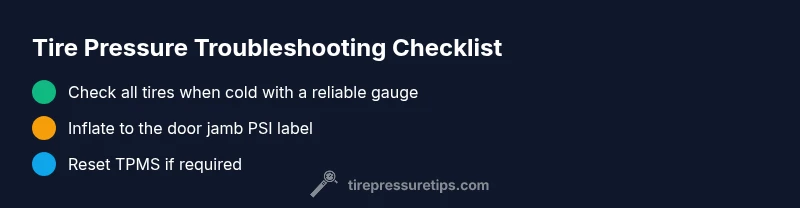
- Check all tires with a reliable gauge.
- Inflate to cold PSI from the door jamb label.
- Reset TPMS after inflation or sensor work.
- Inspect for leaks and damage before driving far.
- If warnings persist, seek professional inspection.