What is tire pressure and how do you check it
Learn what tire pressure means, why it matters for safety and efficiency, and a practical, step-by-step guide to check and adjust it using gauges and TPMS.


Tire pressure is the air pressure inside each tire, measured in PSI (pounds per square inch) or kPa. Proper pressure improves safety, fuel economy, and tire wear. To check it, use a gauge when tires are cold, read the value from the vehicle placard or TPMS, and adjust with air as needed.
What tire pressure is and why it matters
Tire pressure is the air pressure inside each tire, typically measured in PSI (pounds per square inch) or kPa (kilopascals). Understanding this value helps you maintain safe handling, better wear, and more efficient fuel use. According to Tire Pressure Tips, maintaining correct pressure reduces rolling resistance and keeps TPMS readings meaningful. The recommended pressure isn't identical for every tire; it's specified by your vehicle in the door placard and owner’s manual, depending on load and driving conditions. Checking tires when they are cold yields the most accurate reading because heating from driving raises the pressure reading temporarily. Use a reliable gauge and check all four (or five, if you have a spare) tires to keep performance balanced.
PSI, kPa, and the role of the placard
Tire pressure is commonly shown in PSI in the U.S., while many other regions use kilopascals (kPa). If your gauge displays both units, you can switch as you prefer. The door jamb placard lists the recommended pressure for front and rear tires under standard load, and the owner’s manual may provide adjustments for heavier cargo or towing. When inflating, aim for the values on the placard and re-check after a short rest, since a tire’s shape changes with air movement and temperature. Remember TPMS readings are a guide; a physical gauge confirms the exact pressure.
How temperature and driving affect tire pressure
Tire pressure changes with temperature: cold air lowers pressure and heat raises it. A cold morning reading will typically differ from a reading after a long drive. Regular exposure to sun, road heat, and ambient conditions can cause gradual changes over weeks. The TPMS can alert you to low pressure, but it won't tell you the exact target value. Regular checks help you catch leaks early and maintain even tire wear.
Essential tools and where to get them
To check tire pressure accurately, you’ll need a tire pressure gauge, a source of clean air, and access to your vehicle’s recommended values. A digital gauge is often easier to read, but an analog gauge can be just as accurate if used correctly. Use the vehicle placard or owner's manual to know your target pressures. You may perform checks at home with an air pump or at a gas station with a built-in gauge.
Step-by-step: checking tire pressure the right way
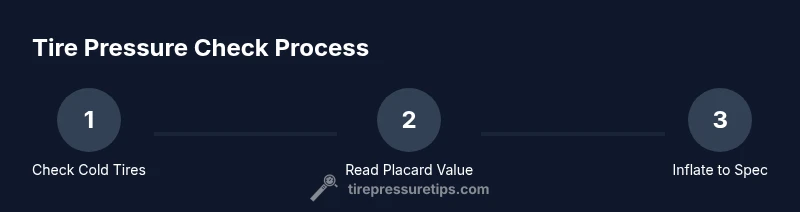
This section provides a concise, actionable sequence you can follow any time you want to verify tire pressure. Park on level ground with the engine off and tires cold. Locate the correct pressure spec on the placard or manual. Remove the valve cap and place the gauge on the valve stem, ensuring a good seal. Read the pressure, then inflate or deflate to the recommended value and re-check. Replace the valve cap and repeat for all tires. Consistency matters, so use the same gauge each time.
Common mistakes and how to avoid them
Common mistakes include checking when the tires are warm, using a poorly calibrated gauge, inflating beyond the vehicle’s recommended pressure, and ignoring differences between front and rear tire specs. To avoid these, always check cold tires, verify with a reliable gauge, and follow the placard values for each tire position. If you tow or carry heavy loads, ensure adjustments align with guidance in the owner’s manual.
When and how to adjust pressure and verify
Adjustments should be done in small increments, and readings should be taken after the tire has had a moment to settle. After inflating to the target, re-check to confirm accuracy. If TPMS warns continue after inflation, re-inspect for leaks or damaged valves. Regular checks help maintain grip, steering, and even tread wear over time.
Tools & Materials
- Tire pressure gauge(Digital or analog; accuracy ±1 PSI recommended)
- Air pump or access to air compressor(Use the same gauge for consistency if possible)
- Vehicle placard or owner's manual(Contains recommended PSI for front/rear tires)
- TPMS (if available) reset tool(Helpful if recalibration is needed after inflating)
- Cloth or rag(Wipe valve stem and gauge for clean readings)
Steps
Estimated time: 15-20 minutes
- 1
Prepare your tools and plan
Park on a level surface with the engine off and gather your gauge, air source, and vehicle documents. Confirm tires are cold or have cooled for at least several hours since last drive. This ensures accurate readings and avoids heat-related overestimation.
Tip: Keeping a small notebook helps you track readings over time. - 2
Find the correct pressure spec
Check the door placard or owner’s manual for the recommended PSI range, noting differences between front and rear tires and any load-specific adjustments. If you tow or carry heavy cargo, use the higher value shown there.
Tip: If you can't locate the spec, contact the vehicle manufacturer or refer to the manual. - 3
Check each tire
Remove the valve cap, place the gauge on the valve stem, and take a steady reading. Do this for all tires, including the spare where applicable. Record each result for future reference.
Tip: Hold the gauge perpendicular to the valve stem to avoid leaks and ensure a clean seal. - 4
Inflate or deflate to spec
If a tire is underinflated, add air in small increments and re-check after each addition. If overinflated, release air in small bursts and re-check. Repeat until all tires sit within the recommended range.
Tip: Avoid overfilling; you can always add air, but removing excess air requires time and patience. - 5
Re-check and cap
After reaching the target pressure, re-check all readings and ensure each valve cap is tightened. This helps prevent dirt entry and accidental pressure loss.
Tip: Tighten caps hand-tight; do not overtighten and risk breaking the valve. - 6
Final verification and recording
Compare all readings to the placard values, noting any deviations. If readings remain inconsistent after inflation, consider a professional inspection for leaks.
Tip: Document the numbers and the date; it helps track changes over time.
Frequently Asked Questions
Why is tire pressure important for safety and performance?
Tire pressure influences grip, steering response, braking, and tire wear. Maintaining the correct level helps ensure predictable handling and can improve efficiency. Regular checks are a fundamental part of vehicle maintenance.
Tire pressure affects safety and performance; keeping tires at the correct level helps grip and efficiency.
Can I check tire pressure when the tires are hot?
Reading tires while hot can give you a higher number than the true cold value. For the most accurate result, check when tires are cold and allow a cooling period after driving.
Check tires when they’re cold for accuracy; hot tires skew readings.
Where can I find the correct tire pressure for my vehicle?
Look at the door placard on the driver’s side or consult the owner’s manual. The placard lists front and rear pressures and any special conditions.
Use the door placard or owner’s manual for the correct pressures.
How often should I check tire pressure?
Check at least monthly and before long trips, especially with changes in seasons or loads. Regular checks help prevent under- or over-inflation.
Check monthly and before trips to stay safe and efficient.
What if the TPMS warning light stays on after inflating?
Re-check with a gauge to confirm the reading. Inspect for leaks or damaged valves and consider professional service if the light remains illuminated.
If the light stays on, re-check and inspect for leaks; seek service if needed.
Watch Video
What to Remember
- Check tires when cold for accuracy
- Follow the placard for target pressures
- Use a reliable gauge and recheck after inflating
- Address TPMS readings as guidance plus a physical check