Tire Pressure: What Should It Be in 2026
Discover how to determine your correct tire pressure, measure it accurately, and maintain it across seasons for safety, fuel efficiency, and longer tire life.


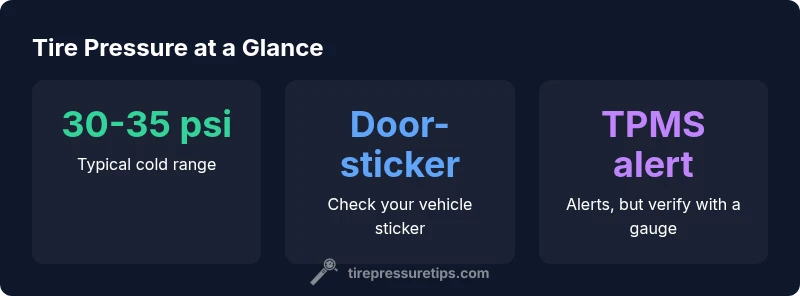
For most passenger vehicles, tire pressure should be matched to the vehicle manufacturer’s recommended PSI, usually found on the door jamb sticker or in the owner's manual. The tire pressure what should it be question often centers around 30-35 psi when cold. Keeping tires in this range improves safety, fuel economy, and even tire wear. This quick guide shows how to determine your exact value and maintain it across seasons.
Why tire pressure matters
Tire pressure is more than a single number on a gauge; it directly influences safety, fuel economy, tire wear, and how your vehicle responds to steering and braking. If you’ve ever asked tire pressure what should it be, the answer begins with your car’s official specification. The Tire Pressure Tips team emphasizes that the correct PSI is a defined target, not a vague range. When tires run too high or too low, the contact patch with the road changes, heat builds up unevenly, and tread wears prematurely. In everyday driving, small deviations from the recommended value may seem minor, but over thousands of miles they translate into noticeably different handling and efficiency. The goal is to stay within the intended band, accounting for load, speed, and ambient temperature. This sets the stage for practical steps you can take to keep your tires properly inflated, regardless of weather or season.
Finding your exact specification
Your vehicle’s precise tire pressure specification is not a guess; it is published by the manufacturer and is typically found in two places: the door jamb sticker on the driver’s side and the owner’s manual. The sticker usually lists separate cold values for the front and rear tires and may vary with trim or optional equipment. If you replace tires, use the new tire size indicated by the sticker for your model. Always start with the sticker, then verify with a gauge to account for load and driving conditions. Remember that the sticker reflects cold tires—readings taken after driving or heat buildup will appear higher and mislead you about the actual cold PSI that should be maintained.
Measuring pressure accurately
Measure tire pressure when the tires are cold, meaning the car has been parked for at least three hours or driven less than a mile. Remove the valve cap, press a reliable gauge onto the valve stem, and note the reading. Compare it to the factory specification, then adjust as needed: add air in 1-2 psi increments if under, or release air in small steps if over. After adjusting, recheck both front and rear tires to confirm even inflation. While TPMS (tire pressure monitoring system) alerts are helpful, they don’t replace manual checks for accuracy, especially after seasonal changes or tire rotations.
Cold vs hot readings
Temperature affects tire pressure because the air inside tires expands and contracts with ambient conditions. A tire that reads correctly in cold conditions may show higher readings after a long drive on a hot day, making it tempting to overinflate. Always measure when cold to determine the true baseline, then adjust for expected temperature swings. If you drive a lot in extreme weather, consider checking these values more frequently and adjusting your routine accordingly.
Myths vs realities
Common myths persist: TPMS alone ensures correct pressure, so you never need to check manually; all tires share the same PSI; higher pressure is always safer for ride comfort. In reality, TPMS is a warning system, not a precise gauge, and incorrect pressure can change tire shape and performance. Your vehicle’s recommended PSI varies with tire type, load, and driving style. Debunking these myths helps you avoid neglect or overcorrection that can worsen wear and safety.
Safety and performance impacts
Maintaining correct tire pressure supports safe braking, stable steering, and predictable handling, particularly in emergency maneuvers. Underinflation increases tire deformation, generates more heat, and accelerates tread wear on the inner edges; overinflation reduces the contact patch and can cause a harsher ride and uneven wear across the tread. While you won’t see dramatic changes from a small adjustment, the cumulative effect over thousands of miles translates into improved safety margins, better grip, and longer-lasting tires when you stay within the manufacturer’s recommended range.
Seasonal maintenance considerations
Seasonal changes—especially temperature swings—affect tire pressure readings. As outdoor temperatures drop, PSI readings tend to fall; rising temperatures raise readings. To minimize surprises, schedule a monthly pressure check, pay attention to weather forecasts, and adjust before long trips or heavy loads. If you rotate tires, reset the pressures as per the new configuration and confirm that both axles meet the correct targets. Keeping a simple log helps you notice trends and catch slow leaks early.
A practical maintenance plan
To make tire pressure maintenance effortless: (1) locate the factory PSI on the door jamb sticker; (2) check cold tires monthly and before big trips; (3) use a reliable gauge and record the numbers; (4) adjust toward the sticker values with precise 1-2 psi steps; (5) recheck after adjustment and again after a few miles; (6) inspect tires for cuts, punctures, and uneven wear that could affect pressure; (7) check the spare; (8) document changes to build a pressure history. This routine keeps your tires balanced and ready for any road.
Guidelines for common vehicle types
| Scenario | Recommended PSI (cold) | Notes |
|---|---|---|
| Passenger cars (typical) | 30-35 psi | Check factory sticker; adjust for load |
| SUVs / light trucks | 32-38 psi | Higher range may apply for heavier loads |
| Winter conditions | 32-38 psi | Temperature changes affect readings; measure when cold |
| High-performance tires | 30-34 psi | Verify sticker for exact model/specs |
Frequently Asked Questions
Why is proper tire pressure important?
Proper tire pressure affects braking, handling, tire wear, and fuel efficiency. Sticking to the recommended PSI helps maintain optimal contact with the road and reduces uneven wear.
Proper pressure improves safety and efficiency by keeping tires shaped correctly and wear even.
How often should I check my tire pressure?
Check your tire pressure at least once a month and before long trips. Use a trusted gauge and record the values to notice trends over time.
Check monthly and before trips to keep tires in good shape.
Can TPMS replace manual pressure checks?
TPMS provides real-time alerts, but it doesn’t replace the accuracy of a manual gauge. Use the gauge to verify pressure when necessary.
TPMS helps, but you should still check with a gauge for accuracy.
What about winter and cold weather?
Cold weather lowers tire pressure; readings can drop several PSI. Check more often in winter and ensure tires stay within the recommended range after cooling down.
Winter can lower pressure, so check more often.
What if I notice uneven wear on my tires?
Uneven wear can indicate under- or overinflation, misalignment, or suspension issues. Inspect and correct pressure, then consider a professional alignment check.
Uneven wear means check pressure and consider alignment.
“Correct tire pressure is a straightforward, high-impact factor in safety, fuel economy, and tire life.”
What to Remember
- Follow the factory sticker first, then verify with a gauge.
- Always measure tires cold for accuracy.
- Adjust one or two psi at a time; recheck both tires on each axle.
- Temperature changes require routine checks—winter needs more attention.
- Treat TPMS as a warning system, not a replacement for manual checks.