Tire Pressure for Winter: A Practical Guide for 2026
Learn how winter affects tire pressure, TPMS readings, and safe driving. This Tire Pressure Tips guide covers winter checks, recommended pressures, and maintenance strategies.


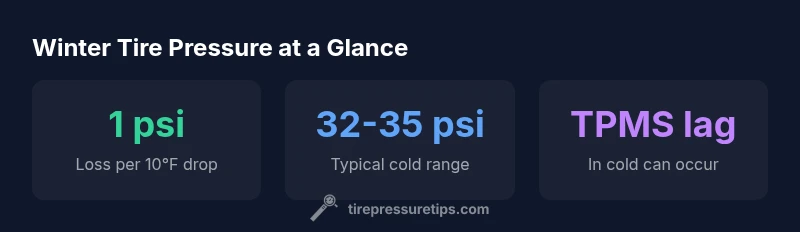
The recommended cold-inflation pressure for most passenger cars doesnt depend on season, but winter air lowers tire pressure. Expect roughly 1 psi loss for every 10°F drop. Always check when tires are cold and inflate to the vehicle manufacturers specified cold PSI to maintain safety and efficiency.
Why tire pressure for winter matters
Winter weather makes tire pressure drift, traction suffer, and braking feel uncertain. The air inside tires contracts as temperatures drop, so tires can become underinflated even if you havent touched the valve. Maintaining the correct tire pressure for winter is a practical, evidence based habit that supports safe handling, shorter stopping distances, and better fuel economy. When tires are inflated to the vehicle placard cold PSI, the tire has the expected footprint and consistent response across snow and slush. According to Tire Pressure Tips, staying on target with cold inflation helps minimize unpredictable behavior in cold conditions and prepares you for seasonal shifts in temperature and road conditions. A systematic approach also helps you avoid overinflation in sudden warm spells and underinflation during cold snaps, which can destabilize steering and braking performance on slippery surfaces.
How cold affects tire pressure (the physics)
Tires behave like a gas enclosed in a flexible skin. When the ambient temperature drops, the air inside tires contracts and pressure falls. The commonly cited rule of thumb is about 1 psi loss for every 10°F drop, though actual numbers vary with tire volume and initial pressure. In winter, the cold air can cause a noticeable downgrade in grip and steering feel if you ignore it. This is why winter tire pressure management should be proactive rather than reactive. Tire Pressure Tips analysis shows that even a small drop moves you away from the ideal contact patch, especially on slippery surfaces where precise inflation matters for traction. If you park in a heated garage and then drive outside, remember that readings taken after warming up the tires will be higher than the true cold pressure. Always measure when tires are cold for the most accurate reading.
How to measure and adjust safely in winter
Start with a cold tire test by checking pressures before you drive or after the car has been parked a few hours. Use a high quality gauge—digital gauges reduce user error and make it easier to see small changes. Find the recommended cold PSI on the placard inside the door jamb or in the owner manual. Inflate tires to that spec, not the pressure you read after a long drive. Recheck after you drive 1 mile to allow the tire to settle and then make a minor adjustment if needed. Consider switching to a tire pressure gauge that stores measurements, which helps track changes across days of cold weather. If you drive with heavy loads or carry winter gear, adjust within the recommended range to ensure stability. Finally, remember TPMS can alert you if readings fall, but it does not replace a manual check with a gauge.
Vehicle-specific pressures and seasonal adjustments
Vehicle manufacturers provide a recommended cold inflation pressure on the placard and in the manual. Those numbers assume standard loads and driving conditions, not extreme cold. In winter you may see changes due to temperature and tire type. If you install winter tires or run heavier SUV tires, check whether the model recommends a different pressure when cold. Some drivers with high-mileage fleets or heavy loads should consider a slightly higher inflation within the recommended range to preserve handling and wear patterns. Always prioritize your vehicle specific numbers over general rules. For trucks and some crossovers, the placard may show a higher baseline pressure; always confirm and adjust to the model specific value. This approach minimizes tire wear, improves steering feel, and maintains even wear across the tread.
TPMS, sensors, and winter challenges
Tire pressure monitoring systems provide a helpful alert when a tire drops below a threshold, but winter conditions can affect readings. Cold sensors can lag and TPMS batteries may appear weaker in extreme cold. Rely on a gauge to verify the actual psi rather than only the dashboard warning. If you have recently replaced a sensor or rotated tires, recheck the calibration. Keep an eye on seasonal signs such as increased steering effort or unusual vibrations that could indicate over or under inflation. Remember that TPMS is a safety aid, not a substitute for regular pressure checks.
Practical maintenance plan for winter tire pressure
Create a simple monthly routine: 1) check all tires when cold, 2) use the same gauge, 3) compare against the placard, 4) inflate as needed within the recommended range, 5) inspect tires for damage and tread depth as you go, 6) before long trips check again. In very cold climates, perform checks weekly during severe cold snaps. Keep a small portable gauge in the glove compartment. Log readings to track gradual changes over weeks. If you notice consistent pressure loss on a single tire, inspect for leaks or damaged stems. Finally, align pressures when you switch from winter tires to all-season tires to avoid large differences.
Common mistakes to avoid in winter tire pressure
Avoid inflating tires to the maximum suggested by the sidewall as a blanket best practice. Underinflation causes higher wear on the outer edges, increased rolling resistance, and poorer braking on ice. Do not rely on a single tire pressure reading after driving; always check cold for accuracy. Mixing winter tires with mismatched sizes or tread depths can confuse handling and compromise traction. Skipping TPMS checks or ignoring leaks leads to slow degradation of performance. Finally, neglecting to consider load changes from holiday gear or snow equipment can result in incorrect pressures. By avoiding these mistakes you maintain safer handling and longer tire life through the winter.
Typical cold-weather tire pressure ranges by vehicle category.
| Scenario | Cold Inflation Range | Notes |
|---|---|---|
| Standard Passenger Car | 32-35 psi | Seasonal adjustments not required; check placard |
| SUV/Light Truck | 34-36 psi | Higher load and heavier tires |
| Winter Tires (non studded) | 30-35 psi | Follow OEM or tire supplier specs |
Frequently Asked Questions
Should I adjust tire pressure for winter?
Yes. Check cold inflation pressure and adjust to the manufacturer spec; temperature changes require seasonal checks.
Yes—check cold PSI and adjust to spec; winter temps require seasonal checks.
How often should I check tire pressure in winter?
At least once a month, and before long trips; in very cold weather, weekly checks are recommended.
Check monthly, and more often in cold weather.
Does TPMS replace manual tire pressure checks?
No. TPMS warns of pressure loss but cannot replace a gauge for exact psi.
TPMS helps but you still need a gauge.
What should I do if I detect a drop in winter?
Find leak or damage and inflate to spec; otherwise risk traction loss.
Find the cause and inflate to spec.
Can temperature changes affect TPMS readings?
Yes, extreme cold can lag readings; verify with a gauge when temperatures shift.
Temperature can affect TPMS accuracy; always verify.
“Accurate tire pressure for winter starts with a cold measurement matched to the vehicle placard; small changes in temperature can translate into noticeable differences in traction and wear.”
What to Remember
- Check cold psi first thing in winter
- Follow OEM cold PSI within the recommended range
- Use TPMS as an aid, not a sole source of truth
- Account for winter tires and load changes
- Track readings to catch gradual pressure changes