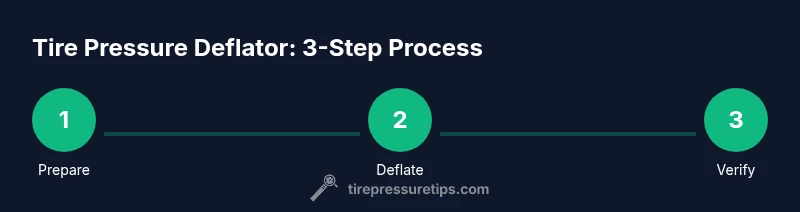
How to Use a Tire Pressure Deflator: Step-by-Step Guide
Learn how to safely and accurately deflate tires with a tire pressure deflator. This comprehensive guide covers tools, step-by-step usage, safety tips, maintenance, and how to choose the right deflator for your vehicle.


By the end of this guide you will safely deflate a tire to its target pressure using a tire pressure deflator, a gauge, and a calm, methodical approach. This 2-3 minute process helps you avoid under- or over-deflation and complements TPMS readings. According to Tire Pressure Tips, using a purpose-built deflator improves accuracy and reduces the risk of sudden air loss during adjustment.
Why tire pressure deflator matters
Maintaining correct tire pressure isn't only about fuel economy or tire life; it's a safety issue. A tire pressure deflator is a tool that lets you release air from a tire in controlled increments so you can reach an exact target rather than guess at the read on a gauge or rely solely on TPMS warnings. According to Tire Pressure Tips, precise deflation helps ensure the tire maintains proper contact with the road under varying loads and temperatures, reduces bulging on the sidewall during underinflation, and minimizes the risk of sudden air loss when pressures are adjusted in a hurry. When you combine a deflator with a reliable gauge, you gain a repeatable process you can apply to all four tires, regardless of brand or vehicle age. In practice, drivers often overlook that TPMS can report higher or lower pressures than the true valve pressure; a manual deflation step verifies and calibrates readings. This section covers the core reasons to add a deflator to your toolkit and how it fits into a safety-first tire maintenance routine.
Types of tire pressure deflators
Tire pressure deflators come in several forms, each with its own pros and cons. The most common are bleed-type valves that thread onto the valve stem, built-in bleed channels on some gauges, and integrated deflators on portable air pumps. Bleed-type deflators allow fine control by removing air in small increments, which is ideal for achieving an exact target pressure. Built-in bleed channels on gauges provide convenience but may offer limited control for very precise needs. Integrated deflators on air pumps can simplify the process, especially when you need both deflate and inflate capabilities in one tool. The best choice depends on your vehicle type, typical tire pressure, and how precise you want to be with each adjustment. The Tire Pressure Tips team suggests matching your deflator to your most common use case—daily driving versus periodic tire maintenance. Keep in mind that some deflators require manual operation, while others may show readings directly on the gauge as you bleed air. Always ensure the tool is clean, undamaged, and compatible with your valve stems.
How to choose the right deflator for your vehicle
Choosing the right tire pressure deflator depends on several factors, including venting control, compatibility with your valve stems, and how you plan to use it. If you regularly top off with a compressor, an integrated deflator on a gauge or pump can save time. For precision and consistency across all four tires, a separate bleed-type deflator may be preferable because you can control each release in smaller increments. It’s also important to consider valve stem design, as some deflators may not seal properly on older or extended-length stems. Vehicle type matters too: lightweight passenger cars with standard valve stems are generally compatible with most deflators, while trucks and SUVs with heavy-duty stems may require a larger thread or a different adapter. Always read product compatibility notes and confirm that the tool works with your tire sizes. Finally, verify that your deflator’s operation remains smooth and that threads, o-rings, and seals are intact to prevent slow leaks during deflation.
How to use a tire pressure deflator safely
Safe deflation starts with preparation and a calm routine. Begin by parking on a flat surface, turning off the vehicle, applying wheel chocks, and removing the valve cap. Place the deflator onto the valve stem and secure it so air escapes only through the deflator’s bleed path. Gently release air in small increments, pausing to check the gauge after each burst. Do not rush the process; rapid deflation can cause uneven tire contact and sudden temperature shifts that distort readings. Once you approach the target pressure, pause more frequently to confirm accuracy with your gauge before removing the deflator. Replace the valve cap and recheck after driving a few miles to account for tire heat and temperature changes. If a tire is underinflated or overinflated, repeat the steps for that tire only. A well-calibrated deflator with a reliable gauge improves accuracy over relying solely on an electronic TPMS.
Safety considerations and best practices
Safety first means using appropriate gloves, working in a well-lit area, and ensuring the car is stationary with the parking brake engaged. Never deflate while the vehicle is in motion, and always deflate on a level surface to prevent the tire from tipping or rolling. Keep hands and tools clear of rotating parts if you must move the vehicle after adjustments. Regularly inspect your deflator for wear, especially the bleed valve and seals, and replace any damaged parts immediately. Store the deflator clean and dry to prevent corrosion or jammed valves. Remember that ambient temperature affects tire pressure; deflate or inflate with temperature-considerate timing—for example, in moderate conditions rather than extreme heat or cold—and verify readings after the tires cool.
Maintenance and care for your deflator and gauges
To keep your tire pressure deflator and gauges accurate, calibrate your gauge periodically using a known reference pressure, and replace batteries in digital gauges as needed. Clean the bleed path during or after use to prevent debris from sticking in the valve. Lubricate moving parts sparingly with manufacturer-approved lubricants if the deflator has a mechanical linkage. Keep a small spare cap and sealing washers in your toolkit in case a valve stem cap is damaged during use. Document last calibration and maintenance dates so you can plan timely rechecks and avoid drift in readings over time.
Common mistakes and how to avoid them
Common mistakes include deflating too quickly, failing to recheck after minor adjustments, and ignoring the effect of tire temperature on pressure readings. Avoid over-deflating by using small increments and pausing to read the gauge. Don’t rely on TPMS alone for final readings; manual measurement is essential for accuracy. Ensure you re-seat the valve cap properly to prevent dirt ingress that can cause slow leaks. Finally, never deflate without wheel chocks and a parked, safe environment. A methodical approach reduces error and helps you reach the target more reliably.
Cross-checks with TPMS and manual gauges
TPMS is a helpful alert system, but it should not replace a manual check with a gauge when adjusting tire pressure. Use the tire pressure deflator to bring the tire to the exact target, then verify with your gauge and compare to the manufacturer’s specification label on the door jamb or in the owner's manual. If the readings differ significantly, consider rechecking the valve stem and reusing the deflator to confirm accuracy. This cross-check ensures you have an accurate baseline for safety, tire wear, and fuel efficiency.
Practical checklist before a trip
Before hitting the road, verify all tires are within the target range using a gauge after any deflation or inflation. Recheck when tires have cooled for at least three hours or after 2-3 miles of driving to allow heat to dissipate. Confirm that the TPMS warning indicators are consistent with gauge readings and the manufacturer’s spec. Keep your deflator and gauge in good condition, and replace worn parts as needed. A quick pre-trip check with a reliable deflator results in better handling, safer cornering, and longer tire life.
Tools & Materials
- tire pressure deflator(Bleed-type valve or built-in deflator on a gauge)
- tire pressure gauge(Analog or digital; ensure it's calibrated)
- wheel chocks(Place on both sides of the tire to prevent movement)
- vehicle owner’s manual / tire pressure chart(Target pressures by tire and load)
- gloves(Hand protection during deflation)
- notepad or marker(Record readings for maintenance tracking)
Steps
Estimated time: 15-25 minutes
- 1
Prepare the vehicle and safety checks
Park on a flat surface, apply the parking brake, and place wheel chocks in front of and behind the tire you’ll adjust. Remove the valve cap to inspect the stem. Review the target pressure from the owner’s manual or door placard before beginning.
Tip: Keep your gloves on for grip and to avoid grime on hands. - 2
Attach deflator and align
Place the deflator over the valve stem and ensure a snug seal. If your deflator threads onto the valve, start threading gently; otherwise, press the bleed path into the valve opening without forcing it.
Tip: Ensure no dirt or debris is inside the valve stem before seating the deflator. - 3
Begin controlled deflation
Slowly release air in small increments, pausing to check the gauge after each burst. Aim for steady, gradual decreases to avoid overshooting the target.
Tip: Small bursts reduce the chance of underinflation due to temperature change or gauge lag. - 4
Check against target pressure
Once you’re near the target, intermittently measure with the gauge to confirm accuracy. Do not rely solely on the TPMS reading; cross-check with your manual gauge.
Tip: If you’re unsure, deflate by another small increment and re-check. - 5
Secure stem and recheck
Replace the valve cap firmly and recheck the tire after driving a short distance or after tires cool down to account for temperature effects.
Tip: Tires heat up quickly after driving; recheck once they’ve cooled for an accurate reading. - 6
Repeat for remaining tires
Proceed to the other tires using the same controlled deflation process, ensuring consistency across all wheels.
Tip: Maintain a simple record of final pressures for all tires. - 7
Document final readings
Note the final pressures and the date of adjustment for maintenance records. This helps future checks and aligns with seasonal tire care.
Tip: Keep the notes with your vehicle’s toolkit for quick reference. - 8
Store tools properly
Clean and dry your deflator and gauge, then store them in a designated pocket of your tool bag. Replace any worn seals or o-rings as needed.
Tip: Proper storage prevents corrosion and ensures longevity.
Frequently Asked Questions
Can I use any deflator on all tire types?
Most deflators work with standard valve stems on passenger cars, but some heavy-duty stems or specialty tires may require adapters. Always verify compatibility with your tires and valve stems before use.
Most deflators fit standard stems on passenger cars, but check compatibility with your tires and stems before use.
Is a tire pressure deflator safe to use on TPMS-equipped tires?
Yes. Use the deflator to manually verify pressure readings and then compare to the TPMS display. Do not rely solely on TPMS for the final target pressure.
Yes, but verify with a manual gauge and compare to TPMS readings.
How often should I check tire pressure?
Check tire pressure at least monthly and before long trips. Temperature changes and vehicle load can alter pressure, so regular checks help maintain safety.
Check at least monthly and before long trips.
Can I over-deflate or under-deflate using a deflator?
Yes, it’s possible. Use small increments and recheck frequently to avoid overshooting the target. If in doubt, re-evaluate after a cooling period.
Yes, but deflate slowly and recheck often to avoid mistakes.
Do I need to deflate all tires the same amount?
Not necessarily. Tire pressure targets can vary by axle load, tire size, and manufacturer guidance. Always target each tire to its recommended specification for that wheel.
Usually, different tires may have different targets; follow the manufacturer specs per tire.
Watch Video
What to Remember
- Use a proper deflator and gauge together
- Check when tires are cold for accuracy
- Cross-check with TPMS and manual gauge
- Document final tire pressures