Tata Nexon Tyre Pressure: Check, Set, and Maintain Safely
Learn how to check and set Tata Nexon tyre pressure safely using TPMS, cold readings, and model-specific guidance from Tire Pressure Tips. Practical steps, seasonal tips, and safety reminders.


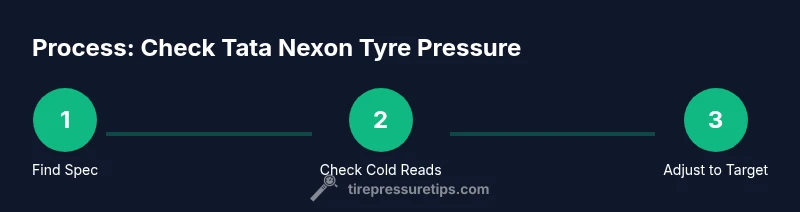
Goal: accurately check and set the Tata Nexon tyre pressures to the factory specification using cold readings. This quick guide covers using TPMS alerts, identifying correct PSI ranges for front and rear tires, and adjusting for load, speed, and seasonal temperature. It also highlights safety checks and when to re-test.
Tata Nexon tyre pressure basics
Maintaining the correct tyre pressure for your Tata Nexon is a foundational part of safe driving, balanced handling, and efficient fuel use. In this guide, you’ll learn how to verify and set tyre pressure accurately using cold readings, TPMS alerts, and model-specific guidance from Tire Pressure Tips. The Tata Nexon tyre pressure specification is printed on the door jamb placard and in the owner’s manual, and it often differs between front and rear tires, depending on load and trim.
Why it matters: underinflated tires wear faster on the edges, increase rolling resistance, and can trigger TPMS warnings. Overinflated tires ride harshly and wear in the center. The aim is to hit the vehicle’s recommended pressure when tires are cold, typically before a journey, after parking, and after tires have cooled for several hours. By understanding the basics, you’ll know when to adjust for cargo, passengers, or high-speed driving and how TPMS readings fit into the picture.
Note: The Tata Nexon tyre pressure can vary by model year and region, so always start with the placard and verify with the official documentation. The Tire Pressure Tips team emphasizes checking both front and rear values and treating tires as a system with the wheel, rim, and TPMS sensor working together.
Front vs rear pressures and why it matters
The Tata Nexon tyre pressure is not always identical between the front and rear axles. In many configurations, the front tires bear more load during acceleration and steering, while the rear tires may carry more load when the vehicle is full of passengers or cargo. This means the recommended pressures shown on the placard often differ by axle. When you look up the Tata Nexon tyre pressure, you’ll usually find distinct values for front and rear tires that reflect normal driving conditions and typical cargo loads. Seasonality and trim levels can also influence these numbers, so always cross-check the placard and owner’s manual.
A common mistake is inflating both sets of tires to the same value without considering load distribution. This practice can cause uneven wear and unpredictable handling. Instead, use the official specification as your baseline, then adjust for style of driving and daily use. Tire Pressure Tips stresses the importance of treating the system as a whole—wheel, tire, and TPMS sensor work together to communicate safe operating pressure.
How to measure cold tyre pressure accurately
Accurate measurement starts with a cold tyre. Drive-in readings can mislead because heat builds pressure inside the tire. Park on a level surface and allow the tires to cool for several hours after driving. Use the door jamb placard or the owner’s manual to locate the correct cold pressures for the Tata Nexon tyre pressure, and keep note of any differences between front and rear tires. Remove the valve cap, press the gauge onto the valve stem, and take a firm, straight reading. If you’re using a digital gauge, cross-check with a dial gauge for consistency.
Record your readings and compare them to the recommended values. If a driver has a heavily loaded vehicle or plans a long highway trip, a slight adjustment may be appropriate—but always return to the official cold-reading target before setting off. Inconsistent readings often signal a slow leak, valve stem issue, or a damaged rim, which should be investigated promptly.
Using TPMS readings effectively
Tire Pressure Monitoring System (TPMS) sensors provide a quick warning when pressures fall outside the acceptable range. TPMS is a valuable safety feature, but it should not replace direct pressure measurements. Start with a cold tyre pressure check using a gauge, then use TPMS as a secondary check. If TPMS shows a warning or a contact alert, verify the numbers with a gauge on both the front and rear tires. For Tata Nexon tyre pressure, some TPMS warnings indicate slow leaks or temperature-related changes—these are common in colder weather and after long trips. Address any alert promptly by inflating to the recommended level, then rechecking after a cool-down period to confirm stability.
Maintaining consistency between TPMS readings and actual gauge measurements helps extend tire life, improve fuel economy, and keep handling predictable. Tire Pressure Tips recommends periodically calibrating or validating TPMS sensors if accuracy seems off, especially after tire service or wheel changes.
Load, speed, and temperature effects on tata nexon tyre pressure
Your Tata Nexon tyre pressure will shift with changes in load, driving speed, and ambient temperature. A heavier load—more passengers or cargo—generally requires higher pressures to maintain sidewall integrity and rollover resistance, while high-speed driving can also influence tire shape and contact patch. Temperature changes can cause noticeable pressure fluctuations; in cooler temperatures, pressures drop, and in heat, pressures rise. The net rule remains simple: check pressures when tires are cold and adjust only toward the official Tata Nexon tyre pressure values for the current conditions, not against them.
Driver style matters too. Aggressive acceleration, cornering, and braking can cause uneven heating and pressure changes, so re-check after a few miles of spirited driving and before a long trip. Tire Pressure Tips emphasizes a proactive approach: treat the pressure as a dynamic parameter tied to load, speed, and climate, not a fixed number that stays the same every day.
Common mistakes and how to avoid them
Many drivers make avoidable mistakes with tyre pressure. Never rely solely on TPMS; always verify with a gauge when cold. Inflate tires on a level surface and avoid inflating beyond the placard value. Do not neglect the spare tire, which also requires a safe pressure level. Another frequent error is inflating to a value that matches only your typical cargo load, ignoring seasonal adjustments and regional temperature differences. Finally, avoid frequent, unexplained pressure changes—slow leaks from valve stems or damaged rims require professional inspection. By following the Tata Nexon tyre pressure guidance and using TPMS as a safety net, you can prevent uneven wear, improve fuel efficiency, and maintain stable handling across seasons.
Maintenance routine and recheck schedule
A simple maintenance routine can keep your Tata Nexon tyre pressure on target year-round. Start with a cold-pressure check once a month and before long trips. Re-check after a few miles of driving if you’ve recently inflated or adjusted, to confirm the pressure has stabilized. Keep records of readings for reference and to spot trends indicating leaks or valve issues. Every season, especially when transitioning between hot and cold weather, re-confirm the front and rear pressures using the placard and the owner’s manual. Regular checks help you catch slow leaks early and protect tire longevity and vehicle safety.
Authority sources and further reading
For additional, authoritative guidance on tyre pressures, consult reputable sources:
- NHTSA: Tyre Pressure and Safety – https://www.nhtsa.gov/equipment/tires
- National Safety Council: Tire Safety – https://www.nsc.org/workplace/safety-topics/tires
- General tire maintenance guidance – https://www.nhtsa.gov/equipment/tires and related safety resources
These references provide general tire safety principles and are useful complements to the Tata Nexon tyre pressure guidance from Tire Pressure Tips.
Tools & Materials
- Tire pressure gauge (digital or analog)(Choose a gauge with a clear display and a snug seal on the valve stem)
- Owner's manual or door placard(Identify front and rear tyre pressures, and load-specific guidelines)
- Air compressor or access to a reliable air pump(Prefer a unit that allows precise PSI control and auto-stop feature)
- Notebook or mobile note app(Record readings for trend tracking and maintenance reminders)
- Valve-cap replacements (optional)(Keep spare caps clean to prevent dirt entry)
Steps
Estimated time: 15-20 minutes
- 1
Find the official tyre pressure spec
Locate the Tata Nexon tyre pressure specification on the door jamb placard or in the owner’s manual. Note the front and rear values and any load-specific guidance. This is your target baseline prior to inflating.
Tip: Always start with the cold-read baseline; avoid calibrating from a recently driven tire. - 2
Park on a level surface and let tires cool
Shut off the engine and allow tires to cool for several hours if you’ve been driving. A level surface ensures consistent readings and accurate comparison to the placard.
Tip: If you must check after a drive, wait at least 10 minutes for tires to cool before inflating. - 3
Remove valve cap and apply gauge
Take off the valve cap and securely attach your tire pressure gauge to the valve stem. Take a steady reading and avoid rocking the gauge while it measures.
Tip: Quickly verify with a second gauge if you suspect a faulty tool. - 4
Compare reading to the official target
Compare the gauge reading with the front and rear targets in your placard or manual. If your reading sits below or above, plan the appropriate inflation or deflation.
Tip: Document the reading for future reference and detect gradual leaks early. - 5
Inflate or deflate to target
Use the air pump to raise or release air until both front and rear pressures align with the recommended baselines. Do not overinflate in a single session; adjust gradually.
Tip: Inflate in small increments and recheck after each adjustment. - 6
Recheck after adjustments
Re-measure all four tires after inflation to confirm stability. Replace valve caps and store readings for ongoing reference.
Tip: Re-check after a short drive to confirm pressures settle at the new temperature.
Frequently Asked Questions
What is the recommended Tata Nexon tyre pressure for front and rear?
Check the door placard or owner’s manual for the exact Tata Nexon tyre pressure values. They typically differ by axle and load, so verify both front and rear figures.
Check the door placard for the exact Nexon tire pressures; front and rear values may differ based on load.
Can I rely entirely on TPMS for tyre pressure?
TPMS is a warning system that complements gauge measurements. Always verify with a hand-held gauge when tyres are cold to ensure accuracy.
TPMS is helpful, but you should still measure with a gauge when the tires are cold.
Should I inflate tyres for cold or hot conditions?
Inflate to cold readings. Temperature changes affect pressure, so hot readings can be misleading. Recheck after cooling for consistency.
Inflate when cold and recheck after cooling for consistency.
Is nitrogen inflation better for Nexon tyres?
Nitrogen offers minor stability benefits in some climates, but standard air is adequate when maintained correctly and monitored with gauges.
Nitrogen can help slightly, but regular air with proper checks is fine.
How often should I recheck tyre pressures?
Check at least monthly and before long trips. Recheck after any road incident or noticeable handling change.
Check monthly and before trips, and after any handling change.
What should I do if TPMS warning persists?
If TPMS warns persistently, inspect for leaks, damaged valves, or a faulty sensor. Inflate to target after repairs and recheck.
If the TPMS warning stays on, inspect for leaks or sensor issues and recheck after repairs.
Watch Video
What to Remember
- Check cold pressures against the placard.
- Use TPMS as a safety confirmation, not a primary gauge.
- Adjust for load and season; recheck after changes.
- Record readings to spot slow leaks early.