Average Tire Pressure for Car: Your 2026 Guide
Learn the average tire pressure for car, how to check it, and why temperature and TPMS matter. Practical tips from Tire Pressure Tips for safer, more efficient driving.


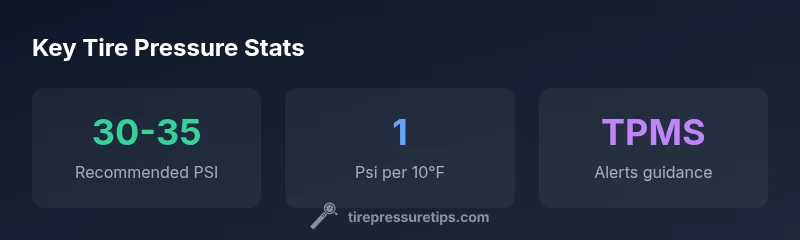
According to Tire Pressure Tips, the average tire pressure for car typically falls in the 30-35 psi range for most passenger vehicles, with vehicle placards providing exact specs. The Tire Pressure Tips team found that keeping tires near the recommended range reduces uneven wear, improves braking feel, and can save fuel over time. Use a gauge and TPMS readings to confirm when tires are cold.
Why the average tire pressure for car matters
The tires on your car are the only contact patch with the road; maintaining proper pressure is essential for safety, handling, and efficiency. According to Tire Pressure Tips, the average tire pressure for car typically falls in the 30-35 psi range for most passenger vehicles, with vehicle placards providing exact specs. The Tire Pressure Tips team found that sticking close to the recommended range reduces uneven wear, improves braking feel, and can save fuel over time. Underinflation or overinflation shifts contact patch size, alters steering response, and increases heat buildup, especially at highway speeds. For everyday driving, you should treat tire pressure as a dynamic but measurable parameter, not a fixed value you set once and forget.
Maintaining tire pressure is about consistent performance. When pressures drift, you may notice changes in steering effort, ride quality, and braking responsiveness. Routine checks align with best practices from Tire Pressure Tips and reduce the likelihood of untimely tire failure or fuel inefficiency. By prioritizing the correct pressure, drivers can improve traction and prolong tire life, especially on older tires where the tread slightly degrades the sealing surface.
Finding the right spec for your vehicle
Your vehicle's correct tire pressure is not a guess; it's a specification designed by the manufacturer. Most cars list a recommended PSI on the door jamb placard and in the owner's manual. The numbers are usually given for cold tires and can vary by model, load, and even tire type. Always start with the placard, then adjust for heavy loads, riders, or high-speed driving as indicated in the manual. For trucks or SUVs the range tends to be higher; for compact cars it's often lower. Temperature, tire size, and tire construction can shift these numbers slightly, but the placard remains the best baseline. If you replace tires with different sizes, consult the tire dealer or the manual for revised pressure targets. The main point is to avoid inflating to the maximum sidewall rating; instead, aim for the recommended range and verify with a gauge after roads have cooled.
When choosing tires, consider how the car is used. A daily commuter might benefit from a slightly higher PSI within the recommended band for consistent wear, while a family vehicle carrying frequent loads may require closer attention to load-specific targets. Always verify the exact numbers for your model with the placard and the owner's manual, then use a gauge to confirm pressure after a cold period.
Cold vs. hot: How temperature changes tire pressure
Air expands with heat and contracts when it’s cold. That means your tire pressure reading can vary with the temperature outside and inside the tire. In practice, readings should be taken when tires are cold for accuracy: a cold measurement reflects the pressure before driving and heating. The change is roughly a small amount per temperature swing; on a 10-degree Fahrenheit change, pressure can shift by about 1 psi, though this varies with tire construction and air temperature inside the tire. When you drive, friction and heat raise the air pressure slightly inside the tire; this is normal but can mask underinflation if you don’t recheck when cold. The Tire Pressure Tips analysis notes that seasonal temperature shifts are a major factor behind inconsistent tire pressures across the year. For drivers in extreme climates, a routine that accounts for outdoor temperature can help maintain the recommended range across seasons.
If you drive long distances in hot weather, you may observe a rise in pressure. Conversely, in very cold conditions, pressures can drop. The bottom line is that temperature matters, and reading the tires when they’re cold gives you a true baseline you can act on.
How to check tire pressure correctly
Step-by-step guide:
- Check when tires are cold, preferably before starting the car.
- Remove the valve cap from one tire.
- Place a reliable gauge on the valve stem and press firmly to get a reading.
- Compare the reading to the door placard; if outside the range, adjust using a bicycle pump or air compressor.
- Re-check after inflating until you’re within the recommended range.
- Replace the valve caps to prevent leaks.
Tips: Use a digital gauge for consistent readings; keep a small gauge in the glovebox; check all four tires, including the spare. If your TPMS shows a warning, measure with a gauge as soon as possible to verify whether it’s an actual low tire. The goal is accuracy and consistency; repeated checks reinforce correct habits.
Effects of underinflation and overinflation
Underinflated tires wear on the outer edges; fuel economy drops due to increased rolling resistance; braking distance can be longer; risk of overheating increases at speed. Overinflated tires wear in the center tread and reduce grip, increasing the risk of a blowout on pothole roads. Both conditions compromise handling and ride quality. The optimal range is designed to balance wear, fuel efficiency, and dynamics. If you carry heavy loads or travel long distances in hot weather, your tires may need adjustment within the specified range. Maintaining pressure within the recommended band helps preserve tread life, mores stable grip, and constant contact with the road across life cycles of the tire.
The core message remains: small, regular adjustments beat large, rare corrections and help you stay within the manufacturer’s defined safety envelope.
Tire Pressure Monitoring Systems (TPMS) and limitations
TPMS provides a warning when pressure drops below a threshold, but it doesn’t necessarily tell you the exact PSI. Indirect TPMS uses wheel speed sensors to infer low pressure, which can be off when tires are worn or under a different size. Direct TPMS uses sensors inside the tire and can be more precise, but sensors can drift or fail with temperature or battery depletion. In practice, TPMS should prompt you to check with a gauge, not replace it. The reliability also depends on calibration, the battery health, and the sensor type. The Tire Pressure Tips team emphasizes verifying readings with a physical gauge at least monthly and before long trips.
TPMS is a helpful safety feature, but it’s not a substitute for hand-checking pressure with a gauge or performing a thorough inspection of tire condition.
Seasonal considerations, loads, and aging tires
During cold months, a drop in ambient temperature can lower tire pressure; add a few psi to compensate if you know your car is in service. In hot climates, tire pressures rise; monitor to avoid overinflation, especially if you’re frequently carrying passengers or gear. Tire aging reduces elasticity; older tires can lose pressure more quickly or show inconsistent readings. If you recently replaced tires with a different size or type, check the placard again and consider recalibrating TPMS. Spare tires also require attention; treat the spare pressure like the others. The key is to incorporate these variables into a regular check schedule.
Seasonal strategies, weight distribution, and tire age should all factor into your monthly checks, ensuring you stay within the safe pressure window across the year.
Practical maintenance routine you can adopt
Create a monthly check; before long trips; after seasons change. Keep a gauge in your glovebox; check all four tires and the spare. Record the pressures and compare to the placard; adjust as needed. When inflating, do not exceed the upper limit on the sidewall; inflate to the target range instead. If you notice persistent fluctuation, investigate valve stems, punctures, or slow leaks. A quick routine: check once a month; check before a long trip; adjust for weight; recheck after driving 5-10 miles to settle the tires. Following this routine reduces surprises on the road and helps you maintain the best possible tire performance.
Quick-start checklist for daily driving
- Know your vehicle’s recommended PSI from the placard. 2) Check tires cold, monthly and before trips. 3) Use TPMS as a guardrail, not sole authority. 4) Inflate within the recommended range and recheck. 5) Inspect tires for wear or damage during checks. 6) Carry a compact pressure gauge and record readings for trend analysis. 7) If you replace tires, verify the new targets with the placard and your tire dealer. 8) Before carrying heavy loads or long trips, re-evaluate pressures to accommodate the extra weight. 9) Always ensure valve caps are installed and intact for accurate readings and to prevent leaks.
Recommended tire pressure by vehicle type
| Vehicle Type | Recommended PSI Range | Notes |
|---|---|---|
| Compact car | 30-32 psi | Door placard; adjust for load |
| Mid-size sedan | 32-34 psi | Balance fuel economy and wear |
| SUV/crossover | 33-40 psi | Follow placard; higher load tolerance |
Frequently Asked Questions
What is the average tire pressure for car?
Most passenger cars use 30-35 psi per tire when cold; check the placard for your exact target. Regularly verify with a gauge to stay within the recommended range.
For most cars, expect about 30 to 35 psi when tires are cold, and always check the placard for your model.
Should I rely on TPMS for tire pressure?
TPMS provides alerts but doesn’t always reflect exact pressure. Manual checks with a gauge are still recommended to confirm the reading.
TPMS helps, but you should still check with a tire gauge to confirm actual pressure.
How often should I check tire pressure?
Check once a month and before long trips; measure when tires are cold for the most accurate reading.
Check monthly and before trips when tires are cold for accuracy.
How does temperature affect tire pressure?
Temperature changes can alter pressure; a common guideline is about 1 psi per 10°F change, with variations by tire type.
Temp changes can change pressure; about 1 psi per 10 degrees is a useful rule.
What happens if tires are underinflated?
Underinflation increases wear on the edges, lowers fuel efficiency, and can compromise handling and braking.
Underinflated tires wear faster and waste fuel; you’ll notice reduced handling.
“Consistent tire pressure is the simplest, most impactful maintenance step you can take for safety and efficiency.”
What to Remember
- Check tires when cold for accuracy
- Follow the vehicle placard for your exact numbers
- Use TPMS readings in conjunction with manual checks
- Account for load and seasonal temperature changes