Low Tire Pressure: What to Do
Learn how to safely handle low tire pressure with a practical, step-by-step guide. Check PSI, inflate correctly, inspect for leaks, and maintain tires for safer travel.


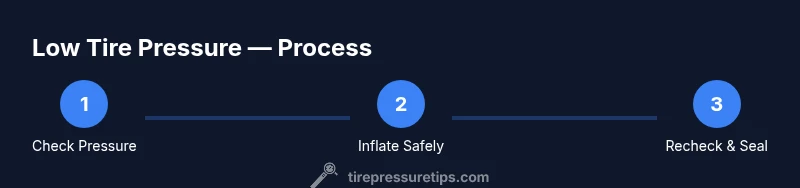
If you suspect low tire pressure, start by checking all tires with a reliable gauge when the tires are cold. Inflate to the vehicle’s recommended PSI as shown on the door placard or in the owner’s manual, then recheck. If pressures keep dropping, inspect for leaks, damaged valves, or a TPMS warning and visit a tire shop if needed.
Understanding Low Tire Pressure and Why It Matters
Low tire pressure is more than just a soft ride. Underinflation reduces fuel efficiency, affects handling, and accelerates tire wear. It also raises the risk of heat buildup during driving, which can lead to a blowout in extreme cases. According to Tire Pressure Tips, underinflation is a common issue that many drivers encounter, especially in changing weather. Tires that sit below the recommended PSI compromise the tire’s footprint and grip, reducing steering response and braking performance. Regularly monitoring tire pressure helps you avoid these risks and keeps your tires running safely longer. A simple pressure check should become part of your routine before long trips and after seasonal temperature shifts.
To stay safe, remember that tire pressure changes with temperature: a cold morning reading will be different from a hot after driving. Always verify when the tires are cold for the most accurate reading. The door placard near the driver’s door lists the recommended PSI for your vehicle’s tires, which is the target you should aim for rather than the maximum printed on the tire sidewall. Consistency matters more than chasing a number that may be irrelevant in your climate or terrain.
How to Check Tire Pressure Accurately
Checking tire pressure correctly is the foundation of tire health. Use a reliable gauge, preferably a digital or good-quality analogue gauge, and take readings on all four tires. Make sure you check when the tires are cold, ideally after the car has been parked for at least three hours. Remove the valve cap, press the gauge onto the valve stem with a firm, straight push, and note the reading. If the reading is below the placard-recommended PSI, you will need to inflate. If it’s above the recommended level, release air gradually until you reach the target. Always replace valve caps afterward to protect the valve stem from dust and moisture. A consistent approach across all tires ensures even wear and predictable handling on the road.
Finding Your Vehicle’s Recommended PSI
Your vehicle’s recommended tire pressure is not a guess; it’s specified by the manufacturer. Look for the PSI value on the driver’s side door placard, fuel cap, glove box, or in the owner’s manual. Do not rely on the tire’s maximum pressure printed on the sidewall, as that is the maximum the tire can handle, not the advised operating pressure for your vehicle. If you share your car model with a shop, technicians will verify the correct PSI quickly using the placard and the user manual. Maintaining this target helps with fuel economy, steering accuracy, and even tread wear.
For seasonal drivers, recheck after major temperature swings, as cold air reduces pressure and heat increases it. Keeping a small gauge in your glove box makes this quick and easy, so you can confirm the PSI before every trip. Remember that the PSI is a range, not a single number, and it’s normal for slight variations between front and rear tires.
Step-by-Step: Inflate and Recheck Safely
This section walks you through inflating a low tire to the recommended PSI. First, ensure you are in a safe, level area away from traffic and use the parking brake. Remove the valve cap and attach the air source, taking care to avoid over-inflation. Inflate slowly and check the pressure in increments. Once you reach or exceed the target PSI, recheck both the target tire and the adjacent tires to maintain even pressure. Reinstall the valve cap to seal the valve stem and prevent dirt from entering. If you notice the tire immediately losing air after inflation, there may be a puncture or rim leak that needs professional attention.
If your tire is still low after inflation or you observe sidewall damage, stop driving and seek professional help. Underinflated tires increase the risk of a blowout at highway speeds and can compromise braking performance.
Tip: Always perform these checks with the car on a flat, stable surface and never exceed the tire’s maximum inflation pressure.
Inspect for Leaks and Common Causes
If a tire repeatedly loses air, you need to identify the cause. Leaks may come from a puncture, damaged valve stem, or a bead leak where the tire seals to the rim. Perform a visual inspection for nails, screws, or cuts, and listen for hissing sounds when the tire is inflated. A quick leak test uses soapy water: apply a lather to the tire bead, valve stem, and any apparent puncture, then look for rising bubbles that indicate air escaping. If you find a location that is leaking, do not drive on it; replace or repair the tire as soon as possible. For many drivers, these checks save time and money compared with driving on a compromised tire.
TPMS: Understanding the Warning Light
The Tire Pressure Monitoring System (TPMS) is a safety feature that alerts you when a tire’s pressure drops below the recommended threshold. If the TPMS light illuminates, check all tires with a gauge, verifying cold readings, then inflate to the target PSI. If the light stays on after inflation, there may be a TPMS sensor issue or a slow leak that needs professional inspection. TPMS is designed to remind you to maintain proper pressure rather than replace the feel of your tires; treat the light as a priority signal and address it promptly.
Maintenance Practices to Prevent Dropping Pressure
Preventative maintenance reduces the chance of repeated underinflation. Check tire pressure at least once a month and before long trips, especially during seasonal temperature changes. Keep a high-quality gauge in the car to ensure consistent readings. Rotate your tires per the manufacturer’s schedule, and inspect tires for signs of wear or damage regularly. If you have a tire with a slow leak, address it early; a small repair today can prevent a larger problem later.
Safety Considerations Before Driving with Low Tire Pressure
Never drive far on a visibly underinflated tire; it increases heat buildup, reduces control, and can lead to a blowout. Slow down and plan a safe route to a repair facility if you notice a tire’s pressure is significantly low. If the tire looks damaged or has a bulge, replace it rather than try to drive it out. Use the spare tire if a repair is not feasible, then visit a shop promptly. The quickest way to stay safe is to make tire pressure checks a habit and address any issues early.
When to Seek Professional Help
If you cannot locate a leak, the tire still loses air after inflation, or you see sidewall damage, seek professional help. A tire shop can perform a thorough leak test, rim inspection, and TPMS calibration if required. Replacing a damaged tire or repairing a puncture should be done by trained technicians to ensure road safety. Regular maintenance and timely repairs protect you and your passengers and extend tire life.
Tools & Materials
- Tire Pressure Gauge (digital or analog)(Calibrated for accurate readings; keep at least 2–3 psi precision.)
- Air compressor or access to air supply(Use a reliable power source; avoid over-inflation by inflating gradually.)
- Vehicle owner’s manual or door placard(Use the recommended PSI printed there for correct inflation targets.)
- Soapy water or leak detection solution(Optional but helpful for locating slow leaks.)
- Valve cap removal tool (if needed)(Keep caps on and tight after inflation.)
Steps
Estimated time: Total time: 25-40 minutes
- 1
Stop in a safe area and inspect
Pull over on a level surface, engage the parking brake, and visually inspect all four tires for obvious damage and debris. Look for bulges, cuts, or nails that indicate a puncture. If you find damage, avoid driving further and seek professional help.
Tip: Safety first: turn on hazards and stay clear of traffic while inspecting. - 2
Check tire pressures with a gauge
Remove the valve caps and press the gauge firmly onto the valve stems to get a stable reading. Do this for all tires, noting any that are below the vehicle’s recommended PSI. Remember to check when the tires are cold.
Tip: Compare readings to the placard values rather than the tire sidewall maximum pressure. - 3
Inflate to the recommended PSI
Attach the compressor and inflate slowly. Check pressure frequently to avoid over-inflation. Stop once the target PSI is reached on each tire and replace the valve caps.
Tip: Inflate in small increments and recheck after a minute to account for gauge variance. - 4
Recheck all tires
Recheck all four tires after inflation. If one tire continues to drop pressure, there may be a leak or a slow puncture that requires inspection.
Tip: Document the readings so you can monitor changes over time. - 5
Check for leaks with soapy solution
If a tire repeatedly loses air, apply soapy water to the bead area, valve stem, and suspected punctures. Look for bubbling indicative of a leak. Do not drive on a tire that shows leaks without repair.
Tip: Also inspect the rim for damage that may cause a bead leak. - 6
Assess TPMS status
If the TPMS light is on, verify all tires are at the correct PSI. If the light persists after inflation, or if you still have pressure loss, a TPMS fault or leak could be present.
Tip: A TPMS reset may be required after inflation or tire replacement. - 7
Plan next steps
If you cannot fix the leak or the tire won’t hold air, schedule a professional repair or replacement. Keep a spare and plan to visit a shop before your next trip.
Tip: Roadside assistance can help with temporary fixes and safety guidance.
Frequently Asked Questions
What steps should I take immediately if I notice low tire pressure?
Pull over to a safe spot, check all tires with a gauge when cold, inflate to the recommended PSI, and inspect for leaks or damage. If the tire won’t hold air or you see signs of damage, seek professional help promptly.
If you notice low tire pressure, pull over safely, check all tires with a gauge when cold, inflate to the recommended PSI, and inspect for leaks. If the tire continues to lose air or looks damaged, contact a professional.
How do I know the correct PSI for my tires?
The correct PSI is printed on the driver door placard or in the owner’s manual. Do not rely on the maximum sidewall pressure. Check all tires and aim for the placard value.
Look up the PSI on your door placard or in the manual, not the tire sidewall. Inflate to that value for optimum performance.
Why does a tire lose air over time?
Tires can gradually lose air due to slow leaks, valve stem wear, bead leaks, or temperature changes. Regular checks help catch these issues before they become dangerous.
Tires can lose air slowly because of leaks, worn valves, or temperature changes. Regular checks help you catch problems early.
What is TPMS and how does it work?
TPMS monitors tire pressure and alerts you when a tire is underinflated. It helps prevent unsafe driving conditions, but it does not replace regular pressure checks.
TPMS watches your tire pressure and notifies you if a tire goes low. It still needs you to check pressures regularly.
Can overinflating fix a slow leak?
No. Overinflating can worsen wear and failure risk. If you suspect a leak, inflate to the target PSI and then inspect for leaks or seek professional help.
No, overinflating isn’t a fix for a leak. Inflate to the correct PSI and check for leaks or get professional help.
When should I replace a tire due to low pressure?
If a tire cannot hold air after repair attempts or shows significant tread wear, bulges, or sidewall damage, replacement is advised for safety.
If a tire won’t hold air after repairs or shows damage, replacement is the safest option.
How often should I check tire pressure?
Check tire pressure at least once a month and before long trips, especially in extreme temperatures.
Check your tires at least monthly and before long trips, particularly when temperatures change.
Should I reset TPMS after inflating?
Some vehicles require a TPMS reset after inflation or tire replacement. Consult the owner’s manual for the correct procedure.
Some cars need a TPMS reset after inflation. Check your manual for how to do it.
What to Remember
- Check tires when cold before driving.
- Inflate to manufacturer PSI from the placard, not the tire sidewall.
- Look for leaks with soapy water; seek professional help for suspected punctures.
- TPMS alerts require prompt inspection and potential calibration.