Tire Pressure Guide for Pickup Trucks
A practical guide to tire pressure for pickup trucks, covering how to check, set, and monitor PSI, TPMS alerts, and load-specific adjustments to improve safety, fuel economy, and tire life.


This guide shows you how to check, adjust, and verify tire pressure on a pickup truck, including how to choose the correct PSI for front and rear tires and when to override the TPMS warning safely. You'll learn to use a tire pressure gauge, a portable inflator, and load-related considerations to optimize safety, handling, and fuel efficiency.
Why Tire Pressure Matters for Pickup Trucks
According to Tire Pressure Tips, maintaining the right tire pressure is essential for pickup trucks that regularly carry cargo, tow trailers, or roam uneven terrain. Load changes alter the contact patch, steering response, and braking performance. Underinflation increases rolling resistance, leading to poorer fuel economy and faster wear on the tire shoulders; overinflation can reduce traction and ride comfort. The Tire Pressure Tips team found that following the manufacturer’s recommended PSI improves tire life and handling when you’re balancing payload versus highway cruising. In cold weather, air pressure falls; in hot weather, it rises. TPMS provides a convenient safety check, but it’s not a substitute for manual readings. A baseline cold-read PSI that matches the placard should be your starting point, then adjusted for expected loads and seasonal temperature. The goal is predictable handling, even wear, and dependable braking in all conditions.
How to Determine the Correct PSI for Your Pickup
PSI values vary by model and load. Start with the placard on the driver’s door jamb or the owner’s manual to identify the recommended front and rear pressures for standard cargo, then adjust within that range for heavier loads or towing. Do not inflate beyond the tire's maximum rating printed on the sidewall. Front tires often carry more weight in many pickups, while rear tires bear the load when towing. When the vehicle is fully loaded for a camping trip, for example, you may move toward the higher end of the range; when empty, you’ll be closer to the low end. Always ensure both sides of an axle are balanced to avoid uneven wear. Remember that the needed PSI can differ slightly between all-season tires and any heavy-duty variants you equip.
Tools and Gauges You'll Need
To accurately measure and adjust tire pressure on a pickup, you’ll want a few reliable tools. A tire pressure gauge—digital or dial—is essential for precise readings. A portable air compressor or inflator helps you add air when you’re at home, a gas station, or on the road. Keep the vehicle owner’s manual and the placard handy, as they specify the recommended PSI per tire, front vs rear, and load considerations. Optional items include a valve core tool, a flashlight for dark areas, and a notebook or phone app to log readings over time. Investing in a quality gauge will pay off with faster, more accurate checks and better consistency across all tires.
Quick-start Checklist for Checking Tire Pressure
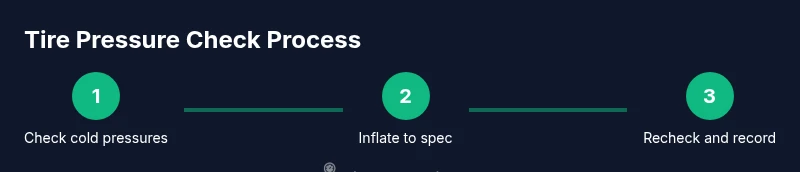
- Park on a level surface and allow the tires to cool before measuring.
- Gather your gauge, inflator, and the vehicle placard/manual.
- Read the cold PSI from each tire on all four corners; write down the readings.
- Inflate or deflate to the manufacturer’s recommended range, not the tire’s maximum rating.
- Recheck after adjustments and record the final numbers for future reference.
- Don’t forget to check the spare tire if your setup uses one and keep a log for seasonal changes.
Common TPMS Issues and How to Handle Them
TPMS alerts are incredibly useful, but a warning doesn’t always mean a tire is dangerously underinflated. If the light comes on but the tires look fine, there may be a sensor issue, a battery in the sensor, or a calibration problem. Always verify with an external gauge to confirm, then drive a short distance and recheck. If the warning persists after correct pressures, visit a tire professional to inspect sensors and metal valves for damage. In some cases, a TPMS reset or recalibration by a qualified technician is necessary.
Seasonal and Load Considerations for Pickup Tires
Temperature and payload significantly influence tire pressure. Cold mornings can drop PSI, while long highway drives in hot weather can raise it. When towing or hauling heavy loads, the tires work harder and heat up more quickly, which can change pressure readings. Adjustments should reflect expected conditions—seasonal shifts, weekly travel patterns, and frequent loads like gear, campers, or equipment. Keeping a consistent baseline during the off-season helps preserve tread life and reaction to road inputs.
Real-World Scenarios and Practical Tips
Imagine you’re heading out for a camping trip and you’re carrying a full load of gear in a mid-size pickup. Start with the placard’s recommended range and then add a notch to account for the extra weight. On a winter morning, recheck after the truck sits for a few minutes to account for cold air and warming from the road. If you’re towing a trailer, check the rear axle specifically and balance pressures across both rear tires to prevent overloading one side. Small changes to pressure can dramatically affect stability and braking response on winding mountain roads, so use a consistent method every time and document the outcome for the future.
Authority and Further Reading
For verified guidance on tire pressure and safety, consult reputable sources such as government and major publications. These references support best practices for checking, maintaining, and understanding TPMS data and seasonal adjustments.
Tools & Materials
- Tire pressure gauge (digital or dial)(Choose a gauge with 0.5 psi resolution if possible; digital is fastest for quick checks)
- Portable air compressor or inflator(12V or rechargeable; ensure it can reach the tire valve without overfilling)
- Owner's manual and door placard(Contains the official front/rear PSI values and load-related adjustments)
- Valve core tool (optional)(Helpful for quick valve service if you notice a leak or need to reseat the stem)
- Flashlight(Useful in dim areas or under vehicles)
- Notebook or mobile app to log readings(Track changes over time and assist with maintenance planning)
Steps
Estimated time: 40-60 minutes
- 1
Gather tools and prepare
Collect your gauge, inflator, placard, and a notebook. Park on level ground and ensure the truck hasn’t been driven recently, so tires are cold. This helps you get accurate readings that reflect the baseline PSI.
Tip: Having everything laid out saves time and reduces distractions during the check. - 2
Check cold pressures per tire
Remove valve caps and press the gauge onto each valve stem to get a reading. Record the cold numbers for all four tires and the spare if used. Cold readings are your baseline and should reflect the placard values.
Tip: If you’ve just driven, wait at least 30 minutes for the tires to cool before rechecking. - 3
Read placard and determine axle targets
Consult the door placard or owner’s manual to identify the recommended PSI for front and rear tires. Distinguish readings by axle, then prepare to adjust each tire toward the correct target within the acceptable range.
Tip: Do not inflate beyond the tire’s maximum rating printed on the sidewall. - 4
Inflate or deflate to the spec
Attach the inflator, add air in small increments, and pause to recheck with the gauge. Stop when readings align with the target PSI for each tire. Ensure both tires on an axle are within 1–2 PSI of each other.
Tip: Avoid overfilling; small adjustments achieve more consistent wear and handling. - 5
Recheck and confirm
After adjustments, recheck all four tires again. Compare to the placard values and confirm consistency across the vehicle. If you’ve made changes for towing, re-check post-tow after a short drive.
Tip: Document final numbers to simplify future checks. - 6
Record and schedule follow-ups
Log your readings, the date, and the season. Schedule monthly checks or more frequent checks if carrying heavy loads. This habit helps catch leaks or slow pressure losses early.
Tip: Set calendar reminders to maintain a consistent check cadence.
Frequently Asked Questions
Why does the TPMS light come on even when tires look okay?
TPMS can illuminate for sensor issues or slow leaks that aren’t visually obvious. Always verify with a separate gauge and consider sensor inspection if readings are inconsistent with the placard values.
A TPMS light can indicate a sensor problem or a slow leak, so verify with a manual gauge and consider sensor service if readings don’t match the placard.
Can I inflate my tires to the maximum PSI printed on the sidewall when towing?
No. Do not exceed the recommended PSI on the placard or in the manual. The sidewall max is not a target for regular inflation and can reduce traction and ride quality.
No. Do not inflate to the sidewall max during towing; use the placard-recommended range for safe handling.
What’s the difference between cold and hot tire readings?
Cold readings reflect the baseline pressure before driving. After driving, tires heat up and PSI increases slightly. Always measure when cold for accuracy and recheck after a drive if you need to verify stability after adjustments.
Cold readings are the baseline; after driving, pressures rise. Check when cold for accuracy and recheck after a drive if needed.
How often should I check tire pressure?
Check at least once a month and before long trips or when you anticipate heavy loads. Adjust with seasons and after switching tire types or modified suspensions.
Check at least monthly and before long trips, especially if you carry heavy loads or change tires.
Is it okay to mix tire pressures between front and rear tires?
Yes, you should follow the front and rear PSI specifications on the placard. Differences between axles are normal, but keep within the recommended ranges for each axle.
Follow the placard values for front and rear; it’s normal for axles to differ, but stay within their recommended ranges.
What if I can’t locate the placard?
Check the owner’s manual or contact the manufacturer. If needed, a professional tire shop can determine the correct pressures for your model and load.
If the placard is missing, check the manual or ask a tire professional to confirm the correct pressures.
Watch Video
What to Remember
- Check tires when cold before trips.
- Follow placard PSI for loads and seasons.
- Use TPMS as a guide, not a sole measure.
- Log readings to track changes over time.
- Inspect tires for wear and leaks during checks.