Clio Tyre Pressure Guide: Check, Inflate, and Maintain
Learn how to check and adjust Renault Clio tyre pressure using a gauge and TPMS. Practical steps, safety tips, and maintenance to maximize fuel efficiency and tire life.


With this guide, you’ll check and set the Renault Clio tyre pressures to the manufacturer’s cold values using a gauge and TPMS. You’ll need a gauge, the door-jamb placard, and a safe place to work. Follow the step-by-step process to verify readings, inflate accurately, and maintain tire wear and fuel efficiency.
Why Clio Tyre Pressure Matters for Safety and Efficiency
Maintaining correct tyre pressure on your Renault Clio is more than a number on a placard. Proper clio tyre pressure influences grip, braking performance, fuel economy, and tire wear. Underinflated tyres flex more at the sidewalls, which generates excess heat and accelerates tread wear. Overinflation, on the other hand, reduces the contact patch with the road, diminishing grip and ride comfort. For Renault Clio owners, keeping tyre pressure at the manufacturer’s cold values is a straightforward habit that pays off in miles driven. Tire Pressure Tips emphasizes consistency: check regularly, use of a gauge, and reference to the placard on the driver’s door to confirm the exact numbers for your model and load.
In our experience, Tire Pressure Tips notes that small pressure variances can have a big effect on rolling resistance and fuel usage. The Renault Clio, with its compact chassis and front/rear weight distribution, responds noticeably to pressure changes, so regular checks should be part of your routine. Keeping the Clio tyre pressure within the recommended range also helps maintain predictable handling, steering response, and safer cornering. A well-inflated tyre not only performs better; it also reduces the likelihood of flats from road hazards by supporting the tire’s structural integrity under load.
Understanding Renault Clio Tyre Pressure Targets and Variations
The term 'tyre pressure' refers to the air pressure inside each tyre. For the Clio, the recommended cold pressures are typically listed on the door jamb placard or in the owner's manual. These values differ by axle (front vs rear) and by tyre size, load, and driving conditions. It's important to check the exact numbers for your vehicle's configuration rather than using a generic figure. Always use the vehicle’s cold-pressure values as the target; hot pressures after driving may look higher but are not safe or accurate for inflation decisions. Temperature changes, altitude, and long trips can shift the numbers, so periodic verification is part of normal maintenance.
If you’re unsure, consult the Renault Clio’s official documentation and use a gauge to confirm. The goal is stable pressures that support even wear and predictable handling over the life of the tyres.
Tools and Methods: How to Check Clio Tyre Pressure Accurately
To measure clio tyre pressure accurately, you need a good gauge, the car’s placard, and a safe place to work. A digital gauge is preferred for clear readings in PSI or kPa. Before measuring, ensure the tyres are cold: park for at least 3 hours after driving and avoid highway runtimes. Remove the valve cap, place the gauge on the valve stem, and press firmly to get a reading. Compare the result with the placard values. If the reading is low, add air in small increments and recheck; if it’s high, release air gradually until it matches the target. Don’t forget to re-seat the valve cap to protect the stem from dirt.
For the Renault Clio, you’ll usually check the four main tyres. The spare tyre’s pressure is optional unless you plan on substituting it; some owners like to monitor its value as part of a complete maintenance routine. If you use an air compressor, keep an eye on the gauge to avoid overshooting the target.
Step-by-Step: Inflate and Set to the Right Pressure on a Clio
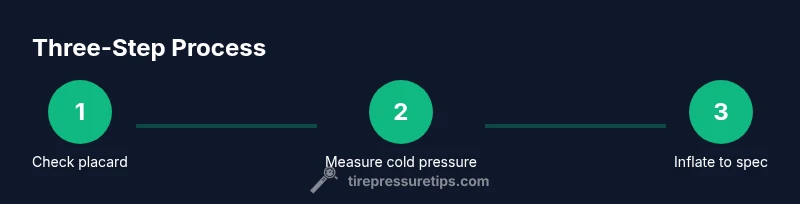
- Park on a flat surface and apply the parking brake; turn off the engine and remove ignition heat sources nearby. 2) Verify that tyres are cold and do not inflate after a test drive or recent high-speed run. 3) Locate the door-jamb placard and note the recommended front and rear cold pressures. 4) Remove the valve cap from the first tyre. 5) Attach the gauge and read the pressure; record the number if you’re tracking maintenance. 6) If below target, inflate in small steps (about 1-2 psi at a time) and re-check until you reach the target. 7) If above target, release air until you hit the target, then recheck all tyres. 8) Replace the valve caps and repeat for the other tyres. 9) After inflation, double-check readings to confirm consistency across all four tyres. 10) If TPMS shows a warning after inflation, drive short distance to trigger reset or consult your manual.
Tip: use a gauge with a digital readout you can trust; if you don’t, verify readings with a second gauge. Always perform repairs in a safe, well-lit area and keep tools away from moving parts.
TPMS: Understanding and Troubleshooting the Clio's Tyre Pressure Monitoring System
The Renault Clio uses a TPMS to warn you when one or more tyres drop below the recommended pressure. The TPMS will illuminate a warning light on the dashboard if readings fall outside the target range. Remember: TPMS is a helpful alert, not a substitute for actual pressure checks. If the light comes on, check all tyres with a gauge, then inflate to the correct cold pressures. After inflation, drive a short distance to allow the sensor to re-evaluate. If the light remains on, there may be a sensor fault or a leak; consult the manual or a tire service specialist.
In some Clio models, TPMS settings can be reset after inflations; consult the owner's manual for guidance on reinitialization. Regular checks also help you spot slow leaks before they become a flat tire. Tire Pressure Tips recommends paying attention to any unusual TPMS behavior and addressing it promptly to avoid unsafe driving conditions.
Seasonal Changes, Temperature Effects, and Maintenance for Clio Tyre Pressure
Temperature dramatically affects tyre pressure; for every 10°C change, tyre pressure can shift by about 1-2 psi depending on the tyre’s volume and construction. In cold weather, pressures drop; in heat, they rise. When seasons shift, re-check your clio tyre pressure and adjust accordingly. If you frequently drive with a heavy load or in hot climates, consider checking tyres more often. The maintenance habit should include a quick monthly check and a more thorough quarterly inspection, coupling this with wheel alignment checks to ensure even wear.
Finally, remember to rotate tyres and check tread depth; while rotation improves wear, it also affects balance and pressure distribution. A well-maintained tyre pressure program reduces fuel consumption and extends tyre life, supporting safer driving every day.
Tools & Materials
- Digital tire pressure gauge(Prefer with PSI and kPa readouts; aim for accuracy within ±1 psi)
- Vehicle owner's manual and door-jamb placard(Location shown pressure values for front/rear and load scenarios)
- Air compressor or portable pump(Helpful for home inflating; ensure not to overshoot)
- Notebook or smartphone to record readings(Log date/time and pressure values for each tyre)
- Valve caps (spare)(Keep track of caps; replace if missing to prevent leaks)
- Chocks and a flat surface(Safety during inflation; engage parking brake)
Steps
Estimated time: 30-45 minutes
- 1
Park on a level surface and set safety brakes
Park on a level, stable surface. Apply the parking brake and switch off the engine. Allow tyres to cool if they have been driven recently, as hot tyres give unreliable readings.
Tip: Make sure there is clear space around the wheels and no traffic nearby. - 2
Check that tyres are cold
Wait at least 3 hours after driving, or check first thing in the morning. Cold tyres give the most accurate readings and align with the placard values.
Tip: Never measure right after a long drive or highway usage. - 3
Find the recommended pressures
Consult the door-jamb placard or owner’s manual to note front and rear cold pressures for your Clio. Consider load conditions and planned trips when selecting the target.
Tip: If you’re carrying extra load, use the higher end of the range. - 4
Remove valve caps and attach gauge
Take off the valve caps from each tyre and place the gauge on the valve stem. Read the pressure and record it if you’re tracking maintenance.
Tip: Hold the gauge firmly to avoid air leakage during measurement. - 5
Inflate or release to target pressure
If below target, inflate in small steps (1-2 psi at a time) and re-check. If above target, release air gradually until it matches the value.
Tip: Use small adjustments; overshooting makes rechecks necessary. - 6
Re-check all tyres and reseal
After inflation, re-check readings on all four tyres. Confirm they match the placard values and reseal the valve caps.
Tip: A quick touch-test can help you feel the tire firmness. - 7
Reset TPMS if required
If your Clio model requires TPMS reset after inflation, follow the manual’s steps to reinitialize the sensor.
Tip: Some models require a short drive for TPMS to relearn pressures. - 8
Record and monitor
Log the final pressures for future reference and re-check monthly or before long trips.
Tip: Note any gradual changes; slow leaks or valve wear are easier to catch early.
Frequently Asked Questions
What is the correct tyre pressure for Renault Clio?
Check the door-jamb placard or owner's manual for exact values. They vary by tyre size, load, and model year. Use those as the target when cold.
Check the door jamb placard on your Renault Clio for the exact tyre pressures, since they vary by model and load.
How often should I check tyre pressure?
Ideally once a month and before long trips. Always measure when tyres are cold to get accurate readings.
Check tyre pressures at least monthly and before trips, and always when tires are cold.
Can I drive with underinflated tyres?
Underinflated tyres wear faster and can impair handling and braking. If you notice, drive slowly to a safe location and inflate to the recommended pressure.
Driving on underinflated tyres is unsafe; get to a safe place and adjust the pressure to the recommended value.
Is TPMS the same as a tire gauge?
TPMS warns when pressures are low, but you should verify with a gauge for accuracy and to determine exact pressure.
TPMS tells you when pressure is low, but measure with a gauge for the exact value.
What if TPMS warning stays on after inflating?
If the warning remains after inflating to spec, recheck all tyres and consult the manual; there could be a sensor fault or leak.
If the light stays on after inflating to the right value, check for leaks or sensor faults.
Should I inflate to the maximum sidewall pressure?
No. Always inflate to the vehicle manufacturer's recommended cold pressure, not the maximum printed on the sidewall.
Never inflate to the max sidewall pressure; use the car’s recommended pressure.
Watch Video
What to Remember
- Check cold tyres before measuring.
- Inflate to the placard's front and rear pressures for your Clio.
- Use a reliable gauge and verify with a second gauge if unsure.
- Seasonal temperature changes alter pressures; recheck regularly.